Showing posts with label guest post. Show all posts

Tuesday, September 9, 2014

What I Did On My Summer Vacation, from guest blogger Ted McCoy

Today's guest blogger is Ted McCoy. I first met Ted at the 2012 ALSC National Institute in Indianapolis, where he won a sweet red plush hand chair as a door prize. Since then, I've come to consider him one of the top youth librarians when it comes to thinking about transformative storytimes and other library services. I'm beyond pleased that he's willing to share some of his great work here. Today he's sharing his summer outreach storytimes, which are incredibly community centered and responsive to the needs of his audience. Take it away, Ted!

This summer my library partnered with the amazing organization Food, Friends & Fun to provide weekly outreach storytimes at two neighborhood parks where kids 0-18 could get free lunch during the summer. Doing this type of outreach was one of the first things I brought up in summer reading planning. If we weren’t going to be providing kids with much-needed summer lunches on site, it made sense to work with organizations that were doing it, strengthening our connections with local partners and learning how to better serve children and caregivers in our community. We want to reach as many kids as possible during the critical summer months, and going to local parks seemed like a great opportunity to reach kids who might otherwise not have access to library services.

We entered the process a little late, so a couple of really good ideas got discussed but ultimately shelved. I had tentative plans to bring honor system collections to both sites, something similar to what Santa Cruz Public Libraries do with their Teen Self-Help Collection. Because we were at different sites, these collections would need to be mobile; I wanted to base our approach to mobile outreach collections in part on Oakland Public Library’s awesome Bike Library. Deadlines and funding kept us from moving beyond the discussion stage on this. We also looked at the possibility of checking out library materials at summer lunch sites, but untenable logistical hurdles cropped up here as well.

We ended up with three librarians doing outreach at two sites for the entire two months. I was able to go to both sites all summer, which was awesome. We read a lot of stories with a bunch of kids. Like, a lot. But we also talked to them and their caregivers, listening to what they wanted in terms of relevant library collections and services. We got harassed by bees pretty much constantly. Oh well, the rough with the smooth.

So here’s what I learned about outreach storytimes:

There's no such thing as a comfort zone

As cool as doing this outreach was, we pretty much started in unchartered territory. Food, Friends & Fun had never partnered with our library before. Their onsite staff was minimal so we were responsible for doing our thing, soup to nuts. These sites were good-sized city parks, each with basketball courts, jungle gyms, and (most distractingly) awesome splash pads.

To find our place, we really had to put ourselves out there. A lot of this was introducing ourselves to kids and families and offering to read stories with them. Scratch that. It was almost entirely introducing ourselves to folks and developing relationships. Shyness was not an option. We’d ask if kids wanted to read some stories, and it was OK to hear “no.” We couldn’t get comfortable or expect people to come to us, nor could we expect to be people’s first choice with all the aforementioned basketball courts, jungle gyms, and splash pads. Especially not with the splash pad.

Brief aside: because it was just me and another librarian (and often just me) with my bag of books, I briefly contemplated some sort of attention-grabbing gimmick: a crazy hat or something. I thought better of it (mercifully) and, after raiding our supply closet, instead constructed the Mystery Cylinder, pictured below.


We could use the Mystery Cylinder to choose books to read when we had a big group together, since there was no way to choose something to perfectly match everyone’s tastes. I found myself occasionally nudging the results in a certain direction, but it was overall a success and I can’t wait to use it with a more targeted audience.

Sing!

Singing books were among the summer’s most popular, and especially Abiyoyo and Pete the Cat: I Love My White Shoes. I read/sang Pete the Cat maybe 20+ times, slightly more than once a storytime. Because we read with several groups over the course of an hour, there were lots of chances for folks to request it.

While these were outreach storytimes, attention spans were shorter and groups were diverse, age-wise. I tried some songs and action rhymes my first day, and the kids were not into it. Singing books were a huge hit, though, so I used them throughout the summer to regularly incorporate singing into the mix.

Sometimes you're just there to have a conversation.

Occasionally, kids weren’t really feeling storytime. During that downtime, we would chat about books and other things they like. Other things being mainly Minecraft. This was an important time for them, making the outreach a two-way street, and getting their feedback about materials and services they would like to see. But I had to eventually institute unofficial “Minecraft conversation limits” or it would consume the entire hour.

When a story goes doesn't click, bail ruthlessly.

This is pretty standard storytime operating procedure, but reading with groups of kids aged 2 to 12 really sharpened my “ditch a book that’s bombing” instinct. With outreach in the park, it’s only natural that kids will get distracted and wander off. I’m absolutely fine with that. But if someone wants to read stories, it’s up to me to make sure I am not offering something low-interest or unengaging.

You can never have enough books, especially ones that mention "butts" or "underwear."

This follows logically from the previous point. Every week I brought a massive bag of books, and every week I had a pile of at least a few books beside me that had failed to connect with the kids. See also Chicken Butt!

~*~

So in conclusion, I wanted to share a couple of my favorite outreach storytime titles from this summer:


Chicken Butt! by Erica S. Perl - This long-standing outreach storytime favorite continues to come through time and time again. I have to thank Ms. Helen from the Oakland Public Library Main Library Children’s Room for clueing me in to Chicken Butt! when I was still in library school. It has never let me down.

What! Cried Granny by Kate Lum - This cumulative tale may be one of my favorite storytime books, ever. It works with preschoolers, but seems to resonate with early- to mid-school age kids, which makes it invaluable for diverse outreach settings. It also deals with sleeping over at grandmother’s house, a theme that school age audiences connect to. I will be always be grateful to the amazing Jim Jeske at San Francisco Public Library Children’s Center for showing me this when I was interning there.


Little Red Hot by Eric A. Kimmel - Paired with Red Riding Hood, this fractured fairy tale offers a lot of opportunity for laughs. I can do a passable Texas accent, which helps when reading this one.


Red Riding Hood by James Marshall - I am very pro-fairy tale, though I acknowledge you have to be careful when it comes to outreach storytime. Marshall’s version of Red Riding Hood retains a strong narrative but is short enough to work with older kids in an outreach setting. Like I said, we read it paired with Little Red Hot on multiple occasions.


Pete the Cat: I Love My White Shoes by Eric Litwin and James Dean - I think I’ve covered this one pretty well anon.

Abiyoyo by Pete Seeger - Another chance to sing, as well as read a great folk tale with a cool monster.


Miss Nelson is Missing! by Harry Allard - I like reading mysteries with older kids, and Miss Nelson is Missing! has a good narrative and enough humor to work well with older (and even some younger) readers in an outreach context. In a more structured outreach setting, I’ve done a reader’s theater version which works as well.

~*~

Ted McCoy is currently a Children's Librarian at the Springfield (MA) City Library. He conducts Tiny Tots infant/toddler storytime and ongoing school-aged STEAM programming. He can be reached at emccoy(at)springfieldlibrary(dot)org and @ted_mccoy on Twitter.

Mystery cylinder photo provided by the author.

Monday, March 3, 2014

Unprogramming at Rogers Public Library, from guest blogger Kathleen Connelly-Brown

Today's guest blogger is Kathleen Connelly-Brown, Library Assistant II at Rogers Public Library with 8 years experience, 6 of those in the children's department. Kathleen got in touch with me after she attended the Wild Wisconsin Winter Web Conference webinar that Marge Loch-Wouters and I gave on the topic of unprogramming. I admired Kathleen's enthusiasm for thinking about programs for kids, and I asked her if she'd be willing to share her thoughts and first experience with unprogramming. Today we get to hear about unprogramming from her. Take it away, Kathleen!


This crafter dubbed his costume "Obama Baby."
The thought the costume prop hat was a
baby bonnet, which of course prompted me
to explain some of the colonial garb.
The program I specifically used this approach for is called Expert Hour, which we started during Summer Reading Club of 2012. This program began as a way to offer special programs focusing on the arts and sciences for older kids, sort of a workshop-type program during SRC. We began with staff utilizing or teaching a special skill that they had, as well as a few paid presenters. Prior programs have included illustration lessons, cake decorating, comedy improv, intricate crafts, and a juggling workshop. We continued the SRC-only option during the summer of 2013, but we have now morphed the program and are offering it all year long. In the fall of 2013 and spring of 2014, we offer a Homeschool Expert Hour for kids age 5-12 at 2pm once a month, and an After-School Expert Hour for kids age 5-12 at 4pm once a month.

February was my turn to lead the program, and I opted to incorporate history (a passion of mine) with traditional crafts and literacy elements. February Expert Hour focused on the Presidents of the United States. My original plan began with the dreaded powerpoint presentation. There were to be lots of slides sharing information about the presidents past and present, some fun facts about several presidents, and a description of how one becomes president including facts about the election process. I found a neat website that would allow us to take a virtual tour of the White House, and I planned to show that to the kids. I had a craft in mind to add at least one element of what a typical program looks like: share some info, make a craft, go home. Sounds really boring, right? The more I planned, the more I got bored with my own presentation! I was really at a loss as to how to make this fun for the kids. I did not want to get trapped in the theory that history is dry, boring, and a total snooze-fest, much like I remembered it from school. In fact, I didn’t want this to be like school; I wanted it to be fun! I wanted the kids to see how much fun the library can be and how many cool resources the library has. My original plan lacked both of these messages I wanted the kids to come away with.
Craft Station
Finished Craft
Jump forward to January and the 2014 Wild Wisconsin Winter Web Conference! I heard about the conference ahead of time from reading this blog, and after reading the words “free” and “virtual” I decided to sign up. I’m so very glad I did! I was really interested in Amy and Marge Loch-Wouters's presentation “Unprogramming: Recipes for Successful Programming with School-Age Children and Teens.” I wanted to know how unprogramming could work at my library. How I could plan a program without spending weeks on it and pulling my hair out? How do I incorporate ALL the THINGS with very little planning and stress??? I had my doubts.

But, as I watched and listened to these two super-smart ladies explain the process, I had an epiphany. I didn’t need to stand in front of the group and tell them stuff. I didn’t need to hold their hands and lecture them on how history was cool. I didn’t need to have everything so detailed and specific that the kids in attendance were being shown the information as passive bystanders. I only needed to be a facilitator; the kids are smart enough and curious enough to be given some options and the discovery can begin with THEM taking the lead! Brilliant!!

Abe or George?
I immediately reconfigured EVERYTHING. I shortened my powerpoint to four slides, one of which was a breakdown of all the cool stuff there would be to do after I shut up. I added a non-fiction read-aloud to begin the program as a way to present some of the information that was included on my previous slides. I kept one slide with a fun fact (Grover Cleveland was the 22nd and 24th president. Technically we have only had 43 different presidents, although Barak Obama is considered to be our 44th president – cool, right?). Our Children’s Director began to get excited about my plans and ordered a Presidential Bingo game from Oriental Trading. She also ordered some costume props the kids could use: faces of presidents and colonial garb to play and experiment with. I pulled all the books on presidents that we had to create a table display to encourage the literacy component and the hope that kids would take the books home. I pulled a few laptops and set them up with different websites: the virtual White House Tours, a Colonial Williamsburg website with games to play, a National Geographic website with fun facts, and a Presidential Mad Lib type game. I printed out some fun word games, coloring sheets, and writing prompts to create a ‘writing center.’ I kept the craft, but had it as yet another optional activity for the kids to do. Now I had a program that included about ten minutes of me talking and lots of stations for the kids to explore on their own.

Mad Libs
I began the program reading If I Were the President by Thomas Kingsley Troupe and playing one round of the mad lib type game with the entire group. I explained what activity stations were available and turned them loose. Within minutes, I heard kids talking and sharing information with each other about what they already knew. They began sharing their own ‘fun facts’ knowledge with each other! They asked me questions about presidents they weren’t as familiar with. They tried to impress me with their knowledge, finding cool stuff in the books I had out. They laughed at their own mad lib creations and wanted to share them with me. They came up with some great ideas for what they would do as president: “All kids should be taken out for pizza on Friday nights by their parents” and “War should be illegal.” The boys were off laughing at the way they looked in the costume props area and the girls were giggling with each other while making crafts. A studious young lady was so absorbed in the book display that I didn’t hear a peep from her until it was time to leave. She wanted to make sure it was ok to check out five of the books (yes, of course!). I heard a lot of “Whoa, I didn’t know that!” and “Hey, check this out!” and “That is so cool, look at this!”

Presidential Bingo
As I called the presidents' names for Bingo*, I looked around the room and saw engaged, happy, bright-eyed children having FUN. And all it took was 20 minutes of room set-up (with a helpful volunteer) and 20 minutes of room clean-up (with a helpful coworker). I spent more time planning than Amy or Marge probably would have, but it being my first attempt at this style I’m ok with that. It was still MUCH less time (maybe two hours) than I would have spent using my old methods (days or weeks of planning). But mostly, the STRESS was non-existent, or close to it. I was worried there would not be enough to do – it turns out there wasn’t enough time! I was worried this new style wouldn’t go over well – what a non-concern that turned out to be! The kids had more fun during this program than many of the others I have planned and presented. To me, that is the key – the fun, the learning, the discovery – that the kids can find for themselves when utilizing the unprogramming idea. They did this, they were empowered, they were excited, they learned, they discovered, they experimented. So much of what we do in the Children’s Library is focused on these goals – leading the kids to discover new things. If I had planned and structured the program using my old methods, this discovery would not have happened the same way. Success!! Thank you Amy and Marge, for making my job more fun, easier, and less stressful.

Writing Center
Writing Station
*So as not to come away without at least one total fail, I share this story: During the fun fact about Obama being the 44th President, one six-year-old boy states “He’s the devil!” upon hearing Obama’s name. Color me shocked! Another boy, age 9, said “No he’s not.” The first boy said “Well, he’s Muslim and that’s bad.” The older boy said, “Well, actually, some of his family is Muslim, but Obama is a Catholic.” I finally recovered from shock and said, “Ok, well moving on.” During Bingo, one card was Obama and Mr. Six-year-old at the craft table beside us said “He’s a bad man!” while Mr. Nine-year-old and two others say “No, you are wrong.” To avoid any further controversy I said “Regardless of what we think of the man, he is the President of our country so let’s be respectful of that. There are deeper issues that reflect the political stances of each of our presidents, which we don’t really have the time to get into. Let’s just say that Obama is our President and keep it at that for today, ok?” Both boys seemed to be ok with this and there were no further incidents. I should point out that this area of Arkansas is deeply conservative and very Christian. I’m sure Mr. Six-year-old has overheard some lively conversations at his house and wanted to enlighten the group. We were having a grand time of sharing information after all.

~*~

Guest blogger Kathleen Connelly-Brown's main duties include baby storytimes for ages 0-24 months, as well as tween programming for ages 8-12. She also functions as the Volunteer Coordinator for her Children’s Department. Her library has a staff of five (three full-time, two part-time), and one page. The Rogers Public Library is a large suburban library serving the town’s population of nearly 58,000 and the surrounding communities.

All photographs provided by the guest blogger.

Wednesday, November 13, 2013

Make Your Own Early Literacy Toy: Texture Blanket, from guest blogger Stephanie Smallwood

One of my favorite takeaways from the Missouri Library Association Conference in October was the idea of a sensory blanket, which Stephanie Smallwood--Early Literacy Specialist at Springfield-Greene County Library District--shared in her session focused on outreach. I asked Stephanie to elaborate on her texture blanket, and she graciously agreed to share details in the form of this guest post.

~~*~~

"What should I do with my baby?"

Families are always happy to learn that the best thing they can do with their littlest ones is talk to them. We know that talking to babies not only builds vocabulary and background knowledge, but also that all-important caregiver-child bond that is so important for all aspects of development. But sometimes we just don't know what to say to those little guys! Especially during the first few months, it can be difficult for new parents to know what to say to their child, so it helps to give them a conversation-starter so to speak.  We do that when we tell adults to talk about what they are doing or to describe everything they see, but there are certain things that babies are particularly drawn to. One of these things is textures.

A newborn is very sensitive to touch, and that sense stays strong throughout the baby years. This is good for adults, because there are lots of words to use to describe textures. We can use a variety to describe how they feel (fluffy, scratchy, rough, smooth), and we can compare and contrast familiar textures ("This denim feels just like Daddy's pants," "Grandma has a blanket that has satin edges like this."). So textures give us an opportunity to use a copious amount of words, and since baby's sense of touch is so sensitive, they are particularly open to learning at that moment. You know that wide-eyed look babies get on their faces when they are particularly interested in something? That is the most important time to talk. They are focused, interested, and their minds are especially open.

Stephanie's Texture Blanket

I use lots of homemade early literacy activities in my work with families, and one of the most popular is the texture blanket.  It is a basic fleece blanket with several different pieces of fabric sewn on it. Babies love it, toddlers love it, caregivers love it, and every time I use it with a family I get to show them that wide-eyed "That is so cool!" look on their baby's face. It is an excellent tool for modeling those simple interactions that are so important to a baby's development. Here are some points I make with families and babies of different stages.

Newborns: Choose the softest fabrics on the blanket to use with the littlest ones, they will be very sensitive to anything rough. Lightly touch baby's arm or hand with the soft fabric and talk about how it feels. Remember, newborns will be ready to move on in a relatively short time, so no need to overdo it.

Tummy Time Crowd: This blanket is so fantastic for tummy time, I can't fully express it in a post. You really just have to watch a baby doing it. Babies doing tummy time have something to feel and look at while they lay on their tummies. As they start creeping and scooting, they have a goal to reach for and explore. Talk about the different textures they touch.

Sitters/Crawlers: So much to explore! This is when we really start to see curiosity come through with babies. Sitting on a texture blanket gives them a big area to move around in and so many different things to examine. And yes, they will examine it with their mouth, so make sure your fabrics are secure and that babies are monitored.

Walkers: Even those bigger babies will still appreciate the textures. Take off their shoes and let them feel the fabric with their feet. They are beginning to make stronger connections between current experiences and things they have experienced in other situations, so this is a great stage to compare textures.

My texture blanket gets used pretty regularly in my outreach programming, but it would be ideal for baby storytimes or a baby corner in a children's department. Mine has been used monthly for three and a half years and is still in pretty good shape. It gets machine-washed after each use, and I line dry it. One of the great things about the texture blanket is that it is that it is portable--it is super easy to roll it up and take it to any of the locations where I work with families. It's truly a perfect activity!

~~*~~

Picture provided by Stephanie Smallwood.

Wednesday, August 7, 2013

Fantasy Maps: An Unprogram, from guest blogger Kary Henry

Not too long ago, librarian Kary Henry tweeted that she had just hosted a successful unprogram. She shared a few details on Twitter, and I knew immediately that we'd all benefit from hearing more about this program. Without further ado, here's guest blogger Kary Henry!

~~*~~

When I first heard of Marge Loch-Wouters’s and Amy Koester’s Unprogramming approach, my first reaction was “What? Let go of control? No way!” I’m the ultimate control freak (although I prefer the term “thorough planner”), and their idea just didn’t fit my preconceived notion of programming. But, like most brilliant ideas, it wouldn’t let go of me. I kept coming back to phrases from their first two blogs on the topic: “We spend a lot of time and energy in planning” and “You never know just how many kids will participate.” Marge and Amy talked about stress, and I remembered past programs where I had Every. Single. Minute. scheduled, and then I either had low turnout or, worse, no turnout! I decided to take that leap of faith and do my “Fantasy Maps” program as an Unprogram. And, as Amy wrote, “EUREKA!”

My daughters and I used to create “fairy maps” when they were little. That effort consisted of nothing more than going for a walk to gather twigs, pebbles, and fallen flower petals. Lots of glue on a piece of heavy paper, crayon-inscribed labels to identify the Rose Fairy’s house or other key features, and everyone was happy. I would use that same low-key, unprogramming approach to Fantasy Maps, a school-age program I had designed for our Summer Reading Program theme of “Have Books – Will Travel!”

Now if I’m totally honest with you (and myself), I had indeed been thinking about this program since February. I had gathered some important information about cartography, emailed another librarian in Illinois who was running a similar event, and put a good deal of thought into what I wanted to do. But the Unprogramming approach saved me from myself and allowed me the freedom to put the focus into what the kids wanted to do! (Slap self on head and mutter, “Duh.”)

The décor consisted of maps of fantasy books/worlds that I had located on Pinterest and other websites: Oz, Narnia, the worlds of Harry Potter, etc. I gathered some books on mapmaking along with fictional titles that had maps on endpapers and displayed those on the counter. The laptop and projector were set to run National Geographic’s Interactive map website.

Supplies were purchased at a local craft store or found in our cabinets: silk flower petals, aluminum foil, craft sticks, colored pencils and markers, ribbons, colored pebbles, Bristol board, and good glue. Total cost for the program was under $30!

When the children arrived, we talked for a few minutes about what a map is, why we use them, parts of a map (scale, legend, compass rose, color), and how a fantasy map can be based on a book or of a world in their own imaginations. We mapped Deerfield using the National Geographic website, and they were excited to put their homes, schools and, of course, the Library on the map. Less than 15 minutes in to the program, I let them loose with a piece of Bristol board each and the above supplies.

The conversations as my teen volunteers and I walked around the room were wonderful – discussions about what was important to include on a map of Harry Potter or how to combine HP with the world of Rick Riordan, even how best to make a pirate ship out of cut-up craft sticks and a bit of ribbon. Some children chose to use the supplies to create relief maps; others used the colored pencils and markers only. The kids were excited and proud to pose with their maps. Forty-five minutes later, as the adults returned, their children didn’t want to leave!

My first attempt at an Unprogram had been just as Marge and Amy hinted it would be: relaxed, kid-focused, and wildly successful. I’m already looking at how to continue to use this approach in future events and in my early literacy storytime sessions. For me, Unprogramming has become the ultimate in programming!

Kary Henry is a Youth Services Associate at the Deerfield (IL) Public Library. She coordinates the Library’s preschool outreach and runs the 4-5 year old early literacy storytimes. She can be reached at khenry(at)deerfieldlibrary(dot)org and @MissKaryReads on Twitter.

~~*~~

Pictures provided by Kary Henry with permission of shown children's mother.


Tuesday, July 23, 2013

Where You Can Find Me Online Today

I've got posts on two other youth services blogs today; I hope you'll click over to read them if you're interested.

First, I'm on the ALSC Blog talking about my Egg Drop program, a school-age science program that was a huge hit with my kiddos last month. Steal the program!

I'm also over on GreenBeanTeenQueen, where Sarah has been running a series called "So You Want to Read Middle Grade," featuring all sorts of guest bloggers. When she asked me if I wanted to participate, I got very excited at the prospect of bringing older readers back to the great MG they may have missed since they "aged out." I even mention Doctor Who.

Happy reading!


Friday, April 19, 2013

Guest Post: Marble Run Mania, a STEAM program, by Miss Melanie

Today's guest post comes from Miss Melanie, a children's staffer at my library. She is sharing a terrifically fun and engaging STEAM program that she offered during our school district's spring break. Take it away, Miss Melanie!

Marble Run Mania

My idea for a recent children’s Science Technology Engineering Arts Mathematics (STEAM) library program evolved after cleaning up from a Time for Twos program and pondering the “likes” of children. In tipping a long table on its end, a toy train engine left by a child zoomed down the table and crashed to the floor. I couldn’t resist. I did it again. Tip, roll, crash. Tip, roll, crash. Fun! I remember thinking, I can use this, and tucked it away in the recesses of my brain.

Weeks later I’m pondering what type of program will accomplish STEAM goals with 20+ rambunctious children during their spring break. Call me a geek, but I will sometimes web diagram my thoughts. Speed, tape, movement, tubes, building, create, pipe cleaners, noise, and cutting were just some of the many words I wrote on my web. What would my own kids like? Aha! The Marble Run Mania idea was born.

With supportive co-workers who will collect anything for me, one trip to Leftovers, Etc. (a not-for-profit creative and educational resource facility), and a few consumables (electrical and duct tape, pipe cleaners) the program was literally ready to roll...out the marbles.

On the day of the event, I displayed all the possible products collected for building marble runs. I placed three long tables end to end, piled with recyclables: paper towel/gift wrapping and paper/plastic/pvc tubes; egg cartons, binder clips, pipe cleaners, milk jugs with holes in the bottoms, detergent lids; and some unusual parts of things like the broken frame around a felt board, creating a straight track. Anticipating around 30 kids, I set up six stations by tipping six tables. One set of legs was resting on the floor; the other set was placed in two chairs to create a slant. Remember the train zooming down the table? Voila! Our marble runs would be constructed against the slanted table top so the force of gravity would be in our favor. Each group was allotted a supply of tape, scissors, and other consumables.

As the children entered the room, a teen volunteer handed them a shoebox with a marble in it. I wanted to get the “juices” flowing for the project so I prompted the children with several questions: Keeping the marble in the box, what can you do with it? See how it rolls? What makes it roll? Can you make it touch all four sides with and without it rolling along the edges of the box? What else can you do with it?

Once the majority of the group arrived, I polled them for their background knowledge of marble runs. To create our own runs, I demonstrated how we would use the slanted tables to assist us with creating a run to finalize at an end point. I used duct tape to tape a paper towel tube to the table to show the marble running through it. What is a deflector and what does it do? What recyclables would make a good deflector?

The kids were divided into groups roughly by age unless they came as their own group. To provide some structure and a starting point, I suggested they start at the highest point of their table and choose something the marble could shoot through. Paper towel rolls were the first to go, and kids got the hang of the taping quite quickly. Back and forth to the product tables they went, choosing just the right object for the next link in their run. Teen volunteers assisted with tape ripping, holding parts in place, and making themselves available on all fronts. They did an excellent job of allowing the youths to create and implement without overtaking the project. I asked the teens to prompt kids with open-ended questions if the kids fell stuck on a part. Again, the teen volunteers were found encouraging and asking, "What would work best next?"

While navigating around the room, I incorporated as many scientific terms as I could into their building process without sounding preachy. "I see you chose the milk jug lid as a deflector. The marble richochets into the tube. Cool. What happens when you add another deflector? Tell me about this part. I see the marble runs slowly through that part? Why? What would increase the speed of the marble?" I used terms such as gravity, weight, launch, roll, bump, drop, bounce, heavy, and force. I was genuinely interested in their processes.

Many groups found challenges along the way. Why won’t the marble go through? Was the opening too small? Was there an obstruction? Was tape sticking to the marble? The tape won’t work. They aligned tunnels, made long drops, plunked marbles, re-aligned, and finally--success! Some decided to add on or make another branch to the run. Others made a whole new run next to the original.

The diversity of the marble runs was amazing. One child continued to attach paper towel tubes together well past his own station and into the next. Some, with the help of a parent, made various chambers like in pinball machines. Tape was used in abundance.

We spent the last minutes eagerly making our way around the room trying each other’s marble runs. Kids whose parents hadn’t been building with them proudly gave their parents marbles to drop down lengthy chutes, explaining what they did and watching the marble finally plop into the end container.

The final attendance count was 58, and overall I was pleased with the results of the build. I will modify a few things for next time: prior to the build, I’ll have the teen volunteers build a marble run made of completely different materials than what the kids will be building with; providing more types of tubing materials; and starting my collecting earlier. Also, dismantling runs at the end by the teen volunteers and myself was time consuming, but well worth the effort. We were able to salvage some things... to be used for the next builds. I’d also inspire groups to create a name for their building teams and to create a name for their marble run. I can’t wait to do this again!


Monday, February 25, 2013

Guest Post: Balloon Story Time & STEAM Craft, by Miss Erin

Today's guest post comes from one of my staffers, Miss Erin. She is sharing a preschool story time program that she offered in our library last week. One of my favorite aspects of her program: the Mini Marshmallow Shooter STEAM craft! Engineering + Arts, with fidelity to her theme... terrific! Without further ado, it's Miss Erin!

Balloon Story Time

Opening Song: "Finger Family"

Song: "Where is Thumbkin?"

Story: Emily’s Balloon by Komako Sakai
     While this book has a story to narrate, I decided to use it for a picture walk. Preschoolers helped me tell a story about a little girl named Emily and her yellow balloon.


Song: "Animal Action I" by Greg and Steve

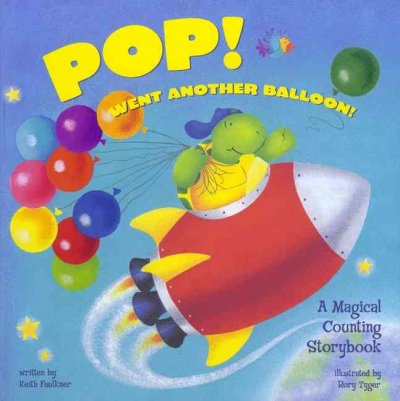
Story: POP! Went Another Balloon! by Keith Faulkner, illustrated by Rory Tyger
     This story demonstrated counting and subtracting in a fun and repetitious way. Ended up being a great interactive story!

Song: "Body Rock" by Greg and Steve

Story: Sally’s Great Balloon Adventure by Stephen Huneck (didn’t get to this book)
     This is a story about a dog,Sally, who goes to a hot air balloon race. While looking at the balloons, Sally smells fried chicken! In an attempt to find the chicken, Sally finds herself in a hot air balloon, alone and floating away. While Sally’s adventure makes the news, all she can do is worry about the fried chicken.

Closing Song: "If You’re Happy & You Know It!"

Craft: Mini Marshmallow Shooters (from www.cometogetherkids.com)
     Materials Needed: plastic cups;   balloons;   mini marshmallows;   scissors
  1. Cut the bottom part off of the cup. 
  2. Tie a knot at the end of a balloon and cut off about ½” from the other end opposite of the knot. 
  3. Stretch the open end of the balloon over the end of the cup. That’s it! You are now ready to launch marshmallows!
     Each child made two shooters. I had the cups already cut. The children tied the balloons, cut the ends off, and placed balloons over cups. As they were leaving, I supplied them with a baggie of marshmallows and balloon coloring sheets.

*lead photo by Erin Gilmer