Later this month, I'll be taking the train back home again to Indiana--specifically, to South Bend, Indiana, where I'll be offering a workshop for the St. Joseph County Public Library. SJCPL has opened the workshop to folks outside of their library system, too, so if you're from northern portions of my home state (or southern bits of Michigan, even) and are interested in new ways of thinking about youth programming, come on over!
The kind folks at SJCPL have put together a flier, at right (click on this link to see it larger), with all the relevant details, which I'm also sharing here:
Unprogramming & Maker Activities for Youth
Thursday, October 15, 2015
10 a.m. - 1 p.m.
Main Library, Humphreys Media Room (304 S. Main Street, South Bend)
$25
Participants will be able to receive 3 LEUs for the workshop, which will include a hearty mix of some of the theory behind programming for youth, sample programs and activities, and hands-on experiences to get everyone comfortable with the unprogramming and maker concepts. If you've been looking for ways to invigorate your program calendar, or if you simply like getting to learn and swap ideas with colleagues IRL, email the workshop organizer, Theresa Horn, at t.horn@sjcpl.org
Showing posts with label presentations. Show all posts
Thursday, October 1, 2015
Friday, March 13, 2015
Let's Get Together, Better: Rethinking Collaboration at SXSWedu 2015
Until Thursday afternoon, my coworker Vanessa and I were in Austin, Texas, for the South by Southwest Education Conference, SXSWedu. Vanessa and my supervisor had submitted a proposal for a Core Conversation way back when, but due to my supervisor's being on maternity leave, I stepped in. Our topic was collaborations, and doing them better, so I was excited to co-facilitate the session and get to enjoy the rest of the conference besides.
So, collaborations. That's a topic we talk about all the time, right? Probably true, but especially since moving to Skokie and seeing how they do things with an entire department dedicated to community engagement, and with some of the reading I've been doing on my own, I'm recognizing that collaborations can be so much more than they typically are for public libraries and other community partners with education, literacy, etc. as an aim.
That's where Vanessa, the library's graphic designer, comes in. Vanessa has experience with design thinking; originally developed in the design world, it's a process for creating innovative ideas and for solving problems creatively. (For great info on design thinking as it pertains to libraries, check out the new Design Thinking for Libraries toolkit from IDEO.) Design thinking offers a framework of stepping back and thinking much more broadly and deeply than we might be used to doing.
How does that apply to collaborations, you ask? Well, consider a pretty typical collaboration between a public library and a school. The public library contacts the school and says, "Hey! We have this great storytime/tour/booktalk/etc. We can bring it to you!" And the school, if the timeline works, says, "Great!" Henceforth, both public library and school consider one another partners and/or collaborators.
While bringing a library service more squarely to a school audience is certainly a great thing, it's a pretty superficial partnership. Neither partner is really doing anything that they hadn't done before. Collaborations can go deeper to incur more impact.
Vanessa gave a brief introduction to design thinking, which ultimately allowed us to lay out a process for more transformative collaborations. Consider it a five-step process, if you will.
I would venture to say that we've all been in a meeting at one point or another where the thought crossed our minds that "the people who really should be at this meeting aren't here." Or, conversely, you've heard about a meeting with a potential collaborator after the fact and thought, "I wish I had been there!" Having the right people at the table is integral for transformative collaborations to get started.
What that means is that you want the people with both the passion and the capacity to act sitting at the table. That may mean you have to rethink your obvious choices for potential partners; for example, if the school principal is spread to thin, then they shouldn't probably be at the collaboration table. Their staff should absolutely fill them in on everything after the fact, but they're probably not the best in-meeting choice. The people you do want are those people who are intimately familiar with an issue or cause within the organization. They bring the background knowledge and contextual knowledge, and more than likely they agree to sit at the table because they care. A lot. Meaningful collaborations need people who have that passion and are willing to funnel it into action, even though that process will take time and work.
You know everything you think you know about that organization with whom you want to partner? Forget it. Do not bring preconceptions to your meeting. This can be hard for a lot of people, especially in situations in which the parties pursuing a new collaboration have worked together before. But think of it this way: If you're a public library, do you think the school truly understands everything you're trying to do, and capable of doing? And vice versa? No. We do a whole lot that they couldn't possibly know about. But if everyone goes to the meeting with a set idea of who does what and what folks can contribute, it automatically starts to limit all the things you could come up with together. So be totally open to the fact that you just don't know, and that you're at the table, at least in part, to learn.
Vanessa gives the best hypothetical for this step. Imagine your library or department wants a new logo, and you go to a graphic designer. The graphic designer shouldn't just say, "Great! You're a library! I know what a library is. I got this," and then send you mock-up logos in a few weeks. A great graphic designer is first going to ask you a ton of questions. About the library's history. About the people who work there. About the people who use library services. About service philosophy. Etc. etc. etc. All. The. Questions. Only then, with lots of contextual information and an idea of the vision of the library, will the designer get to the drawing board.
The best question to include: What do you want to see in your community?
By starting with lots of questions, you're doing two things: first, really amassing deep context for a potential partner and their goals; and second, breaking the superficial discussion barrier that can manifest in lots of meeting scenarios. Frankly, we're not always good about talking about ourselves; or, conversely, we assume that the person we're talking to already knows a lot about us. Both of these things lead to undertaking of valuable information about vision, services, mission, everything. By asking lots of question, and listening actively, we truly learn about what a fellow community organization is hoping to do.

After you've asked lots and lots of questions and listened thoughtfully to the answers, it's time for you and your organization to share your plan; that is, your vision, mission, goals, and services. This step is vital, because it is where all parties at the table can start to identify overlap. This overlap is the sweet spot for creating a transformative collaboration.
If, in the course of question-asking and plan-sharing, you determine that you do not currently share any common goals for the community you and the other organization both serve, the time is probably not right for pursing a collaborative project. That's not a bad thing--in fact, it's far better to recognize that now is not the time before pouring lots of resources into a project that will have middling buy-in. Talk about how you can promote one another's services to your respective audiences, shake hands, and make sure to set up another meeting for six months down the line to see if shifts in goals have creating space for a collaboration at that point.
And if you do find overlap? That means you two are not just driving on the same road headed for the same destination. It means you're in the same vehicle, truly moving together. That's a transformative collaboration.
Once you've identified that, yes, there is a community need that we both have the resources and passion to aim to address, it's time to get thinking. It's time to ask, "How might we accomplish this mutually-agreed-upon thing that our community needs to be better?" Maybe this starts at the same meeting and everyone brainstorms ideas. Maybe you make plans to reconvene after everyone has had some time to think and will bring their own ideas (called "brainswarming," and arguably more productive than everyone-at-the-table-shares-ideas-live brainstorming). Either way, it's time to finally get to that stage where more traditional, yet ultimately superficial, partnerships start: the "I can bring this to the table" stage. You guys all know how to take it from here.
~~*~~
So that's what Vanessa and I talked about at SXSWedu: rethinking collaborations using design thinking, or taking a couple of steps backward in our usual partnership process so that we can try to do something truly transformative. Our complete slides from the session are below, and I want to particularly point you to the resources we include at the end in case you're looking for more information on this process, etc.
There was great audience participation and sharing at our session, too, with plenty of great ideas and collaboration troubleshooting tips flying across the room. It's our hope that, the next time you think, "Hey, we might be able to work with those folks next door," you have a toolkit to do so as productively as possible.
So, collaborations. That's a topic we talk about all the time, right? Probably true, but especially since moving to Skokie and seeing how they do things with an entire department dedicated to community engagement, and with some of the reading I've been doing on my own, I'm recognizing that collaborations can be so much more than they typically are for public libraries and other community partners with education, literacy, etc. as an aim.
That's where Vanessa, the library's graphic designer, comes in. Vanessa has experience with design thinking; originally developed in the design world, it's a process for creating innovative ideas and for solving problems creatively. (For great info on design thinking as it pertains to libraries, check out the new Design Thinking for Libraries toolkit from IDEO.) Design thinking offers a framework of stepping back and thinking much more broadly and deeply than we might be used to doing.
How does that apply to collaborations, you ask? Well, consider a pretty typical collaboration between a public library and a school. The public library contacts the school and says, "Hey! We have this great storytime/tour/booktalk/etc. We can bring it to you!" And the school, if the timeline works, says, "Great!" Henceforth, both public library and school consider one another partners and/or collaborators.
While bringing a library service more squarely to a school audience is certainly a great thing, it's a pretty superficial partnership. Neither partner is really doing anything that they hadn't done before. Collaborations can go deeper to incur more impact.
Vanessa gave a brief introduction to design thinking, which ultimately allowed us to lay out a process for more transformative collaborations. Consider it a five-step process, if you will.
Rethinking Collaboration: A Primer Drawing from Design Thinking
Step One: Find the Right People
I would venture to say that we've all been in a meeting at one point or another where the thought crossed our minds that "the people who really should be at this meeting aren't here." Or, conversely, you've heard about a meeting with a potential collaborator after the fact and thought, "I wish I had been there!" Having the right people at the table is integral for transformative collaborations to get started.
What that means is that you want the people with both the passion and the capacity to act sitting at the table. That may mean you have to rethink your obvious choices for potential partners; for example, if the school principal is spread to thin, then they shouldn't probably be at the collaboration table. Their staff should absolutely fill them in on everything after the fact, but they're probably not the best in-meeting choice. The people you do want are those people who are intimately familiar with an issue or cause within the organization. They bring the background knowledge and contextual knowledge, and more than likely they agree to sit at the table because they care. A lot. Meaningful collaborations need people who have that passion and are willing to funnel it into action, even though that process will take time and work.
Step Two: Be Open
You know everything you think you know about that organization with whom you want to partner? Forget it. Do not bring preconceptions to your meeting. This can be hard for a lot of people, especially in situations in which the parties pursuing a new collaboration have worked together before. But think of it this way: If you're a public library, do you think the school truly understands everything you're trying to do, and capable of doing? And vice versa? No. We do a whole lot that they couldn't possibly know about. But if everyone goes to the meeting with a set idea of who does what and what folks can contribute, it automatically starts to limit all the things you could come up with together. So be totally open to the fact that you just don't know, and that you're at the table, at least in part, to learn.
Step Three: Start with Questions
Vanessa gives the best hypothetical for this step. Imagine your library or department wants a new logo, and you go to a graphic designer. The graphic designer shouldn't just say, "Great! You're a library! I know what a library is. I got this," and then send you mock-up logos in a few weeks. A great graphic designer is first going to ask you a ton of questions. About the library's history. About the people who work there. About the people who use library services. About service philosophy. Etc. etc. etc. All. The. Questions. Only then, with lots of contextual information and an idea of the vision of the library, will the designer get to the drawing board.
The best question to include: What do you want to see in your community?
By starting with lots of questions, you're doing two things: first, really amassing deep context for a potential partner and their goals; and second, breaking the superficial discussion barrier that can manifest in lots of meeting scenarios. Frankly, we're not always good about talking about ourselves; or, conversely, we assume that the person we're talking to already knows a lot about us. Both of these things lead to undertaking of valuable information about vision, services, mission, everything. By asking lots of question, and listening actively, we truly learn about what a fellow community organization is hoping to do.
Step Four: Share Your Plan

After you've asked lots and lots of questions and listened thoughtfully to the answers, it's time for you and your organization to share your plan; that is, your vision, mission, goals, and services. This step is vital, because it is where all parties at the table can start to identify overlap. This overlap is the sweet spot for creating a transformative collaboration.
If, in the course of question-asking and plan-sharing, you determine that you do not currently share any common goals for the community you and the other organization both serve, the time is probably not right for pursing a collaborative project. That's not a bad thing--in fact, it's far better to recognize that now is not the time before pouring lots of resources into a project that will have middling buy-in. Talk about how you can promote one another's services to your respective audiences, shake hands, and make sure to set up another meeting for six months down the line to see if shifts in goals have creating space for a collaboration at that point.
And if you do find overlap? That means you two are not just driving on the same road headed for the same destination. It means you're in the same vehicle, truly moving together. That's a transformative collaboration.
Step Five: How Might We...?
Once you've identified that, yes, there is a community need that we both have the resources and passion to aim to address, it's time to get thinking. It's time to ask, "How might we accomplish this mutually-agreed-upon thing that our community needs to be better?" Maybe this starts at the same meeting and everyone brainstorms ideas. Maybe you make plans to reconvene after everyone has had some time to think and will bring their own ideas (called "brainswarming," and arguably more productive than everyone-at-the-table-shares-ideas-live brainstorming). Either way, it's time to finally get to that stage where more traditional, yet ultimately superficial, partnerships start: the "I can bring this to the table" stage. You guys all know how to take it from here.
~~*~~
So that's what Vanessa and I talked about at SXSWedu: rethinking collaborations using design thinking, or taking a couple of steps backward in our usual partnership process so that we can try to do something truly transformative. Our complete slides from the session are below, and I want to particularly point you to the resources we include at the end in case you're looking for more information on this process, etc.
There was great audience participation and sharing at our session, too, with plenty of great ideas and collaboration troubleshooting tips flying across the room. It's our hope that, the next time you think, "Hey, we might be able to work with those folks next door," you have a toolkit to do so as productively as possible.
Friday, November 14, 2014
Heroes! A Workshop
![]() |
| "Greetings from Wisconsin" by flickr user Boston Public Library (CC) |
The workshop organizers contacted me to talk about programming through the lenses of Unprogramming and STEAM/maker philosophies, which I did with examples and time for participants to brainstorm with their peers. We wrapped up the morning workshop by exploring a range of SLP alternative options. That's right; SLP doesn't have to be just about reading for prizes any more.
I'm including here the range of resources I shared on the workshop handouts I created--there are so many great programs and SLP variants, and having time to peruse them before summer planning begins full force could be helpful. So, for your reading pleasure...
On Unprogramming:
- "Unprogramming at the Library," a Pinterest board curated by Marge Loch-Wouters and myself
- A blog series on unprogramming by Marge and myself: Chapters 1, 2, 3, 4, 5, 6, 7, & 8
On STEAM & Making:
- "STEAM," a Pinterest board I curate for School Library Journal
- "All Things STEAM," a page with program and resource links right here on this very blog
- "Library Maker Spaces," a Pinterest board I curated with Michelle Cooper and Justin Hoenke
- "We Make Everyday," a Pinterest board I curated with Claire Moore
On SLPs:
- "Summer Reading Booklets" by Hafuboti
- "Summer LIBRARY Club: Where prizes and cheating go to die" by Kelsey at Library Bonanza
- "Those Summer Reading Club Prizes" by Abby at Abby the Librarian
- "Summer Prizes - Good-Bye!!" by Marge at Tiny Tips for Library Fun
And, last but not least, the slides from the workshop. Based on the plethora of excellent superhero-themed, Creative Commons-licensed images out there, this is probably one of my favorite slide decks. Most definitely my favorite title slide. Enjoy!
Monday, October 13, 2014
Unprogramming and Blogging at the Missouri Library Association Conference
At the end of last week, I drove back down to Missouri for the 2014 Missouri Library Association Conference. I was slated to present twice on the last morning of the conference, each time with a former colleague.My former branch colleague, Angie Soetebier-McDonnell, and I gave a presentation on our experiences with unprogramming within our branch. Angie still focuses primarily on teen services at the branch, and while I worked there I did lots of school-age programming in addition to other responsibilities. After Marge Loch-Wouters and I developed the concept of unprogramming (unpacked in a series of posts beginning here), Angie and I talked about it at length. It's a programming philosophy and strategy that minimizes library costs--staff planning time, purchasing supplies, etc.--while engaging youth participants at least as much, if not more than, traditional programs. That's what Angie and I presented: ways to use unprogramming in lots of youth and teen library contexts, as well as a number of program examples. Our slides are below.
The second presentation was with Sarah Bean Thompson. We cheekily gave the presentation as the Green Bean Teen Queen (Sarah) and the Show Me Librarian (me), because those are our blog aliases--our presentation was all about getting started blogging. As Sarah and I crafted the presentation, we reflected on our own experiences with blogging and thought what a new blogger might need/want to know. The result is the "First-Time Blogging in 10 Steps" list that we discussed, step-by-step, in our session. The full slides are below, including lists of exemplar blogs on the final few slides. If you've got any questions about blogging--or about writing guest posts--please feel free to contact either Sarah or myself! It's an offer we extended to our program audience, and we're happy to extend it to you, too.
So You Want to Blog: The Hows, Whats, and Whys of Creating Your Own Space on the Internet from Amy Koester
~*~
Thanks to the organizers of the 2014 Missouri Library Association Conference for your work and hospitality!
Sunday, September 28, 2014
STEAM & the Makerspace: A Presentation for Montana
I was in Montana this morning to give a workshop titled "STEAM & the Makerspace" through the Montana State Library. I talked about lots of programs and activities in the workshop, and this blog post shall serve as the landing page for finding links to everything I talked about. Thank you, Montana, for inviting me to visit your beautiful state. I very much enjoyed the excellent conversations I had with your library staff!
Without further ado, the resources.
STEAM for Preschoolers
- Observation Skills & measuring activities
- Weather Science
- Three Little Pigs science activity
- Picture book app in storytime (Peek-a-Zoo)
- Sink or Float? boat activity in Water Science
- Building Name Game in Chemistry Science
- Painting with Forces
- Color Science
STEAM for School-Age
- Airplane Science
- Science of Slimy Things
- MaKey MaKey & Scratch video games
- Egg Drop
- Marble Run Mania
- LEGO Club
- Art Aliens
- Camouflage
- Light Painting - program by Brad Jones, formerly of Skokie Public Library
- Constellation Books
- Art Market
- Life-Size Chutes & Ladders
- Tangram Challenge - take-home activity by Abby Johnson, Abby the Librarian
Maker Activities
- Mobile Makerspaces - from Karen Jensen, Teen Librarian Toolbox
- Gingerbread Houses
- LEGO Club
- Marshmallow Towers
- Mini Mazes - from Anne Clark, so tomorrow
- Paper City: Paris - by Made by Joel
- Art Bots
- Bristle Bots - from Anne Clark, so tomorrow
Go-To Blogs
- Library Makers
- Abby the Librarian
- Read Sing Play
- Library Bonanza
- Never Shushed
- Teach Preschool
- PreKinders
- so tomorrow
- Teen Librarian Toolbox
- Gadgets, Gizmos, & Goo (G3): The Mad Scientists Club
- The Show Me Librarian: All Things STEAM
Go-To Websites
- Steve Spangler Science
- Little eLit
- Family Engineering
- Start With a Book
- Wonderopolis
- Mixing in Math
- Bedtime Math
- Make It @ Your Library
- TinkerLab
- Saroj Ghoting's Preschool Science and Math info
Funding Resources
Further Reading
- "Every Child Is Born a Scientist" from Marcelo Gleiser on NPR 13.7 Cosmos and Culture
- "From STEM to STEAM: Science and Art Go Hand-in-Hand" from Steven Ross Pomeroy on Scientific American
- "Full STEAM Ahead: Injecting Art and Creativity into STEM" from Amy Koester on School Library Journal
- Improving STEM Curriculum and Instruction: Engaging Students and Raising Standards, Successful STEM Education Initiative, a National Research Council report funded by the National Science Foundation
- "What does STEM look like in preschool and what is STEM anyway?" from Deborah J. Stewart, M.Ed., on Teach Preschool
- "Why Kids Need to Tinker to Learn" from Katrina Schwartz, on Mind/Shift
Thursday, September 25, 2014
Recapping the 2014 ALSC National Institute #alsc14
As previously mentioned, I spent the latter half of last week in Oakland for the 2014 ALSC National Institute. It was a grand old time, folks--easily one of the top conferences I've attended, if not the top. There was learning, there was presenting, there was networking, there was cavorting in Fairyland... What youth librarian could ask for more? I want to do a bit of recapping of the conference, first of my biggest takeaways as a participant, with my presentation details following.Conference Takeaways
The conference was positively brimming with gems of information and ideas, but for the sake of everyone's sanity, I'm going to condense it all down into three main takeaways that have been resonating in my brain since the weekend:- Discerning tweens deserve responsive programming. Ernie Cox, Iowa school librarian extraordinaire, talked in this session about how he chats with his 5th- and 6th-grade students each year when they return to school to see what they've been up to and what they're interested in. He then uses those conversations to inform his programs. Example: tweens were talking lots about using Instagram, so he crafted some programs on creating photo collages in apps. Tweens participated in and enjoyed the program because it was directly responsive to their interests. So simple, yet profound: don't assume you know what programs tweens want; talk to them about their lives and go from there.
- We need to remind ourselves that inspired collaboration is a two-way street. Many libraries are great at forming impactful partnerships, but are we always looking to be equal partners? Or have we gotten to a default position of "we know what's best, so this is what we'd like you to do in this partnership, thank you very much"? The myriad examples of collaborations that this panel shared reinforced this point that, in good collaborations, we're not the only experts at the table. And there will be many times when we defer to the expertise of our partners instead of insisting things be done how we envisioned them.
- "So often, the books we call 'diverse,' kids just call 'books.'" -Tim Federle As I take on a much more substantial materials selector role at my new job, I'm thinking a lot about the need for diverse books in collections for youth. Tim Federle's statement, however, put something in direct perspective for me: It's my job to think about diverse books. It is not kids' job to think about that. Rather, it's my job to find these materials and then get them in the hands of readers just like I would with any other great titles. The critical concern and consciousness needs to happen on my end; we as professionals need to reflect on and modify our tried and true practices as necessary; but, ideally, to readers, nothing about their fundamental library experience is changing.
As I said, these are just three of a plethora of great takeaways from even more excellent sessions. If you want to see all of the handouts, slides, etc., from the educational sessions at the Institute, head to the handouts page.
| Me, Marge, Mel, and Amy, post-presentation. Whew! |
Thinking Outside the Storytime Box
The first of two educational sessions I led at the Institute was a collaborative effort with dynamic librarians Amy Commers, Melissa Depper, and Marge Loch-Wouters, and it was about two years in the making. Let me explain. Just about two years ago, the four of us started engaging in a spur-of-the-moment Twitter discussion about programming for preschoolers beyond traditional storytimes. We enjoyed the conversation so much that we moved our thinking to a Google doc so we could keep things going. From there, it seemed like a no-brainer to submit our thinking as a program proposal; we could figure out details later.Fast forward to the Institute, where were started our presentation with some reasons why a library might want to think beyond storytimes when it comes to the breadth of programming for preschoolers. From there, the presentation covered 9 different specific examples of alternative preschool programs. After Amy, Marge, or I outlined what each program looks like and entails, Mel swooped in as only Mel can do and was the perfect combo of energetic and persuasive while sharing the rationale behind offering each of these types of programs. One of my favorite examples is how, after I talked about preschool obstacle courses, Mel shared some research that emphasizes how an obstacle course program is what age-appropriate writing skills look like.
The audience chimed in with lots of outstanding program ideas, too; you can find many by searching Twitter for our presentation hashtag, #unboxST.
If you'd like to see the handout with links to write-ups for the 9 programs we discussed, as well as to Mel's research and our Pinterest board, click here. Our slides are below.
STEAM Power Your Library!
The second of my two presentations was all about STEAM--programs & services for both preschoolers and school-age children. I gave some context for thinking about STEAM, what it means, and why it fits into library youth services. From there, it was rapid-fire idea sharing. I outlined examples of preschool and school-age programs and activities on each of the five STEAM content areas (science, technology, engineering, arts, and math), then moved into some discussion of other STEAM services like displays and readers' advisory. The whole session wrapped up with an exploration of some go-to resources for program planning and use as well as funding. It was an hour-long introduction to STEAM. (Apologies to all the attendees who had to deal with all the science puns that just flew out of my mouth in the sessions.)And don't forget Guerrilla Storytime!
Kendra Jones, fellow Storytime Underground Joint Chief and my once and future conference roommate, and I hosted a Guerrilla Storytime on the first morning of the conference. Make sure you click over to the recap, where we captured all of the great ideas that participants shared--in text AND video. It's a multimedia world, y'all.~~*~~
Thank you, thank you, THANK YOU to ALSC and the local arrangements committee for putting together such an outstanding professional development opportunity. It was absolutely top-notch, and I'll be reflecting on the conversations I had there for a long time to come.
Now tell me, how was YOUR conference? I'd love to hear in the comments or on Twitter.
![]() |
| Whimsical adventures (and a toothless lion) at Fairyland. |
Thursday, July 3, 2014
Recap of Presentations at #alaac14
This past weekend, I attended the 2014 ALA Annual Conference in Las Vegas. I attended in multiple capacities--as a member of the 2014 Newbery Committee, as the incoming chair of the ALSC Public Awareness Committee, and as a staffer at my library looking for professional development. I also had a few opportunities to present and contribute to sessions, which I'd like to share here.Storytime: Not Just Reading Out Loud
My fellow Storytime Underground Joint Chiefs and I put on this panel-style Conversation Starter, a 45-minute event in which we explored the other 80% of storytime activities: singing, playing, talking, and writing. We aimed to include lots of ideas for resources to support these practices; resources we mentioned, as well as our slides, are available here:Sing:
Play:
Talk:
Write:
We Make Everyday: How you're (most likely) already doing the makerspace thing
The term "makerspace" seems to be on everybody's tongue, but more often than not, we hear "makerspace" and think high-tech, like 3D printers. And while 3D printers are great, they aren't the only want to do a makerspace. Fellow advocate for the maker mentality Claire Moore and I talked about some of our successful low- and medium-tech maker activities, easily adaptable by libraries with any range of budget and space. Justin Hoenke also participated virtually, as he couldn't attend the conference live, to talk about what's happening with making in Chattanooga--especially their partnership with Dev Dev. Check out our slides and Justin's video below, then head over to our Pinterest board for full info on the maker activities we mentioned.Guerrilla Storytimes
I co-facilitated four (!) Guerrilla Storytimes in the Uncommons space throughout the conference, and the idea-sharing that occurred in these sessions was sensational! Head over to the Storytime Underground site for full recaps, which will include videos.- Friday Guerrilla Storytime
- Saturday Guerrilla Storytime
- Sunday Guerrilla Storytime
- Monday Guerrilla Storytime
Common Core IRL: In Real Libraries 2014
Mary Ann Scheuer, Aly Beecher, Cathy Potter, and Louise Capizzo recently asked me to join their library blog initiative Common Core IRL, a project to assist teachers, librarians, and caregivers in demystifying what Common Core means for their kids' nonfiction reading. These four put on a program session delving deeply into this topic in Vegas, and while I couldn't be present due to a conflict, I heard outstanding things about their program. I did a bit of help looking over their slides, and I wanted to post the presentation here, too. You can find lots more information on the presenters' blogs.Wednesday, April 30, 2014
Upcoming Webinar for Infopeople: STEAM in the Public Library
On May 7, I will be working with Infopeople to offer a webinar. It's part of ELF 2.0, the Early Learning with Families initiative of the California State Library.
My webinar is STEAM in the Public Library: Programs & Services for Children. I'll be talking about STEAM programs and services for preschoolers and school-age children; how they fit with library missions and goals; and resources for any staff member to start adding STEAM to their library right away.
For full information about this webinar, head over to the Infopeople webinar description page. The webinar will be archived for those unable to attend the live session.
Monday, March 31, 2014
Upcoming Webinar for Early Childhood Investigations: Integrating STEAM into the ECE Classroom
On April 9, I'll be presenting a 90-minute webinar for Early Childhood Investigations. This free webinar will be part of the Follett Growing Readers Series of online professional development for early childhood educators and others who serve young children.
My webinar is titled Integrating STEAM into the ECE Classroom: Finding and Utilizing the Right Resources for Your Center. I'll be reviewing what STEAM is and how it applies in early childhood classrooms and services. I'll also highlight a variety of options for implementing STEAM activities, as well as resources to support all things STEAM in the early childhood center.
For more information and to register for this webinar, please head over to the official Early Childhood Investigations page for my session. The session will be recorded and archived in case you are unable to attend live.
I am very much looking forward to promoting what libraries are doing with STEAM for preschoolers, and especially to singing from the rooftops what a stellar resource the library can be for ECE centers looking to integrate STEAM.
Monday, March 17, 2014
Upcoming ALSC Student Session Webinar: Create a Personal Learning Network That Works For You
On March 25, I'll be co-presenting an ALSC Student Sessions webinar with my fellow Storytime Underground Joint Chiefs, Cory Eckert (2014 Library Journal Mover & Shaker, w00t!) and Kendra Jones. Since it's a student session, the webinar is FREE for anyone interested, regardless of whether you're an ALSC member. All you have to do is register.
Cory, Kendra, and I will be talking about creating your own personal learning network (PLN) and then making it work for you. This ALSC Student Session will include the PLN stories of the Storytime Underground founders, and we'll be sharing a variety of strategies for building and maintaining PLNs; using PLNs to meet and collaborate with colleagues; and approaching the PLN through the lens of professional development. Check out the full, official details for the webcast below, straight from the ALSC website. We hope you'll join us (and enjoy our Teenage Mutant Ninja Turtles theme)!
Create a Personal Learning Network That Works For You
Join the Joint Chiefs of the Storytime Underground, an online community for youth services librarians, as we discuss how you can use social media to create your personal learning network, or PLN. We will explore how your PLN can help you meet and collaborate with others in the field as you take charge of your career and professional development.
Who Should Attend
This webinar is open to all students, ALSC members, non-members and anyone with an interest in a career in children's services.
Course Level & Prerequisites
No specific course level nor prequisities are required for this course.
Instructor(s)
Cory Eckert is a Librarian III with the Houston (TX) Public Library. She also serves on the ALSC Quicklists Consulting Committee, the LLAMA Membership Committee, the YALSA State Association Outreach Committee, and the YALSA State Conferences Road Trip Task Force.
Kendra Jones is a Children’s Librarian at the Vancouver Community Library, part of the Fort Vancouver (WA) Regional Library District. She also serves on the ALSC Managing Children’s Services Committee.
Amy Koester is the Children’s Librarian at the Corporate Parkway Branch Library of the St. Charles (MO) City-County Library District. She served on the ALSC 2014 (John) Newbery Award Committee.
Kendra Jones is a Children’s Librarian at the Vancouver Community Library, part of the Fort Vancouver (WA) Regional Library District. She also serves on the ALSC Managing Children’s Services Committee.
Amy Koester is the Children’s Librarian at the Corporate Parkway Branch Library of the St. Charles (MO) City-County Library District. She served on the ALSC 2014 (John) Newbery Award Committee.
Date(s) & Time(s)
Tuesday, March 25, 2014
7 PM Eastern
6 PM Central
5 PM Mountain
4 PM Pacific
Credits &/or CEUs Heading
College credit nor CEU's are available for ALSC Student Sessions at this time.
Fee
Student sessions are offered free of charge.
Technical Requirements
To take part you must have a computer, Internet access, web browser, and a copy of Flash® Player 8 or higher. You can download a free copy of Flash® Player from the Adobe website if you do not already have it.
For more information, view a video about Abode Connect meetings produced Adobe.
How to Register
To sign up for this webinar, please fill out the registration form. Registration is free. Participants must register before Monday, March 24 at 4pm Central.
A few days before the event, registrants will receive an email with a direct link to the forum. For more information, please see the contact information below.
Contact
Saturday, March 15, 2014
Be a Champ! Effective Advocacy for Youth Services
I'm in Indianapolis at the 2014 PLA Conference today presenting a session with Rhonda Puntney Gould, library advocate extraordinaire. Our session is titled Be a Champ! Effective Advocacy for Youth Services, and it's meant to inspire all manner of youth services personnel to use their storytelling skill set to advocate for their departments, their libraries, their customers, and themselves.
Throughout our presentation, we're talking about a number of outstanding resources that can aid advocates as they go about their work. All of these resources, plus plenty more that we love and recommend, are available on our presentation Pinterest page. Rhonda, Marge Loch-Wouters (who was originally supposed to present with Rhonda, but, life) and I will continue to add to this board as we collect more resources. I do want to highlight a few key resources here, however, to get you started thinking about how you can be your best advocate.
Advocacy Toolkits
Advocacy University - From ALA, this compilation of resources covers everything from how to start being an advocate, to quotable facts about libraries, to strategies for advocating for different types and sizes of libraries.
Pew Internet: Advocacy Tools for Librarians - This site, available through WebJunction, compiles all of those Pew studies that share quantitative data about the use and value of libraries.
Turning the Page 2.0 - This online course from PLA is available in its entirety to get anyone started advocating.
Youth Services Advocacy Facts, Ready to Share
Colorado Libraries for Early Literacy - The CLEL advocacy page is overflowing with messages just begging to be shared with administrators, library customers, community members, legislators--everyone!
Growing Wisconsin Readers - Use the excellent information on this site to help craft brief, powerful messages about early literacy and the work the library does to support parents as they help their children develop early literacy skills. Don't forget to check out the resources for librarians for even more good stuff.
Advocacy Support
Everyday Advocacy - This initiative of ALSC gives ideas and bite-size advocacy projects that any youth services librarian--any librarian, really--can implement from the reference desk on any given day of work. This is a new initiative, so more content is added all the time.
Storytime Underground - Looking for a community of folks with whom you can share, commiserate, and swap strategies for effective advocacy of youth services? Peruse the Storytime Underground, a community of youth services advocates who stand fully behind the expertise that is serving children in the library.
Advocacy at a National Level
Every Library - The only registered Political Action Committee (PAC) for libraries, Every Library has made a huge different in election campaigns that could have been severely damaging for libraries all over the country.
National Library Legislative Day - Every year, library advocates descend on their elected officials to make sure they understand just how necessary it is for the communities they represent to have vibrant libraries--and how important it is that their votes reflect that reality.
~~*~~
What are you waiting for? Tell your story and get advocating!
Wednesday, February 26, 2014
Nonfiction Programming Connections from SLJ's "Using Nonfiction in the Library, the Classroom and at Home" Webcast
Today, school librarian Cathy Potter and I are moderating a School Library Journal webcast titled Using Nonfiction in the Library, the Classroom and at Home. The focus of the webcast is showcasing new and upcoming nonfiction from Gale, ReferencePoint Press, and Scholastic. I’ll link to the archived webcast here when it’s available, but in the meantime, perhaps you’d like to peruse some additional resources?
As supplementary material to the webcast, Cathy and I are both expanding on some of the topics we’re sharing with attendees. Head over to Cathy’s blog, The Nonfiction Detectives, to get some context for the nonfiction we’re seeing published for youth today. Cathy and her co-blogger, Louise Capizzo, are veritable experts on this topic, and they have lots of examples and food for thought for understanding the nonfiction available now.
I’m sharing some programming and classroom connections for titles mentioned in this webcast. I’ve connected a variety of titles from each of the three featured publishers to public library program options--so you can see how you can add these titles to your programming repertoire as well as your nonfiction stacks. Cathy shared some great info about how some of the titles can connect to classroom activities (I don’t go into as much detail here, as no one wants to see me pretend to know what school curriculum or a typical school day looks like in 2014).
So check out Cathy’s intro to the types of nonfiction available for libraries serving youth; read up on some programming and classroom connections for specific titles; accessing the archived webcast when it’s available; and get using more nonfiction in your library. I’d love to hear what you’re currently doing with nonfiction down in the comments.
Gale Cengage
In the public library:
The Book: Eye on Art: Walt Disney by Barbara Sheen
The Program: Animation School-Age Program
Every librarian knows that Disney is big--and perhaps more so here in Missouri, Disney’s birthplace. So an animation program that has some Disney materials tie-ins will be popular. To create context around animation, I’d use Sheen’s book as well as the Disney Animated app (the 2013 Cybils winner for best app!). Then we’d get animating. If we have enough tablets, we could go high-tech and use animation apps for the iPad to create cartoons. Or we could go old-school and make flip book cartoons using markers and pads of sticky notes.
The Book: Science Behind Sports: Cycling by Stephen Currie
The Program: Sports and Simple Machines School-Age Program
Lots of sports equipment uses the principles of simple machines to help athletes perform well. In this program, we’d introduce the different types of simple machines and test them out at different stations. From there, we’d see either video clips or still images of athletes performing their sports, and then we’d try to identify how simple machines are at work. Currie’s title would add great context and examples to this activity. We would end with some hands-on, creative construction to try to imagine making our own sports equipment.
The Book: Teen Rights and Freedoms: Bullying by David M. Haugen
The Program: Teen Chat & Chew: Bullying Edition
My library regularly hosts Chat & Chews for teens. These programs take the form of a book discussion, although there is no assigned reading leading up to the event. Instead, teens gather to enjoy some snacks and talk books. Teens share what they’ve been reading, and then the library staffer shares book talks for titles on a theme. Bullying happens in a huge variety of young adult titles, and it’s a nearly universal experience, so it would make a great topic for book discussion in a Chat & Chew. Haugen’s title can also add great context to these discussions and instances of bullying in books, allowing teens to see facts and legislation about bullying.
The Book: Eye on Art: Public Art by Meryl Loonin
The Program: Graffiti Art for Teens
I’d share some examples of public art from Loonin’s book as well as some graffiti images (think Banksy) to get the graffiti juices flowing. From there, I’d designate a space--a bare wall covered with butcher paper, large glass windows--and hand out supplies for teens to create their own graffiti. We’d talk about keeping it appropriate if it’s going to be displayed, but I don’t see too many teens at a library program trying to get away with crude illustrations. I’d love to host this program in the lead-up to summer reading and have teens decorate on the summer reading theme.
In the classroom:
The Book: Hot Topics: Medical Marijuana by Kevin Hillstrom
The Classroom Activity: Supporting opinion with facts in both persuasive writing and speaking
The Book: At Issue: Drones by Gale
The Classroom Activity: Persuasive writing on a current event topic in social studies class
The Book: Opposing Viewpoints: Human Genetics by Louise Gerdes
The Classroom Activity: Understanding different points of view in biology class
ReferencePoint Press
In the public library:
The Book: Tattoos, Body Piercing, and Art by Kris Hirschmann
The Program: Henna Tattoos Teen Program
Many teens are drawn to tattoos for the artistic aspect, which means a henna tattoo program can be a huge draw. Hirschmann’s title allows the program to have just as much information as creativity. Share facts about tattoos as teens sketch their own designs and then get temporary henna tattoos.
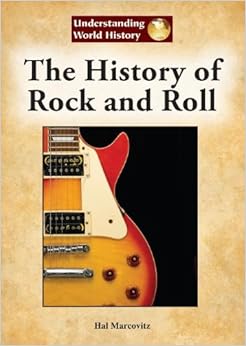
The Book: History of Rock and Roll by Hal Marcovitz
The Program: Music Club Teen Program
My library hosts a monthly teen music club. Each month highlights a specific genre or decade in music, allowing teens to both enjoy the music they love and hear music to which they’ve not been exposed. Marcovitz’s title can add a lot of context and interesting facts to a music club meeting, and I can see several of our die-hard musician teens checking it out for leisure reading.
The Book: Life During the Roman Empire by Stuart A. Kallen
The Program: Minute to Win It - Gladiator Style for Teens or School-age Kids
Even if they aren’t familiar with the Minute to Win It television show, lots of kids and teens are drawn to game competition programs. The quick pace of Minute to Win It tasks (ideas here) keeps everyone interested. I’d throw a Roman Gladiators-themed Minute to Win It program, complete with an introduction about all the perils facing those alive in Ancient Rome--info that can be provided by Kallen’s title. Togas optional.
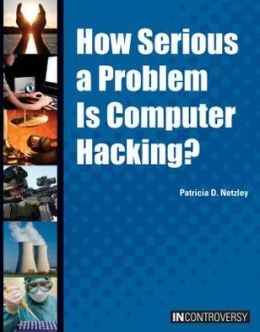
The Book: How Serious a Problem is Computer Hacking? by Patricia D. Netzley
The Program: CoderDojo for teens or school-age children
Make a STEM programming connection and help teens and kids learn to code by offering a CoderDojo at the library. I would either use Scratch or Code Academy to introduce basic coding skills, and I would include facts from Netzley’s title to give context to the potential for coding skills to do both great and destructive things. We would of course talk about using our coding powers for good.
In the classroom:
The Book: Thinking Critically: Social Networking by Andrea C. Nakaya
The Classroom Activity: Classroom debate on the school’s social media policies
The Books: Life in the North During the Civil War by Jim Whiting and Life in the South During the Civil War by Diane Yancey
The Classroom Activity: Understanding different points of view in history class; Using first-person accounts to further understanding
The Book: The Future of Renewable Energy series
The Classroom Activity: Persuasive writing about current topics in science and politics
Scholastic
In the public library:
The Book: Monster Bulldozers by Chris Bowman
The Program: Preschool Construction Party
Preschoolers love to build, and they love the equipment associated with construction. Monopolize on those interests by offering a construction party program. Share plenty of nonfiction with great images, like Bowman’s book, to work in some great construction vocabulary, then let the construction begin. You can set out all the library’s building materials and let kids engage as they please, or you can follow a more specific program plan.
The Book: Unexplained Mysteries series
The Program: Fact or Fiction? School-Age Trivia
Take advantage of the common fascination with the unexplained and myths to put together a trivia program for school-age kids. I’d create a long list of possible questions on a variety of topics using the Unexplained Mysteries series as well as some Ripley’s Believe it or Not! titles. During the program, I’d break kids into teams and have them compete to answer each question as fact or fiction. Prizes may result, but bragging rights are great, too.
The Book: You Wouldn’t Want to… series
The Program: Time Travel Adventures School-Age Program
Set up a carnival-style program with several different games and activities stations. Each station would represent a historical time period, with the games and activities gleaned from this popular nonfiction series. Think pyramid-building tasks and mammoth- and whale-hunting skills. I would make sure to display titles from the different historical time periods alongside the activities, because so many of these little history factoids inspire interest and leisure reading.
The Book: You Can Draw It! series
The Program: 12-Hour Comics Day for Teens or School-Age
I previously worked at a library that offered a variation on 24-Hour Comics Day, a worldwide event that encourages comic writers, artists, and fans to create a full 24-page comic in one day. I’d book the program room for an entire day and set out plenty of paper, pencils, pens, and coloring implements as well as tons of resources for crafting stories and drawing. The new titles in this You Can Draw It! series would assist comics creators in making comics around some of their favorite topics: mythical beings and cars.
In the classroom:
The Book: Blastoff! Readers - Exploring Countries series
The Classroom Activity: Using different text features to get all the information, in the school media center; Social studies country projects
The Book: Cornerstones of Freedom: Gun Control by Steve Otfinoski
The Classroom Activity: Persuasive writing or speaking assignments
The Book: Extremely Weird Animals series
The Classroom Activity: Animal research unit; Science unit on animal adaptation
The Book: Rookie Read-About Science: Acorn to Oak Tree by Lisa M. Herrington
The Classroom Activity: Science unit on plants or the life cycle; Arbor Day activities
~*~
How would you use these or other new nonfiction titles in your school or public library?
As supplementary material to the webcast, Cathy and I are both expanding on some of the topics we’re sharing with attendees. Head over to Cathy’s blog, The Nonfiction Detectives, to get some context for the nonfiction we’re seeing published for youth today. Cathy and her co-blogger, Louise Capizzo, are veritable experts on this topic, and they have lots of examples and food for thought for understanding the nonfiction available now.
I’m sharing some programming and classroom connections for titles mentioned in this webcast. I’ve connected a variety of titles from each of the three featured publishers to public library program options--so you can see how you can add these titles to your programming repertoire as well as your nonfiction stacks. Cathy shared some great info about how some of the titles can connect to classroom activities (I don’t go into as much detail here, as no one wants to see me pretend to know what school curriculum or a typical school day looks like in 2014).
So check out Cathy’s intro to the types of nonfiction available for libraries serving youth; read up on some programming and classroom connections for specific titles; accessing the archived webcast when it’s available; and get using more nonfiction in your library. I’d love to hear what you’re currently doing with nonfiction down in the comments.
Gale Cengage
In the public library:
The Program: Animation School-Age Program
Every librarian knows that Disney is big--and perhaps more so here in Missouri, Disney’s birthplace. So an animation program that has some Disney materials tie-ins will be popular. To create context around animation, I’d use Sheen’s book as well as the Disney Animated app (the 2013 Cybils winner for best app!). Then we’d get animating. If we have enough tablets, we could go high-tech and use animation apps for the iPad to create cartoons. Or we could go old-school and make flip book cartoons using markers and pads of sticky notes.
The Book: Science Behind Sports: Cycling by Stephen Currie
The Program: Sports and Simple Machines School-Age Program
Lots of sports equipment uses the principles of simple machines to help athletes perform well. In this program, we’d introduce the different types of simple machines and test them out at different stations. From there, we’d see either video clips or still images of athletes performing their sports, and then we’d try to identify how simple machines are at work. Currie’s title would add great context and examples to this activity. We would end with some hands-on, creative construction to try to imagine making our own sports equipment.
The Book: Teen Rights and Freedoms: Bullying by David M. Haugen
The Program: Teen Chat & Chew: Bullying Edition
My library regularly hosts Chat & Chews for teens. These programs take the form of a book discussion, although there is no assigned reading leading up to the event. Instead, teens gather to enjoy some snacks and talk books. Teens share what they’ve been reading, and then the library staffer shares book talks for titles on a theme. Bullying happens in a huge variety of young adult titles, and it’s a nearly universal experience, so it would make a great topic for book discussion in a Chat & Chew. Haugen’s title can also add great context to these discussions and instances of bullying in books, allowing teens to see facts and legislation about bullying.
The Book: Eye on Art: Public Art by Meryl Loonin
The Program: Graffiti Art for Teens
I’d share some examples of public art from Loonin’s book as well as some graffiti images (think Banksy) to get the graffiti juices flowing. From there, I’d designate a space--a bare wall covered with butcher paper, large glass windows--and hand out supplies for teens to create their own graffiti. We’d talk about keeping it appropriate if it’s going to be displayed, but I don’t see too many teens at a library program trying to get away with crude illustrations. I’d love to host this program in the lead-up to summer reading and have teens decorate on the summer reading theme.
In the classroom:
The Book: Hot Topics: Medical Marijuana by Kevin Hillstrom
The Classroom Activity: Supporting opinion with facts in both persuasive writing and speaking
The Book: At Issue: Drones by Gale
The Classroom Activity: Persuasive writing on a current event topic in social studies class
The Book: Opposing Viewpoints: Human Genetics by Louise Gerdes
The Classroom Activity: Understanding different points of view in biology class
ReferencePoint Press
In the public library:
The Book: Tattoos, Body Piercing, and Art by Kris Hirschmann
The Program: Henna Tattoos Teen Program
Many teens are drawn to tattoos for the artistic aspect, which means a henna tattoo program can be a huge draw. Hirschmann’s title allows the program to have just as much information as creativity. Share facts about tattoos as teens sketch their own designs and then get temporary henna tattoos.
The Book: History of Rock and Roll by Hal Marcovitz
The Program: Music Club Teen Program
My library hosts a monthly teen music club. Each month highlights a specific genre or decade in music, allowing teens to both enjoy the music they love and hear music to which they’ve not been exposed. Marcovitz’s title can add a lot of context and interesting facts to a music club meeting, and I can see several of our die-hard musician teens checking it out for leisure reading.
The Book: Life During the Roman Empire by Stuart A. Kallen
The Program: Minute to Win It - Gladiator Style for Teens or School-age Kids
Even if they aren’t familiar with the Minute to Win It television show, lots of kids and teens are drawn to game competition programs. The quick pace of Minute to Win It tasks (ideas here) keeps everyone interested. I’d throw a Roman Gladiators-themed Minute to Win It program, complete with an introduction about all the perils facing those alive in Ancient Rome--info that can be provided by Kallen’s title. Togas optional.
The Book: How Serious a Problem is Computer Hacking? by Patricia D. Netzley
The Program: CoderDojo for teens or school-age children
Make a STEM programming connection and help teens and kids learn to code by offering a CoderDojo at the library. I would either use Scratch or Code Academy to introduce basic coding skills, and I would include facts from Netzley’s title to give context to the potential for coding skills to do both great and destructive things. We would of course talk about using our coding powers for good.
In the classroom:
The Book: Thinking Critically: Social Networking by Andrea C. Nakaya
The Classroom Activity: Classroom debate on the school’s social media policies
The Books: Life in the North During the Civil War by Jim Whiting and Life in the South During the Civil War by Diane Yancey
The Classroom Activity: Understanding different points of view in history class; Using first-person accounts to further understanding
The Book: The Future of Renewable Energy series
The Classroom Activity: Persuasive writing about current topics in science and politics
Scholastic
In the public library:
The Book: Monster Bulldozers by Chris Bowman
The Program: Preschool Construction Party
Preschoolers love to build, and they love the equipment associated with construction. Monopolize on those interests by offering a construction party program. Share plenty of nonfiction with great images, like Bowman’s book, to work in some great construction vocabulary, then let the construction begin. You can set out all the library’s building materials and let kids engage as they please, or you can follow a more specific program plan.
The Book: Unexplained Mysteries series
The Program: Fact or Fiction? School-Age Trivia
Take advantage of the common fascination with the unexplained and myths to put together a trivia program for school-age kids. I’d create a long list of possible questions on a variety of topics using the Unexplained Mysteries series as well as some Ripley’s Believe it or Not! titles. During the program, I’d break kids into teams and have them compete to answer each question as fact or fiction. Prizes may result, but bragging rights are great, too.
The Book: You Wouldn’t Want to… series
The Program: Time Travel Adventures School-Age Program
Set up a carnival-style program with several different games and activities stations. Each station would represent a historical time period, with the games and activities gleaned from this popular nonfiction series. Think pyramid-building tasks and mammoth- and whale-hunting skills. I would make sure to display titles from the different historical time periods alongside the activities, because so many of these little history factoids inspire interest and leisure reading.
The Book: You Can Draw It! series
The Program: 12-Hour Comics Day for Teens or School-Age
I previously worked at a library that offered a variation on 24-Hour Comics Day, a worldwide event that encourages comic writers, artists, and fans to create a full 24-page comic in one day. I’d book the program room for an entire day and set out plenty of paper, pencils, pens, and coloring implements as well as tons of resources for crafting stories and drawing. The new titles in this You Can Draw It! series would assist comics creators in making comics around some of their favorite topics: mythical beings and cars.
In the classroom:
The Book: Blastoff! Readers - Exploring Countries series
The Classroom Activity: Using different text features to get all the information, in the school media center; Social studies country projects
The Book: Cornerstones of Freedom: Gun Control by Steve Otfinoski
The Classroom Activity: Persuasive writing or speaking assignments
The Book: Extremely Weird Animals series
The Classroom Activity: Animal research unit; Science unit on animal adaptation
The Book: Rookie Read-About Science: Acorn to Oak Tree by Lisa M. Herrington
The Classroom Activity: Science unit on plants or the life cycle; Arbor Day activities
~*~
How would you use these or other new nonfiction titles in your school or public library?
Wednesday, February 19, 2014
Upcoming SLJ Webcast: Using Nonfiction in the Library, the Classroom and at Home
Attention librarians looking to find out about new and upcoming nonfiction releases! School librarian Cathy Potter (fresh off the Sibert Committee) and I will be moderating a webcast for School Library Journal next week on this very topic. You can register for this FREE event by clicking here. Full details follow.Using Nonfiction in the Library, the Classroom and at Home
Wednesday, February 26, 2014, 3-4 p.m. ETCompelling nonfiction can have a profound impact on young readers, from helping develop personal interests to supporting academic research needs. Find out about new and upcoming nonfiction titles from Gale (part of Cengage Learning), Scholastic, and ReferencePoint Press, for beginning readers and elementary children up through high school students, all with strong applications for both school and public libraries.
This free webcast, co-moderated by a school librarian and public library children’s librarian, will include ideas for connecting many of these new titles to Common Core Standards and educational curriculums as well as public library programming. From persuasive writing connections and debate topics to programs about sports science and designing tattoos, new nonfiction titles have plenty to offer to librarians serving youth.
Panelists
Judy Galens - Content Developer, Gale (part ot Cengage Learning) Judy Galens has been involved in reference publishing for twenty-three years. In her current role as content developer with Gale, part of Cengage Learning, she oversees new title development for Greenhaven Press and Lucent Books as well as shaping content for other print, database, and digital archive products. In a previous role, Judy spent six years as an acquisitions editor for Greenhaven Press, immersed in the world of nonfiction reference works aimed at high school and middle school students.Jen Wilson - Director of Marketing, Scholastic Library Publishing Jen Wilson has worked with Scholastic for more than ten years, having started as a reference editor with Grolier in 2003. Before transitioning to the Literacy Initiatives marketing team in 2007, Jen served as an acquisitions editor with Children’s Press/Franklin Watts. After 6 years with the Literacy Initiatives team, Jen transitioned to SLP where she’s been charged with rebranding legacy products, leading aggressive, multi-faceted marketing strategies for both new print and digital products and supporting both the national field reps and the insides sales team. Jen brings a creative vision, and a passion for developing lifelong learners and ensuring equitable access to content for all children to her new role with Scholastic Library Publishing.
Chris Nasso - Director of Marketing, ReferencePoint Press Chris Nasso is the marketing director for ReferencePoint Press, a company founded in 2007 to publish high-quality nonfiction titles for students in grades 6-12. Before joining ReferencePoint Press, Chris was the publisher of Greenhaven Press, Lucent Books, and KidHaven Press from 2006 through 2011. Prior to that, Chris was with Gale (now part of Cengage Learning) for many years, working in new product development where she conceptualized, created, and helped to market new print and electronic reference products designed for middle school and high school students.
Moderators
Cathy Potter - School Librarian, Falmouth (Maine) Elementary School Cathy Potter is the school librarian at Falmouth Elementary School in Falmouth, ME. She is the co-author of The Nonfiction Detectives blog and reviews apps for School Library Journal. Cathy was a member of the 2014 Sibert Medal Committee.Amy Koester - Children’s Librarian, St. Charles (Mo.) City-County Library District Amy Koester is the children’s librarian at the Corporate Parkway Branch of St. Charles (Mo.) City-County Library District. She blogs at The Show Me Librarian and wrote SLJ’s feature on STEAM programming and services. She was a member of the 2014 Newbery Committee.
Can’t make it on February 26th? No problem! Register now and you will get an email reminder from School Library Journal post-live event when the webcast is archived and available for on-demand viewing at your convenience!
Wednesday, January 15, 2014
Unprogramming: Recipes for Successful Programming with School-Age Children & Teens
Today, Marge Loch-Wouters and I are presenting on the topic of unprogramming as part of the two-day Wild Wisconsin Winter Web Conference. In conjunction with that webinar, I want to prompt you, dear reader, to think about unprogramming and to point you toward some resources to help you make it work for you at your library.
Marge and I have also been curating a Pinterest board rife with unprogramming ideas, resources, and program plans. Check it out and get unprogramming!
The complete slides for Marge and my presentation are below, and the archived webinar is accessible here. Enjoy, and sound off with any questions or comments!
To unprogram, ask yourself...
How does what I'm doing in my program connect kids and teens to:
- a book or books
- an author or illustrator
- the library and our services
- some aspect of kids' and teens' interests that can connect back to the library?
That's the key question for the key part of unprogramming: the library connection. The answer to this question can be incredibly varied--which is great, because that means your unprogramming options are pretty near infinite. You can aim to connect kids to award-winning books. You can aim to connect teens with your graphic novel collections. You can connect kids to their fascination of disasters and draw resources from throughout the collection. Possibilities for a starting point to unprogram are endless, and your programs are guaranteed to fit library goals when you start with this question.
The unprogramming recipe...
Marge is best at conveying the simplicity that is unprogramming, and so I will defer to her wording here.
So you want to unprogram...
Hooray! Your unprograms can look however you want them to and cover any topic you (and your kid and teen customers) choose. In the unprogramming webinar today, I am talking through a few successful unprograms we've offered here at my library. You can get full program write-ups for these unprograms at the following links:
If you want to share your own unprogramming experiences...
We want to hear about them! Share your successes by using #unprogramming on Twitter.
Subscribe to:
Posts (Atom)