Showing posts with label craft. Show all posts

Sunday, October 4, 2015

Star Wars Sticky Note Mosaic Murals

We celebrated Star Wars at my library this weekend. It was my first time being immediately involved in a big Star Wars program since my spring break programs in my former job, and while my current library has celebrated Star Wars for a few years now, the goal is to always add some new elements to the festivities. Of course we had some of the expected: trivia; a light saber craft; and a seek-and-find scavenger hunt. We also repeated using the green screen in our youth Digital Media Lab to take family photos and insert them into Star Wars backgrounds.

What was totally new this year, however, was the main activity taking place in the BOOMbox, our STEAM space: Sticky Note Mosaic Murals.

My colleague Amy Holcomb, who runs the BOOMbox, emailed me a few weeks back with a news article about a paper company, Viking Direct, that created such murals on their office walls. I looked at those pictures (and looked harder), and from there I created a 25-by-25 sticky note grid template in Excel, on which I designed Darth Vader and Yoda images. The individual grid templates are pictured below if you're interested.


To make this activity work, one of my program assistants broke each 25-by-25 mural into 5-by-5 squares; these squares each had a designated spot on a grid, allowing a child/teen to take one grid square "map," gather their requisite sticky notes, and place their sticky note mosaic squares into the proper section of the full grid, which was measured out with string and tape on the glass BOOMbox windows. We had a grid on one window for the Light Side of the Force, and another on the opposite window for the Dark Side. The grid square "maps" are linked here if you'd like to use them to do this collaborative mosaic wall activity yourself (Light Side link; Dark Side link).

To create both the Vader and Yoda mosaic murals, you will need:
  • 7.5'x7.5' wall or window space for EACH mural
  • string, tape, and a measuring device to mark out your full grid, as well as paper or sticky notes to label the rows and columns (picture of the grid set-up below)
  • Sticky notes for Yoda: 295 blue; 219 green; 54 yellow; 34 orange; 16 gray; 7 black
  • Sticky notes for Vader: 304 black; 243 blue; 78 gray

As kids and teens came into the BOOMbox for the activity, they could choose if they wanted to help with the Light Side or the Dark Side. From there, we gave them a grid square map that would be within their reach--that is, lower squares for shorter, younger kids, and higher squares for taller teens. We were able to help explain the map-to-wall process as needed, but most kids jumped into the activity with a decent understanding of how to read their maps and add to the wall.

Our Vader mosaic mural in progress.
Note: because of the height at which our windows begin, I chopped the bottom row off of both grids for our particular activity. Were we to repeat this activity on a bare wall, however, I'd start with the bottom of the grid touching the carpet and build up from there. I just didn't want the grid to get too high for our activity--no ladders allowed.

Kids really liked this activity, and their caregivers got pretty excited about it, too. It was great fun to overhear conversations about what kids thought the murals would be while they were in early stages--each mural got pieced together one square at a time, making it a cool puzzle to solve.

Once our mosaic murals were completed, kids were welcome to come in the space to admire them and to create origami Yodas under the gaze of sticky note Yoda himself. Quite a fun way to weave our current BOOMbox theme--textiles--into our larger Star Wars Extravaganza!

Have you done any of these cool sticky note murals before? Care to share your plans?


Wednesday, July 16, 2014

Constellation Guidebooks on The Library as Incubator Project

Today I'm over on The Library as Incubator Project with my final post in my guest Show Me STEAM series. Have you been looking for ways to incorporate a bookmaking activity into a program? Have you ever thought of giving that book a STEAM purpose--say, to guide in stargazing? I'm sharing a constellation guidebook STEAM activity over on The Library as Incubator Project, and I hope you'll head over there to check it out.


Thanks so much to the great moving and shaking folks at The Library as Incubator Project for allowing me to be part of their outstanding blog these past six months. I've loved getting to share these programs and activities with a wider audience, especially one as cool as the LAIP's readership.


Tuesday, July 8, 2014

Origami Hour

When it comes to summer programming, I like to try to strike a balance between featured performers, exciting standalone programs, special events (like after-hours forts or a movie matinee), and chill, laid-back options. Funnily enough, it's the chill, laid-back programs that tend to require the most thought on my part--I want to choose a topic that will be interesting enough to get people into the library, but that's also something they can generally do on their own with supervision from me. For June, I settled on an origami program. Here's what we did:

Origami Hour

Supplies:
  • origami paper
  • printer paper in different colors
  • all the origami books in the branch (736.982)
  • print-outs of a few easy origami creations, which I got from origami-fun.com
  • plenty of table space
  • scissors, tape, and crayons (I realize that traditional origami doesn't use these tools, but who am I to stifle creative juices when they start flowing?)

Setup:
     I did not require registration for this program, so I only had a rough estimate of how many people would show up. I opened the doors right on the top of the hour, and a steady stream of kids came in. I shared some basic information--what is origami; I asked who had ever done origami--before explaining that the print-outs and books were there for instruction, and that kids could create as much of whatever they wanted. I emphasized that I would be circulating around the room to see if anyone needed assistance, and then I let kids go to it.
     As I talked to the 40-ish attendees, I found out that about two-thirds had see the program on our events calendar and come to the library specifically for origami. The other third were already in the library for other reasons when the program began, so they came to check it out. That's the exact type of scenario I want to promote for library programs, especially the chill ones: everyone can come and enjoy an activity regardless of whether it was on their daily schedule or not. Kids eager to slightly detour their library activities to take in a low-key program signals successful implementation.

The Creations:
     I told attendees that they were welcome to take home anything they created, but if they wanted to leave anything at the library, I would display them in the display cases we usually reserve for our Lego Club creations. By the end of the program, I had a basket full of origami creations to display--creations that really ran the gamut from traditional (swans) to timely (Origami Yoda & Darth Paper). Take a look for yourself to see some of the excellent origami work.


Wednesday, June 18, 2014

Wednesday, May 21, 2014

Painting with Forces on the Library as Incubator Project

Have you been looking for some new ways to paint with your library kiddos? Then head over to The Library as Incubator Project, where my post today deals with painting with forces. Help your painters get creative with the help of gravity and magnetism!

Head over to LAIP to get full details on how to paint using these fundamental forces.


Wednesday, April 23, 2014

Wednesday, March 26, 2014

STEM Invades Art Aliens on The Library As Incubator Project

I'm over on The Library As Incubator Project website today to talk about hacking the STEM potential in a relatively straightforward arts program: creating aliens out of recycled materials and craft supplies.

I'm thrilled to be able to share some strategies for turning traditional arts and crafts programs into uber-engaging STEAM programs. Head over to LAIP to get full details on how you can have this program invade your library!


Wednesday, February 26, 2014

Show Me STEAM on The Library As Incubator Project

I am extremely excited to be sharing my first post today on The Library as Incubator Project!


A while back, The Library as Incubator Project (LAIP) contacted me to see if I'd be interested in regularly contributing to their blog. They were looking for a STEAM perspective--specifically, programming ideas and examples for integrating STEM concepts into those "traditional" arts and crafts programs that take place at so many libraries. I LOVE the LAIP and was thrilled to say "yes."

My first post serves as something of an introduction to this idea of harnessing the STEM potential in arts and crafts programs. It's meant to serve as an introduction to the idea that there are STEM applications for arts & crafts activities. Readers of The Show Me Librarian are likely already familiar with this concept in theory, but fret not: from here on out, my monthly posts on LAIP will each highlight a specific program, ready to replicate in your library. These will be programs that at first glance look like straight arts and crafts programs, but which actually have tons of avenues for adding in STEM concepts, too.

I hope you'll head over to LAIP to read my first post for them. Then stick around and browse all of their great content. It's a gold mine of ideas over there!


Friday, February 14, 2014

Fingerprint Stamp Art & Valentine Cards: A Maker Craft Program

I've had success in years past with offering craft programs where kids can make Valentine's Day cards, and so I offer a program on that premise every February. I like to tweak and add to these sorts of open-ended, crafty maker programs, though, so I am always on the lookout for new elements to incorporate. For this year's program, I pulled a bunch of our great Ed Emberley fingerprint drawing and regular drawing books to provide some artistic inspiration.

The Supplies:
  • lots of paper, both card stock, construction, and printer
  • scissors
  • glue sticks
  • markers
  • pencils
  • washable ink pads in a variety of colors
  • baby wipes (to get ink off fingers)
  • extra fine point permanent markers

The Premise:
     Create valentines or artwork using the supplies provided. Ed Emberley titles provide inspiration and how-tis.

The Results:
     Were outstanding! There was a solid variety of creations, ranging from traditional heart-shaped valentines and pop-up cards to fingerprint designs and even occasional poetry. Check out the gallery of some of the final products:


Roses are red / Violets are blue / I hate poetry / I love bacon and you!

I had around 20 kids in this program creating art, and they were all particularly talkative and eager to talk about their work. I love these informal conversations that take place while hands are busy doing other tasks, and I'm always able to get the conversation focused on books. Since this particular program was centered around Valentine's Day, we talked about books we love. I stuck a large sticky note on the wall to encourage kids to share the books they love, and several of them obliged.


Open-ended creation and talking books: a great way to spend an afternoon at the library.


Friday, September 6, 2013

On Process Art for Preschoolers

My preschool story times don't usually have a craft component anymore. That has more to do with the types of preschool programs I do: outreach, where it's a large group story time with no space or time for craft; preschool science, where we do hands-on experiments and activities after sharing a story; and Milk & Cookies Story Morning, where our post-story time activity is free play time. Basically, the only opportunities I have to offer a craft in a preschool story time program are when I'm offering a special one-off program or filling in for a colleague on vacation.

And in those instances, I am all about the process art for preschoolers.

A simple breakdown of "process art": an open-ended art activity that focuses primarily on having the children involved in the process of creation. Process art is an alternative to "product art," wherein the focus is on each child creating the same basic craft modeled after a sample. As the names suggest, one is about the creative process, and one is about the final product.

I love process art for preschoolers for a number of reasons. First, studies and experts have proclaimed that process art is the most developmentally appropriate art activity for preschool-age children. These young children are building their background knowledge of everything they encounter, even craft supplies. Through process art, children get to really explore what paint is, what it does, how it feels, how it works, and what they can do with it. They can experiment with how colors interact, what happens when crayon and paint mix on the page, how to place paint where they want it on the page. Process art allows preschoolers to gain hands-on knowledge of how art works.

Process art also more deeply involves preschoolers in the creative process, giving them more pride in what they create. Basically, preschoolers don't care if the butterflies they make looks like the librarian's butterflies. They are more involved in creation if they get to decide where to place the spots or stripes, what colors to make the wings. Allowing children to create according to their own visions provides ample opportunities for discussion--why did you use those colors?--and the very personal finished product means something to the child. He or she made it in its entirety, which is a definite matter of pride. That's opposed to product art activities in which preschoolers often need adult assistance to make the cut-and-paste replicas of a sample craft. Making a copy just isn't as engaging. Process art is much more personal.

I will quickly note here that, sometimes, caregivers do care what their children's artwork looks like, and they prefer a picture that is obviously a ladybug to hang on the fridge than a red blob. These caregivers prefer product art for the wrong reasons: aesthetics over engagement. I've found that a few simple statements shared during craft time help caregivers see the whys of process art, and it makes them appreciate their children's creations much more. We share early literacy information for caregivers' benefits, and sharing similar information on art activities isn't that different.

Process art is also great from a story time provider's standpoint. Process art means less pre-program preparation, as activities don't require precise, pre-cut supplies and other specific items. Process art means setting out a variety of supplies and sharing loose parameters for free creation. One recent example from a program I led involved painting ice cream cones. With white paper, brown paper for cones, glue sticks, and paint on the table, each child could paste a cone to the paper and then paint an ice cream cone that suited their imaginations. They all looked very different, and each child had wonderful things to say about what flavors they had painted on their cones. The parameters were basic--create an ice cream cone--but the rest of the craft was open-ended, allowing children to engage in creating an ice cream cone that they saw in their heads.

While my library still offers product art activities for preschoolers every once in a while, for the most part my colleagues have transitioned to using process art in their programs. The creations have been diverse, although I think the hit so far has been painting with mud for a springtime story time; what's more engaging for a child, to paint a picture of mud or a picture with mud? Ask yourself that type of question for your crafts, and you'll come up with process art most of the time.


Tuesday, February 12, 2013

A Valentine Workshop: or, simple maker spaces for kids

A valentine-maker at work.
I subscribe to the perspective that we youth services folks have been living out the maker space movement since before it was cool existed as such. We've crafted with our kids since we first branched out from just offering story time programs, and now that crafting fits into the larger, more publicized Maker Movement. So keep this in mind: while it may seem as though I'm just offering you details of my low-tech, cut-and-paste-and-paint-and-stick Valentine Workshop, I'm really showing you how easy it is to turn your own youth program room into a maker space for an hour.

Every year, I love to offer an informal program at which my library kiddos can make valentines. My valentine programs attract kids who like crafts; kids who want to give their friends and classmates something homemade, but lack supplies at home; and kids who just happen to be wandering around the library after school, looking for something to do. My preparation process is simple and straightforward:
Pretty paper!
  1. hit the craft store a few days before the program (I picked up a ton of stick-on foam hearts, stars, and flowers, as well as some great patterned scrapbook paper, all very discounted);
  2. grab red and pink paper from our equipment room (a.k.a. my office) as well as anything else that might fit on a valentine (googly eyes!);
  3. set up tables and chairs in the program room with markers, paint daubers, scissors, and glue at each station;
  4. open the program room doors and let the creativity flow.

I find a messy process often
begets lovely results.
I had about 25 people come through this year's one-hour Valentine Workshop. Yes, that's smaller than my more "programmed" programs tend to be, but the smaller group size meant I was able to circulate the room and talk to every child about Valentine's Day, their creations, and what they've been reading. As I wandered about the room talking to the children, I also got a sneak peek into their processes. One girl was methodically making matching valentines for each of her classmates; another child was strategically placing stick-on foam stars amidst her poems for her friends; and a boy made valentines that doubled as bookmarks. The younger kids experimented with how much glue it takes to get a googly eye to stick (not as much as they think it takes), and then they left with at least one valentine for a family member or friend. The products of our hour were varied, and invariably the makers were proud of what they'd made.

They always assume I'm married.
When it comes down to it, maker spaces for kids are, in my experience, equal parts about the freedom to build and having a forum to share with others. That's the exact sort of environment I seek to create in my low-tech maker spaces: plenty of supplies for unrestrained creativity, space and time to make things, and companions who are interested in what they're doing. My kids really enjoy the opportunity to relax, get their hands dirty, and make things without rigid instructions. I even got my very own valentines at the end of it.

How are you incorporating maker spaces into your youth programming? Have you given the maker movement much thought?


Friday, December 21, 2012

Gingerbread House Workshop: A Holiday STEAM Program

We all know how much I enjoy adding STEM aspects to my craft programs--to offer STEAM programs for the children who visit my library. This week we were able to offer a five-hour drop-in Gingerbread House Workshop for the kiddos. It was flexible, so families with varying schedules could attend as it suited them; it was festive and helped to celebrate the holiday season; and it was, at its core, both an engineering and an art activity.

Remember how I mentioned rinsing out all those milk cartons the other day? Those milk cartons served as the framework for the children's gingerbread houses. A colleague and I created plates with all the major building materials: milk carton frame, graham cracker bricks, and embellishments in the form of Necco wafers, candy corn, pretzels, peppermints, mini marshmallows, and licorice bites. These items were ready for gingerbread house assembly on all of our six covered tables. The construction glue--white icing--was set out on every table within easy reach. All these supplies may sound expensive, but the program ended up coming in at $0.74 per participant.

This program worked remarkably well for a few reasons. First of all, because we had the program room open for five hours, we never had an overwhelming crowd--people came as it fit their schedules. Thus each child was able to get individual attention and praise from a library staff member while they constructing a gingerbread house. We were even able to have some great book chats during our slower stretches. Our final attendance count was 112; a high number for our program room, to be sure, but when spread out over five hours, very manageable.

The program also worked well because children could succeed in making their creations regardless of their overall skill levels. We had fifth and sixth graders taking their time to make intricate houses, and we had two-year-olds focusing quite hard to wield the icing knives properly. Children at all ability levels were able to make their very own gingerbread houses, a point of pride.

Additionally, this program is a great example of a basic STEAM program--the engineering and art aspects blend wonderfully. Children engaged their minds to figure out how to construct stable structures (the STEM side), and then they were able to add the sweet and savory embellishments to serve whatever purposes they chose (the creative, art-y side). Both sides of the brain were engaged in creating these gingerbread houses, and all the children were really cognizant of was how much fun they were having.

Clean-up was very easy for this program, especially considering its overall stickiness and the large scale. We wrapped all our leftover materials in our disposable tablecloths at the end of the five hours, and after throwing them away, all we had left was a bit of vacuuming crumbs off the floor. We did have wet wipes and paper towels in the program--after all, as every children's librarian knows, if the potential for stickiness exists, at least 95% of the children will become sticky by activity's end. A little bit of sticky was a small price to pay for such an engaging, enjoyable program.

Do you create and decorate gingerbread houses at your library? Had you ever thought of the program as a STEAM program?


Monday, September 10, 2012

Art Aliens Invade! or, How a craft program accidentally becomes a STEAM program


The assortment of things shown below this paragraph may look to you like nothing but space junk. Last week at the library, however, these random recycled bits made up our craft supplies for Art Attacks! The scenario: aliens are landing at the library. The mission: use the materials on hand to create models of aliens.


After my brief introduction of the scenario, the open art time began. School-age children and a few younger siblings scoured the supply tables to find the perfect pieces for their alien creations. Most of the craft supplies were recycled things--tin cans, plastic bottle caps, film canisters, and the like. There's this little shop in my county called Leftovers, and they have rows and rows of donated recycled things that are perfect for craft supplies; a brown paper grocery sack full of items is $8. I added some chenille sticks, pom poms, and googly eyes from our library craft cupboard, and then the alien parts tables were ready.

Attendees spent about 45 minutes assembling their various aliens. Craft glue didn't work on all of the materials, so a teen volunteer and I broke out the hot glue guns--that did the trick. Pretty soon aliens were taking shape left and right, with some children making multiple specimens while others focused their full attention on a single creature.


I noticed that the kiddos were putting the finishing touches on their creatures with about 10 minutes still left in the program--and not wanting the program to go short when everyone was so engrossed, I asked everyone to sit in a circle with their creations. The children introduced their alien/s, and then I started asking some broad questions about the aliens' anatomies. How did the aliens move around? Did they have feet? Most did, but two hovered without feet. How did the aliens navigate the world around them? All the creatures had eyes (such is the appeal of googly eyes in craft programs), but there were only a smattering of noses and ears.

What ensued for the final few minutes of our program, then, was a discussion about how body parts have functions--and by looking at what parts make up a creature like a dolphin or a cat or even an alien, you can tell things about how and where that creature lives. Through this discussion, we "discovered" that all our aliens came from only two planets: one where sound was very faint so the creatures' ears needed to be large or antenna-like, and one similar to Earth but with more hovering. And that's how this simple, labor-light program ended up having a really strong science bent. Not only did children create aliens, they got to reason through why their aliens looked the way they did.

Art Attacks! turned out to be a full-blown STEAM program--STEM plus "A" for arts--a term I first heard at ALA Annual in Anaheim. After seeing the huge success of this program, I'm going to think about more ways I can deliberately incorporate free art/creation time with simple STEM concepts in order to offer more STEAM programs at my branch.

Monday, July 2, 2012

Crafting the Red, White, & Blue

I've seen lots of kids in the library wearing their American flag t-shirts lately. We've had a run on books about parades and Independence Day, and I've overheard at least one conversation about fireworks. Kids love the Fourth of July--have you noticed? There's something about being out of school, staying up to enjoy the long summer days, and the promise of pools and popsicles.

I try to notice when kids at the library are really into something. And then I work it into my programming. This week: patriotic crafts!

Patriotic Paper Lanterns
The take-home craft at my branch for July is a patriotic paper lantern. It's an easily adaptable craft, and it requires minimal supplies. Our craft packets, which customers can pick up as they check out their materials, include a full sheet of paper (in red, white, or blue), two small sheets of stars (also in red, white, and/or blue), and a sheet of instructions. All of the cutting and pasting happens at home. These crafts have been flying off the shelves. Must be because the demo is so cute! My colleague did a fantastic job of selecting a fun, simple, skills-promoting craft and making it look beyond appealing to everyone passing the library's circulation desk.

Patriotic Spinners
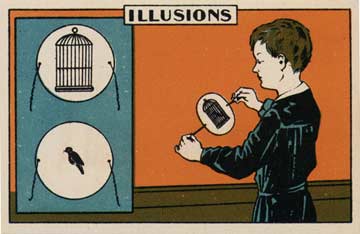
Our second crafternoon of the summer is a patriotic spinner. Didn't you love playing with spinners when you were young? You know, the kind with a bird on one side and a birdcage on the other, and when the spinner was spinning the bird was magically in the birdcage? I adapted that classic spinner to fit a patriotic theme for our walk-in craft. Our craft tables will be supplied with the spinner templates printed on cardstock; crayons for coloring them; scissors for cutting them out; glue sticks for pasting the two sides together; hole punches for punching holes; and yarn for creating the spinner handles. The goal for these crafternoons is to provide a craft that will engage and delight all ages of kids, from preschool through early teens. When you consider the relative simplicity of the craft combined with the sheer amount of enjoyment my staff have gotten from playing with my demo spinner, I would guess we have a winner.

Friday, June 29, 2012

Mad Hatter's Tea Party

A child made this hat
specifically for the program!
Alice in Wonderland always seems to be a perennial favorite with kids. It's got fun, nonsense, book-to-movie goodness (both cartoon and live action!), rhymes, imagination, curiosity...all things, in my experience working with children, that draw kids to a story. So why not, I figured, offer an Alice in Wonderland-themed program for the summer preschool and school-age crowd? Our own golden afternoon, as it were?

Why not, indeed. It was certainly apparent that kids were interested in a Mad Hatter's Tea Party--within about 30 hours of registration opening for the initial program, our roster was full with a substantial waiting list. I opted to open up a second session of the program on the same day; same snacks, same games and craft, but twice the happy attendees. This decision ended up being a good call, as the second session filled up pretty quickly, too. The high demand filled both the programs, which made them extremely high-energy and lots of fun. It's an easily replicable and adaptable program plan:

Mad Hatter's Tea Party

I had the tea party drinks and snack components all set up at tables before children arrived. Our library has a stash of old china saucers, and I used these as serving dishes for watermelon and a variety of cookies. I pre-portioned everything for easier handling by attendees of all ages. I asked a few moms who came in the room to help me pour the drinks--Sunny Delight, in a variety of flavors--and within a few minutes of starting the tables of funnily be-hatted kids were all achatter. Some came with friends, some on their own, so I encouraged them to turn to a neighbor to say "How do you do?" and shake hands (get it?!). I then prompted them to share what they've been reading for summer reading. As I went around each table playing hostess, I was able to greet everyone and get an update on SRP progress.

After about 15 minutes of snacks and chat, all of the stragglers had arrived, so we segued into some Alice-themed nonsense. We had tongue twister races, and lots of kids offered their favorite tongue twisters for group trial. I also recited my favorite Alice poem ("How doth the little crocodile"), which they seemed to get a kick out of.

Then, games! We had a caucus race (musical chairs, albeit played with sit-upon cushions instead of chairs for easier use with such a large number of kids), and I used an Alice soundtrack to source the game music. Next we played The Queen of Hearts Says (Simon Says), which needed a bit of initial explaining for some of the youngest program attendees. A few of them struggled with the concept of the game, so in my second program I opted to let an older girl play the Queen of Hearts. Lots of the girls giggled at how bad I am at the game (which I was not faking), and once Miss Amy was sitting out, not winning didn't seem quite as big a deal.

With about 20 minutes left in the hour-long program, we all moved back to our tables for a craft. I had the children clear their tables in exchange for their craft supplies--a tip I learned working meals at summer camp--so the tables were an open canvas for craft creativity. Our mission: to create an army of mome raths. I adapted the linked craft to use rainbow-colored popsicle sticks (instead of painting our own), and we also used pipe cleaners in place of feathers to cut down on a sticky feather mess. All ages of the children got really into the creation of their mome raths--some made theirs hats, some appendages, some clothing... I always love how the simplest crafts promote the most variety of creations among children.

As the kids finished up their mome raths, I thanked them very much for coming to the program. Everyone who left the Mad Hatter's Tea Party was all smiles. And there's nothing curious about that.