Showing posts with label early literacy. Show all posts

Monday, January 18, 2016

Let's Talk! Babies Need Words Every Day - The Blog Tour

Hello, friends and fellow literacy warriors! I'm pleased as punch to be participating in Day 1 of the Babies Need Words Every Day Blog Tour.

In case you'd like a refresher, Babies Need Words Every Day is an ALSC initiative with the impetus to help libraries help families to reduce the 30 million word gap--that is, the massive gap in the number of words that a typical child from a lower socio-economic status (or SES) household hears as compared to a typical child in a higher SES*. And ALSC, with the hard work of their Early Childhood Programs & Services Committee, created 8 beautiful posters (in both English and Spanish) that cheerily invite parents with young children to engage in talking, reading, singing, and playing that will, as a result, facilitate a greater sharing of words with their children.

It's my pleasure today to talk about one of the posters focused on "Talk." And boy am I happy to do so, because my favorite early literacy messages of all time--in storytimes, in parent engagement programs, and to early childhood educators--are about all of the amazing things we can help children accomplish simply by talking to and with them. When we talk to and with children, they hear and learn new words. They are introduced to new concepts. They become able to piece together facts that they understand separately to form a fuller picture of the world they inhabit. They become able to make analogies to understand both concrete and abstract concepts. And they develop the tools to express themselves. All such major milestones in literacy development.

Did you know that "talk" doesn't necessarily get a huge amount of play in today's early childhood education landscape? A recent article in The Atlantic talked about the differences between typical preschool programs and the really high-quality ones--and illustrated that high-quality interactions do not have to be synonymous with high-cost programs. Whereas many programs focus on learning words for the sake of learning words, the best embrace the learning that comes from free talking and conversation:
"The real focus in the preschool years should be not just on vocabulary and reading, but on talking and listening. We forget how vital spontaneous, unstructured conversation is to young children’s understanding. By talking with adults, and one another, they pick up information. They learn how things work. They solve puzzles that trouble them." -Erika Christakis
So when I talk to caregivers about the importance of talk, I emphasize talking for the sake of learning--conversation for the sake of concept-building. Parents, especially those with very young, pre-talking children, can feel awkward talking to their little ones. Many think it feels silly to chatter on with and ask questions of their infant, especially anywhere in public. But it's so beneficial! I am always emphasizing the simple, language-building ways that a parent can talk with their child. That's one reason why I love the koala poster you see here: it's got a simple, adaptable rhyme. When a parent receives or sees this poster, they can learn the rhyme: "Way up high in the apple tree / Two little apples smiled at me / I shook that tree as hard as I could / Down came the apples / Mmmmmm--were they good!" That's a fun, simple rhyme to get a conversation started, say, at the grocery store. But it's also a template for more conversations. Substitute apples for your child's favorite food when you say the rhyme. Talk about things that grow on trees and where other foods come from. Talk about why things fall down. TALK!

I encourage you to encourage the caregivers in your library and your community in the same ways. Print off the posters that you think will most appeal to your community (who wouldn't love the gorgeous artwork by Il Sung Na??). Hang them in your library, or hand them out at storytimes. At the very least, challenge yourself to have a conversation with caregivers about each of the practices emphasized by Babies Need Words Every Day.

Families need library workers who know that babies need words every day. Be that library worker! Check out all of the stops on the Babies Need Words Every Day Blog Tour for lots of resources and ideas.

How do you talk about talk in your library?


*Yes, it's true that bridging this gap alone will likely not completely solve all the problems--those 30 million fewer words are likely a correlation to a lower kindergarten readiness and reading achievement, not a causation. But study after study shows that efforts to increase early literacy through talking/vocabulary/background knowledge are, in fact, successful. The way I see it, Babies Need Words Every Day is an awfully impactful, low-effort tool to help us do just that.

Monday, May 4, 2015

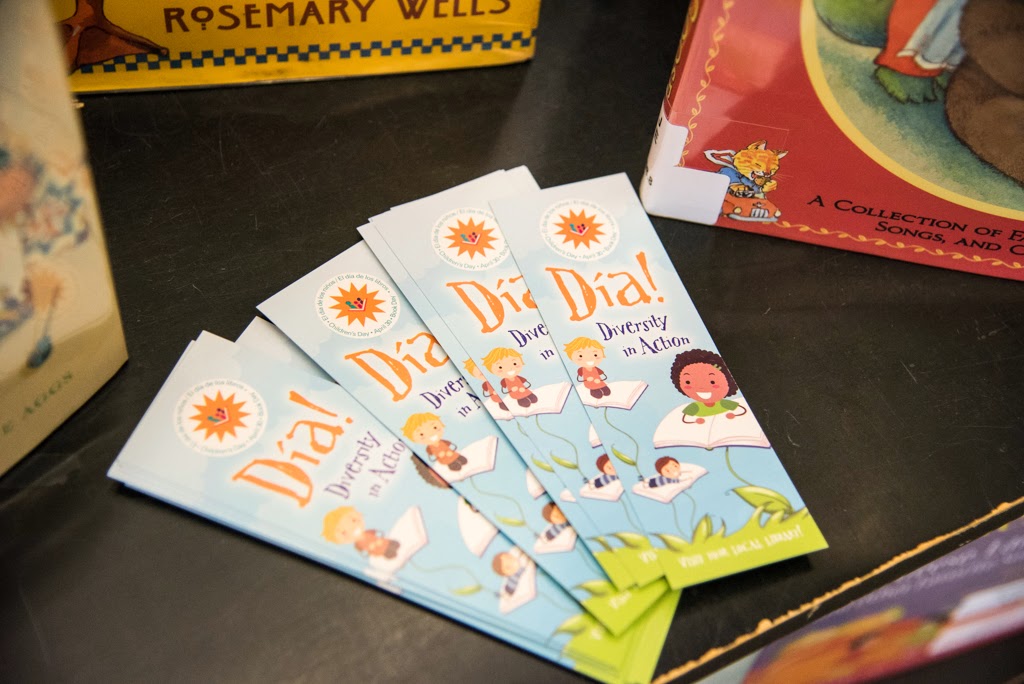
Rhymes Around the World: A Día Celebration

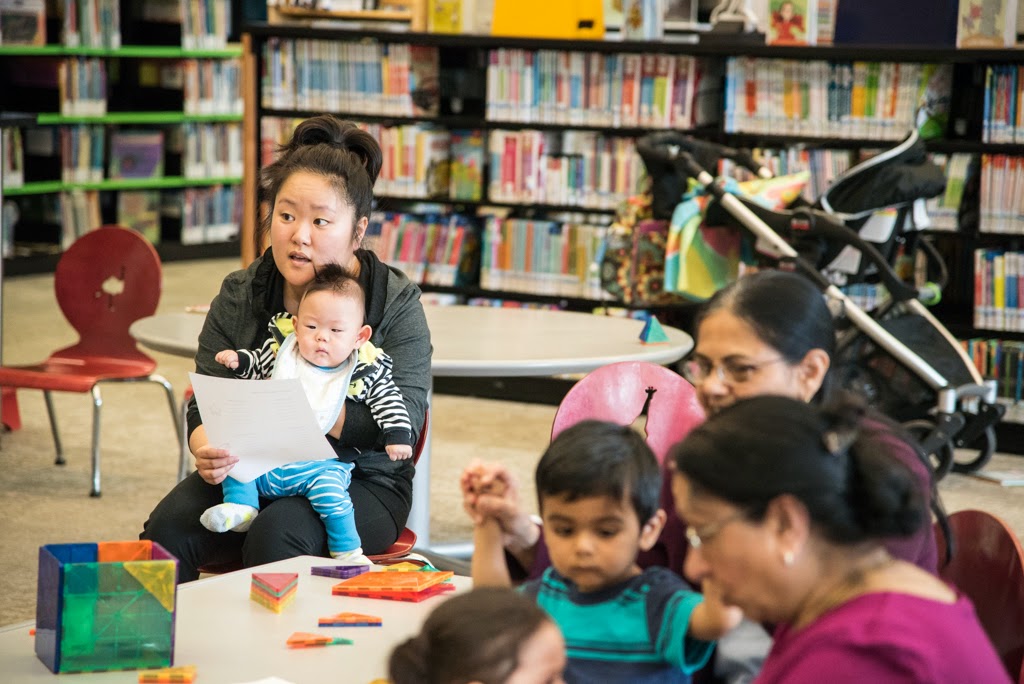
The village my library serves is remarkably diverse. It's been that way for decades, with large community initiatives like the Festival of Cultures and Coming Together in Skokie and Niles Township meant to celebrate and explore that diversity on a continual basis. In putting together my first Día program since coming to this library, I wanted to do my best to help the diversity of our community show through in a Día program. My attempt at this goal was Rhymes Around the World.

(photo by Skokie Public Library,
CC BY-NC-SA 2.0)

Rhymes Around the World was a 30-minute storytime-style program that took place smack dab in the middle of the preschool area of the youth department. I intentionally opted to do the program in an open space (as opposed to in a program room) so that anyone who happened to be in the library on our program morning would be able to join in, even if just for a few minutes. As part of my planning process, I sent out a call to many of the library's contacts within cultural community groups in the village; these are groups the library has had working relationships with, and who are huge supporters of the library. The invitation: to share favorite nursery rhymes and/or songs with the program attendees, and in so doing help celebrate the culture of literacy and love for children that transcends languages and backgrounds.

During the actual program last Thursday, we had nearly 50 kids and caregivers participating throughout the program. Many of these caregivers said they came to the library for a play outing but were pleasantly surprised to be able to join in a program. (A handful said they particularly liked the out-in-the-open setting for the program, as it made them feel less self-conscious about kids whose attentions waver in enclosed settings.)

(photo by Skokie Public Library,
CC BY-NC-SA 2.0)

These ~50 folks enjoyed songs and rhymes in English, French, Spanish, and Urdu, with lots of caregivers chiming in to offer their children's own favorite rhymes and songs with the group. For a relatively informal event--people could come and go as they pleased--I was struck by the successful simplicity of it all: caregivers to passionate about teaching and celebrating their children; children captivated by rhymes they knew as well as rhymes the were hearing for the first time; and an overarching sense that our community shares a value for supporting young children that is not bounded by lines of culture or ethnicity.

(photo by Skokie Public Library,
CC BY-NC-SA 2.0)

I wrapped up the program with a resonating thought: that a community rich in cultural diversity can offer something truly great to all the children we serve when we share and celebrate our literary heritages.

I hope you had a successful Día celebration of your own!

(photo by Skokie Public Library,
CC BY-NC-SA 2.0)

Thursday, October 2, 2014

Make Your At-Home Storytime Kit! A Joint Kids/Caregivers Event

Before I left my job in Missouri, my adult reference colleague Michele Nolan and I were planning our second joint kids/caregivers programming event: a Make Your At-Home Storytime Kit. The premise: while kids were on one side of the partitioned program room doing storytime and open play with me, caregivers were on the other side with Michele making supplies for an at-home storytime kit. The activities were planned, supply lists were made, and... then I left.

But, oh, did I work with some amazing people in Missouri, because my colleague Erin stepped in to lead the storytime portion while Michele directed caregivers, and the event went on without a hitch. Full details, according to Michele:

My adults consisted of parents, caregivers and grandparents. So, while Erin kept the children busy, I then had the adults make their own "At-Home Storytime Kit" that consisted of materials for "Read," "Talk," "Sing," "Write," and "Play," in addition to mentioning how "Math" can be incorporated into any and all of these activities. I had 12 adults signed up with 10 that showed, plus a mom with her kids that asked if she could join in. Even though I physically had 11 at the end of the program I had a few (3) people ask if they could take an extra set to share with others.

And in case you have any doubts whether this type of event would be meaningful for the caregivers, here's the participant feedback:
  • "Really enjoyed having the materials and explanation on how they work with a child's learning."
  • "I wasn't sure at first how this was going to work out with bringing the kids, but it is great knowing that they have an activity for them also."
  • "Have been looking for new and fresh ideas."
  • "Originally came to make this for my daughter to use with her kids, but instead am going to keep it at my house so the grandchildren have something that I can interact with them."
  • "Really glad I signed up for this."
  • "Wasn't exactly sure what I was signing up for, but am glad I did."
  • "Hope to see more of these type of programs."
Success! A resounding success, with caregivers actively engaged in creating early literacy activities to use with their children outside of the library! Woo hoo!

And lastly, the full activity breakdown.

Read - Make a Photo Book
     Caregivers used empty CD sleeves, key rings, paper cut to fit the sleeves, and writing utensils to create a blank book for them to fill in with their child. The premise was to add pictures (drawings, photos, or both) and words together at home.
     Early literacy message: “Creating a book full of images your child recognizes is a great way to build a love of books and reading. You can write words that describe the pictures, talk about the pictures, and create your own stories as you read the book together.”

Talk - Three Little Pigs Puppets
     Using cut paper towel rolls, pig and wolf templates, scissors, glue, and coloring utensils, caregivers created puppets for each character in the story of the Three Little Pigs. Also included was the text of the story for those who needed a refresher. The premise is to then tell and retell the story at home with their child.
     Early literacy message: “The more words a child hears everyday, especially when they are spoken to and with the child, the better. Telling and retelling favorite stories is a wonderful way to pack lots of talking into a fun reading experience.”

Write - Shape Drawing
     Caregivers poured white glue and a bit of food coloring into plastic zipper-top bags, which they then sealed with duct tape. The premise is to encourage children to use a finger to write/draw shapes and/or letters in the goo through the bag.
     Early literacy message: “In order to learn to recognize and write letters, children first need to be able to recognize and draw shapes. Drawing shapes on paper or in a fun substance both helps develop shape recognition and strengthens finger muscles which will be used to hold writing implements.”

Sing - Song Cube
     Empty cube-shaped tissue boxes were wrapped in colorful paper, after which caregivers added images to each of the six sides to represent six common children's songs. The station also included a lyrics sheet. The premise is to roll the cube and then sing with their child the song that goes with the image facing upwards.
     Early literacy message: “Singing songs and nursery rhymes is a great way to help your child hear all the different sounds that letters and words can make. The more sounds they hear in their youth, the easier it will be to sound out words as they learn to read.”

Play - Little Mouse, Little Mouse
     Caregivers used a house template drawn along the bottom of file folders to create lift-the-flap houses. They cut out the houses and colored them different colors, then colored and cut out a small mouse, too. The station included an instruction sheet for this activity, where the caregiver hides the mouse in one of the houses and says with their child, "Little mouse, little mouse, are you in the *color* house?" until they find where the mouse is hiding.
     Early literacy message: “Playing helps children learn and internalize facts about the world. By playing together with your child, you are helping them to work out how the world works while also having fun together.”

Monday, January 20, 2014

A Guide to STEAM for Families with Young Children

I've been offering preschool science programs for a while now, and during each program, I speak to caregivers about STEAM and how it ties in with early literacy. STEAM experiences allow children to develop understanding about how the world works. At the most basic level, these sorts of experiences introduce children to new vocabulary, content knowledge, and narrative skills that are an integral part of early literacy. The more a child experiences, the more a child knows; and the more a child knows, the more a child will be able to recognize and process when it comes to reading. STEAM is important.
That's why I created a guide to STEAM for these families with young children. The guide resembles a handout on the five early literacy practices that accompanies my library's early literacy calendars, so it's a format with which my library families are familiar. The guide explains what STEAM is, notes how it's important, and gives fun, simple activity ideas that families can do together to promote STEAM experiences and learning. I've found that parents really enjoy having a handout that gives them a running start when it comes to literacy-positive activities with their kids. These sorts of guides plant the seed for parents, and they empower parents to find the early literacy potential in every day. If I can accomplish that in my library, I consider my work successful.


Wednesday, November 13, 2013

Make Your Own Early Literacy Toy: Texture Blanket, from guest blogger Stephanie Smallwood

One of my favorite takeaways from the Missouri Library Association Conference in October was the idea of a sensory blanket, which Stephanie Smallwood--Early Literacy Specialist at Springfield-Greene County Library District--shared in her session focused on outreach. I asked Stephanie to elaborate on her texture blanket, and she graciously agreed to share details in the form of this guest post.

~~*~~

"What should I do with my baby?"

Families are always happy to learn that the best thing they can do with their littlest ones is talk to them. We know that talking to babies not only builds vocabulary and background knowledge, but also that all-important caregiver-child bond that is so important for all aspects of development. But sometimes we just don't know what to say to those little guys! Especially during the first few months, it can be difficult for new parents to know what to say to their child, so it helps to give them a conversation-starter so to speak.  We do that when we tell adults to talk about what they are doing or to describe everything they see, but there are certain things that babies are particularly drawn to. One of these things is textures.

A newborn is very sensitive to touch, and that sense stays strong throughout the baby years. This is good for adults, because there are lots of words to use to describe textures. We can use a variety to describe how they feel (fluffy, scratchy, rough, smooth), and we can compare and contrast familiar textures ("This denim feels just like Daddy's pants," "Grandma has a blanket that has satin edges like this."). So textures give us an opportunity to use a copious amount of words, and since baby's sense of touch is so sensitive, they are particularly open to learning at that moment. You know that wide-eyed look babies get on their faces when they are particularly interested in something? That is the most important time to talk. They are focused, interested, and their minds are especially open.

Stephanie's Texture Blanket

I use lots of homemade early literacy activities in my work with families, and one of the most popular is the texture blanket.  It is a basic fleece blanket with several different pieces of fabric sewn on it. Babies love it, toddlers love it, caregivers love it, and every time I use it with a family I get to show them that wide-eyed "That is so cool!" look on their baby's face. It is an excellent tool for modeling those simple interactions that are so important to a baby's development. Here are some points I make with families and babies of different stages.

Newborns: Choose the softest fabrics on the blanket to use with the littlest ones, they will be very sensitive to anything rough. Lightly touch baby's arm or hand with the soft fabric and talk about how it feels. Remember, newborns will be ready to move on in a relatively short time, so no need to overdo it.

Tummy Time Crowd: This blanket is so fantastic for tummy time, I can't fully express it in a post. You really just have to watch a baby doing it. Babies doing tummy time have something to feel and look at while they lay on their tummies. As they start creeping and scooting, they have a goal to reach for and explore. Talk about the different textures they touch.

Sitters/Crawlers: So much to explore! This is when we really start to see curiosity come through with babies. Sitting on a texture blanket gives them a big area to move around in and so many different things to examine. And yes, they will examine it with their mouth, so make sure your fabrics are secure and that babies are monitored.

Walkers: Even those bigger babies will still appreciate the textures. Take off their shoes and let them feel the fabric with their feet. They are beginning to make stronger connections between current experiences and things they have experienced in other situations, so this is a great stage to compare textures.

My texture blanket gets used pretty regularly in my outreach programming, but it would be ideal for baby storytimes or a baby corner in a children's department. Mine has been used monthly for three and a half years and is still in pretty good shape. It gets machine-washed after each use, and I line dry it. One of the great things about the texture blanket is that it is that it is portable--it is super easy to roll it up and take it to any of the locations where I work with families. It's truly a perfect activity!

~~*~~

Picture provided by Stephanie Smallwood.

Monday, November 11, 2013

November Milk & Cookies Story Morning

November marks my ninth monthly Saturday morning Milk & Cookies Story Morning, and the program looks to have developed quite a following. Month after month, I see a combination of familiar faces who express total excitement at the prospect of story time. I also continue to see plenty of new faces, usually accompanied by caregivers who tell me how grateful they are to have a Saturday library program option for their little ones. When I was in library school, one of my professors advised that any new program should be given at least a 6-month trial before deeming it successful or not; nine months in to Milk & Cookies Story Morning, I feel I can start to say that this program is something much needed and appreciated by the community I aim to serve.

Opening Song: "Open, Shut Them"

Story: Tiptoe Joe by Ginger Foglesong Gibson, illustrations by Laura Rankin
     This simple rhyming story invites audience participation, so we all stood up to follow Joe, a bear, as he tiptoed through the forest to share a secret with his friends. Page turns bring a new animal to identify, including a fun sound for the animal's footfalls. These animal sounds just beg to be acted out, and the kiddos are happy to oblige. Discovering Joe's secret at the end of the story doesn't fail to delight, either. Give kids some space to stand up and have their feet make different sounds when you read this one--a perfect opportunity for play.

Song: "Bluegrass Jamboree" by Hap Palmer
     Since we were already standing for the preceding story, we kept standing up to dance along to this song. It includes simple, fun actions as the song lyrics, and the strong beat of the song helps pump up enthusiasm.

Song: "I Can Shake My Shaker Egg" by Mr. Eric and Mr. Michael
     After passing out shaker eggs, I explained to the kiddos that we would try to shake our eggs along to the beat of the song--if the song was slow, we would shake slow; and if the song was fast, we would shake fast. The dramatic increase in tempo of this song set to a classical music staple provides a perfect background for reinforcing rhythm.

Story: There's Something in My Attic by Mercer Mayer
     Before I started this story, we talked about a few things. First, where in a house is an attic? Did anyone in attendance have an attic at their houses? We also talked about how things can happen in stories that cannot happen in real life. When I've got some younger kids in a program in which we're going to read a story that might be interpreted as scary, I always talk about how these stories are made up and that pretend things can only happen inside the pages. By the time we got to the end of the story, kids were twirling their pretend lassos with nary a nightmare fear in sight.

Song: "Five Little Ducks"
    Our song cube landed with the illustration of five ducks facing upward, which meant we would sing "Five Little Ducks." We all practiced showing numbers on our fingers, and we had great fun making big, huge quacking noises to bring the little ducks back home.

Story: The Gingerbread Man by Beatrice Rodriguez
     The simple, sometimes-silly illustrations in this version of The Gingerbread Man are quite delightful lend plenty of opportunity to talking about the pictures. Most of my attendees had not heard this folktale before--a fact that doesn't shock me as much as it used to, that kids aren't familiar with classic tales. By the end of our reading, though, they were reciting the refrain with me like pros. I've said it before, and I'll say it again: these folktales are classics for a reason, and their pacing and building of suspense are often exquisite. That, combined with the fact that kids need a basic knowledge of these tales to understand many, many things in life, is why I always strive to include a folktale when I can.

Rhyme: "Five Little Monkeys Sitting in a Tree"
     Together, we sang and told the story of the five monkeys in the tree and the alligator using Marge's terrific sign language version. Even the younger kids in the group caught along on several of the signs, and the excitement of seeing that alligator's jaws open wide was quite thrilling.

Milk and Cookies Time!
     We enjoyed Teddy Grahams and either 2% milk or 100% apple juice. I've learned to pour just a bit of drink in each cup to start in order to minimize both spills and waste.

Free Play Time
     Our four play stations for the day took advantage of the early literacy play kits currently residing at my branch for November. In addition to our perennial favorite wooden garage-and-cars station, we had foam building blocks; play fruit that can be slices with a play knife, a pencil, or other thin implements; and a variety of magnets (alphabet, dinosaurs, vehicles, animals) with magnetic boards. This variety of play items worked well with the age range of attendees. While younger kids veered toward the blocks and garages, older ones sliced and matched fruit and vegetables or created their own magnetic stories. I was lucky enough to get private readings of a number of these stories, and they were extremely well plotted.


Monday, October 14, 2013

October Milk & Cookies Story Morning

I took a detour from my usual Milk & Cookies Story Morning for this month. My planning process was starting to feel a bit too formulaic, which was harshing my story time juju. I decided to go ahead and put together a story time with a different set of goals for myself: use picture books of the "new books" shelf at my library and sneak in early literacy messages about all five practices. The challenge was invigorating for me, with fun interactive results for the kiddos.

Opening Song: "Open, Shut Them"

Story: Ghost in the House by Ammi-Joan Paquette, illustrated by Adam Record
     This rhyming counting story is excellent for those looking to add a spooky story to story time without being explicitly Halloween. A ghost starts out in a house all alone, but he hears various eerie noises--a groan, a growl, and shriek--and one by one he's joined by other monster characters. Don't worry, though; the illustrations are cartoonish and not frightening. The kids had lots of fun mimicking the sounds of the monsters, especially the click-clack of a skeleton. This is a great story all on its own, but it would pair really well with Go Away, Big Green Monster to emphasize monsters are nothing to be afraid of.

*Talking Tip: Imitating the creatures we see in books helps children become familiar with the range of sounds that occur in spoken and written language; their familiarity with all sorts of sounds will help them when it comes time to sound out words.

Song: "Monster Boogie" by Laurie Berkner
     We danced around like monsters to this fun, silly song from one of my favorite musicians for story time. RAWR!

Song: "Dancing Scarf Blues" by Carole Peterson (with scarves)
     I handed out scarves to all the kiddos in the room, then we shook those scarves with gusto as suggested by the song. What a great way to get the energy pumping!

*Singing Tip: Singing repetitive songs with children is great because they reinforce new and important vocabulary. Our song included lots of words about directions: around, side, front, back, high, low. We learned all those words while having fun!

Story: Tea Party Rules by Ame Dyckman, illustrated by K.G. Campbell
     It's no secret that I loved Dyckman's Boy + Bot, and her newest story is another great look at an unlikely friendship. Cub, a young bear, stumbles upon a tea party table with lots of cookies, but the tea party hostess--a young girl--has several rules to which Cub must adhere before he can get to the cookies. The expressive pictures add to the humor of this story. I wrap up the story by asking the kids what they would like to play: tea party or bear.

*Playing Tip: When children play, they get to experience the world and how it works in a safe space. Playing tea party or pretending to be a bear is really a learning exercise; they get to practice table manners, try out having claws, and use all sorts of words that go with special scenarios.

Song: "I'm a Little Teapot"
     After three tosses and a roll of the song cube, we were prompted to sing this classic song which paired perfectly with the preceding story. Serendipity!

Song: "Five Little Ducks"
     Another toss of the song cube led us to sing the fingerplay of "Five Little Ducks." We worked on getting our fingers to show the appropriate number of ducks, and we had plenty of fun quacking loudly as the mamma duck.

Story: I Spy on the Farm by Edward Gibbs
     This companion to I Spy With My Little Eye contains a great variety of farm animals to spy and guess. Kids are prompted to guess the spied animal by its color and the sound it makes, just like in the companion book, with one great addition: the text says the letter the animal begins with. When sharing this story, I like to say (for a duckling, as an example): "This animal starts with 'D.' Can you use your finger to draw a 'D'? The 'D' makes a 'duh' sound." I love the added element of drawing letters.

*Writing Tip: Writing together doesn't have to mean using pencil and paper. Your child can draw in the air, in bubbles in the bathtub, or in a pan of uncooked rice--these are all great ways to get familiar with creating and recognizing letters.

Song: "We're Going to Kentucky"
     What can I say? I just love this song, and so do the kids, and thus I will happily repeat it a second month in a row.

*Reading Tip: Don't forget that there are lots of books on display next to me that you can check out and read at home! Reading together with your child is a great way to have fun together, and it also promotes a love of words and reading in your child. If you show that you enjoy reading together, your child will love it, too!

Milk and Cookies Time!
     Honey Teddy Grahams and 2% milk. Mmm.

Free Play Time
     I set up four free play stations on the play side of our meeting room: vehicles and garages; play food; puzzles and writing; and science, with magnets, scale, and creature building. One mom in attendance told the whole group that our local fire house was having an event that same day: all the fire trucks would be out of the station and kids could tour them and find out more about being firefighters. That tip meant most of the families didn't stay to play for much longer than 20 minutes--they all wanted to head over to the first station. We had a great time while the kiddos were in the room, however, and I engaged in quite a few conversations with the children about what they were doing. I got plenty of insight into how a child works through a puzzle. Fascinating!

Monday, September 30, 2013

The Bell Awards Blog Tour: Write

Welcome to the first stop on the blog tour for the Bell Awards! All this week, readers will have the opportunity to hop across a number of outstanding youth services and children's literature blogs to find out more about this new early literacy book award as well as some great go-to books that reinforce early literacy practices. It all starts now!

What are the Bell Awards, you ask? The Bell Awards are a new annual endeavor designed to recognize picture books that strongly support young children’s early literacy development. Books recognized by the Bell Award will somehow thematically feature the five early literacy practices: reading, writing, singing, talking, and playing. These recognized books will represent excellent choices for parents and caregivers to share with their pre-readers; the titles will model positive co-reading habits and support them as they engage their children in activities that build reading readiness. While the Bell Award was created and will be administered by Colorado Libraries for Early Literacy (CLEL), note that this is not a state-specific award. The Bell Award can have an impact on libraries and classrooms across the country, helping to identify the best books for early literacy practices in a publishing year. It is hoped that children’s librarians and other professionals will discuss the titles nominated for awards in any of the five practices--after all, it's this type of discussion that fosters sharing and learning about early literacy best practices. I know I'm always up for seeing what my colleagues are using in their own early literacy efforts.

As the first stop on the Bell Awards Blog Tour, I am tasked with sharing with you some of my favorite books for young children that strongly illustrate the early literacy practice of writing. Since I'm a frequent storytime practitioner--sometimes with as many as 10 story times a week--my list of "Write" books is heavily biased in favor of readaloud titles that work for groups as well as one-on-one reading. Without further ado:

Books that Model the Early Literacy Practice "Write"


Andrew Drew and Drew by Barney Saltzberg
     What can you create with a pencil and a blank page? As Andrew demonstrates throughout the story, which centers around his wonderfully imaginative drawings, the sky's the limit when it comes to creating things on paper. This book does a great, subtle job of illustrating that marks on a page have meaning, and that the person who makes the mark can decide that meaning.

Chalk by Bill Thomson
     This beautiful wordless picture book works best one-on-one or with small groups; I like to ask lots of questions about what's going on in each picture. The basic premise is that children draw pictures with chalk, and those pictures come to life. What an imaginative way to show that what we put on a page represents real things in the world.

Giggle, Giggle, Quack by Doreen Cronin, illustrated by Betsy Lewin
     Farmer Brown has gone on vacation and left his brother in charge of the farm. His brother is supposed to followed the written instructions left for him, but unfortunately the mischievous Duck has found a pencil and is writing odd instructions of his own. The animals get all sorts of special treatment--pizzas, movie nights--because of the words in Duck's notes. When I share this story with a group, I use my finger to point to the words I'm reading in Duck's notes to emphasize that the words I'm saying are on the page. At the end of the story, I always ask how Duck was able to get the farmer's brother to do all these silly things: because he wrote them down.

There's An Alligator Under My Bed by Mercer Mayer
     This book may not be the most obvious one to model the practice of writing, but I like to use it in two ways: the minimal text per page makes it simple to point out that the words on the page are the ones I'm saying; and the story is funnier when you read the notes the boy leaves for his father on the last page. I always talk about these notes at the end of the reading, and I ask what the kiddos would write on a note to their parents if there were an alligator in the garage.

Z is for Moose by Kelly Bingham, illustrated by Paul O. Zelinsky
     This cheeky book is great with preschoolers and early elementary children who know or are learning the alphabet. Moose is meant to be part of a production that features all letters of the alphabet, but he has no patience and starts to mess things up. Not only does this book promote letter knowledge--integral for learning to write letters and words--but Moose's funny signs and other written markings throughout the book are great examples of writing to communicate something.

~~*~~

Those are my picks of some of my favorite books for the pre-reader crowd that model writing. Do you have favorites? If you've got favorites that have been published in 2013, you should absolutely nominate them for the Bell Awards! A few bits of info for participating:

Don't forget to follow the rest of the Bell Awards Blog Tour all this week by visiting the following blogs:

And do note that the nominations period for the 2014 Bell Awards ends November 15, so make sure you submit your nominations for any of the five practices by then! The winners will be announced February 5, 2014.


Friday, September 13, 2013

Fun with Letters: Activities to Pair with the ECRR Parent/Child Workshop

Every fall, I work with my local Parents as Teachers group to offer in-library early literacy workshop programs for the families they serve. I create my program content around the ready-to-use Powerpoint-based presentations that come with the ECRR2 kit, which I modify to include my library's branding and my own talking points and activities. This autumn finds me focusing on the "Fun with Letters" presentation, complete with a variety of activities to pair with each of the five practices. Here's what we're doing this September:

Fun with Letters: Activities to Pair with the ECRR Parent/Child Workshop

Talk
  • We work together to say the letters in every child's name; children write their names on a small paper plate (tactilely more interesting to them than nametags, I've found), so all the adults in the room have a cheat for name spellings.
  • We play an "I Spy" game using our alphabet rug in the program room; I name an object featured on the rug, and the kids search for it and identify the letter it starts with, also shown on the rug.

Read
  • Z is for Moose by Kelly Bingham is for slightly older, more engaged audiences, and we talk about the letters and objects we see on each page.
  • With younger children, I usually do a picture walk through G is for Goat by Patricia Polacco,  demonstrating that you don't have to read a story fully for it to have a positive literacy impact.

Play
  • I set out alphabet-reinforcing toys at the beginning of the program while families trickle in: alphabet machines, doodle boards, and an I Spy bottle.
  • We play with pipe cleaners to make the letters in our names. Lots of exercising those fine motor skills!

Sing
  • We sing the letters of the alphabet to the tune of "Mary Had a Little Lamb," a trick of Saroj Ghoting's to help children hear the differentiation between all 26 letters--no more amorphous "ellemmennohpi."
  • We make an ABC parade; using the alphabet rug as our guide, we parade along the letters of the alphabet, naming them as we go.
  • We sing "Willowby Wallowby Woo" with the silly assistance of a Horton the elephant stuffed animal.

Write
  • We practice making letters using shaving cream as our medium. I fill sandwich-size zipper-lock baggies with a bit of shaving cream, then seal the tops with duct tape. Ta-da! Trace and erase!
  • With butcher paper covering our program room tables, kids get to use crayons to draw all over the tables. Older children work on their letters while others create a comfort with writing.

~~*~~

These activities keep kids pretty well engaged and excited while their caregivers get a bunch of accessible early literacy tips they can take home, and we all get to have some fun with letters!

Have you offered a variation on the "Fun with Letters" ECRR2 workshop? What activities have you used to round out the workshop?


Friday, August 16, 2013

Wrapping Up Summer with a Preschool Dance Party

After the high-energy success of my first Preschool Dance Party last winter, I knew I needed to fit another dance party into my programming schedule. What better time than at the end of the summer, when kids have energy to burn after exhausting all their regular summertime activities?

Once again, this dance party was an exemplary program. All of the children were engaged at a level comfortable for them--some marched around the whole time, some clapped from the safety of Mom's lap, but everyone got involved. The program helped draw attention to two wonderful but often-overlooking collections at the library, our children's music CDs and our Rhymes and Songs picture books. Packing the fast-paced program with early literacy tips about the importance of singing and playing also helped caregivers recognize that reading isn't the only way to help kids develop early literacy skills. All in all, a great program (and a great workout for me).

Preschool Dance Party

Song: "Surfin' Safari" by the Beach Boys
     We used this song to get our bodies warmed up and break the ice for an atypical story time experience. We did lots of arm stretches and careful leg lifts to get everyone pumped.

Song: "Do the Bird" by the Kerplunks
     This song includes listening to hear the different motions to make. The kids' favorite verse was when they acted like chickens.

Story: The Croaky Pokey by Ethan Long
     This silly variation of the Hokey Pokey is particularly exciting to kids, as they get to make froggy tongue-slurping sounds as they try to catch flies along with the text.

Song: "Mahna Mahna" by Mahna Mahna and the Snowths
     I passed out rhythm sticks for this song, and we had fun trying to keep a beat, making our sticks sound loud and then soft, and trying to keep our sticks in rhythm while beating them behind our backs.

Song: "Robot Parade" by They Might Be Giants
     The kids and I practiced our robot movements before I pressed play for this song, and then we robot-ed all around the room in a very stiff and silly-looking parade. This song wins the award for inspiring the most caregiver photos.

Song: "Beanie Bag Dance" by Greg & Steve
     Each child got to choose a Beanie Baby animal to use for this song. The song instructs listeners what to do with their bean bags, including dancing with bags between one's knees.

Story: If You're Hoppy by April Pulley Sayre
     I stuck with the silly variation of kids classics book theme and shared this great animal-heavy picture book. Most kids opted to stay standing for the book, so there was lots of acting out the behaviors of the animals.

Song: "Shoo Fly" by Carole Peterson
     We had a great time doing the shoo-ing motions for this song. As several of the kids were getting a bit tired at this point, we shared this song sitting criss-cross-applesauce on the floor, moving our arms and rocking to the beat.

Song: "Movin' Right Along" by Alkaline Trio
     I pulled out the parachute for this song, and the kids and I worked on shaking the parachute at different speeds. We also worked on rotating the parachute in a circle using teamwork.

Song: "Boogie Woogie Bugle Boy" by the Andrews Sisters
     I added some blow-up globes (beach ball-style) onto the middle of the parachute, which of course inspired much excited shaking and bouncing. We again used teamwork to count together and make the globes go really high, much to everyone's delight. When the song ended, I told kids to let go of the parachute when I counted to three so I could wrap the parachute up.

~~*~~

Have you done a preschool dance party program? What are your favorite go-to songs and stories?


Sunday, May 19, 2013

SWAB Book and Activity Bundles & the Blog Tour Wrap-Up: Start with a Book Blog Tour


Welcome to the final entry in the Start with a Book Blog Tour! Don't forget to check out the rest of the posts from some fabulous youth services bloggers; links are in my opening post. And now, without further ado, I'll share how I'm using Start with a Book and its resources now.

I blogged last year about my Take-Home Story Time Kits, neat little bundles of stories and music for caregivers to engage in story time at home. Caregivers (and other librarians!) love them, and guess what? Start with a Book, with their 24 Summer Learning Themes (many of which contain great STEAM tie-ins), offers some great resources for a new twist on those bundles.

Right now in my library, I've got two types of bundles: Take-Home Story Time Kits for pre-readers, and Read and Do Bundles for readers (elementary-aged children). Almost everything about these bundles (save my tags, the music CDs, and the ribbon to tie them) comes from the resources on the Start with a Book 24 Summer Learning Themes. Here's what the bundles include:

Take-Home Story Time Kits - for pre-readers
  • 2-3 books from the 3-6 year-old age level section of a SWAB theme
  • a children's music CD from my library's list of favorites (e.g., Laurie Berkner, They Might Be Giants)
  • a Growing Readers activity sheet that pairs with the theme -- SWAB theme pages include these links in section 2 - Growing Readers: Parent Tips
  • a Start with a Book flyer -- so caregivers who enjoy the bundles have a pathway to finding more theme-extending activities, websites, and apps
  • an eye-catching tag that does three things: 1) connects to summer reading ("Dig into..."); 2) advertises the kit's theme; and 3) gives a brief explanation of the kit and how to use it

Read and Do Bundles - for readers
  • 1 book from the 9-12 year-old age level section of a SWAB theme
  • printed instructions for a theme-related activity -- SWAB theme pages include these links in section 2 - Hands-on Activities and Crafts
  • a Start with a Book flyer -- so readers and their caregivers have access to more activities, including the SWAB theme recommendations of Great Websites for Kids and Mobile Apps
  • an eye-catching tag that does three things: 1) connects to summer reading ("Dig into..."); 2) advertises the bundle's theme; and 3) invites the reader to read and do an activity on the topic

One of the things I love love love about the Start with a Book themes--and the bundles I can create with them--are the great STEAM options. There's STEAM at a basic level: the book lists include lots of great non-fiction titles. There's also the fact that so many of the themes, even the less obviously STEAM ones, have science tie-ins. Think dinosaurs and activities involving paleontology; explorers and related navigation and astronomy sciences; nature and books, activities, sites, and apps that explore life sciences. I love any opportunity to get families involved in STEAM concepts at home, and the resources in each of the 24 Summer Learning Themes certainly encourage that. As a result, my bundles encourage STEAM learning, too.

These bundles initially took a bit of time to assemble; I needed to find the books from the SWAB theme lists, then choose and print the appropriate activity sheets and print tags. Once I had done the groundwork for the bundles, however, I made extra copies of the resources so that replenishing bundles as they check out is easy peasy (see my 2012 post for the check-out logistics of bundles).

There you have it--that's how I thought to use the resources on the Start with a Book website immediately after checking it out. Thanks to this blog tour and its bloggers, however, I now see so many other avenues for using the site. I hope you do, too, and I hope you'll consider Start with a Book as a resource to support you in your summer library services. Please share in the comments any ideas for how you are using/will use the content on Start with a Book in your library!

Don't forget to scroll down and enter the giveaway for one of the tremendous book bundles that the folks at Start with a Book have assembled--each on one of the 24 Summer Learning Themes. The giveaway entry form will only work until noon Eastern time on Tuesday, May 21, so get your entry submitted before then! Winners will be contacted via e-mail to arrange delivery.

In wrapping things up, I want to say thanks: thanks so much to Tina and Rachael at Start with a Book for first introducing me to this rich literacy resource, and thanks to my fellow bloggers for sharing their ideas on their blogs. And, of course, thanks to you readers for your commitment to always developing professionally.

I'm wishing you all summer sunshine and happy reading!


Wednesday, May 1, 2013

Programming with ECRR2 in Mind: An early literacy staff training workshop

At the beginning of April, my district's Early Literacy Task Force, of which I am a member, offered a three-hour training to give children's staff some hands-on experience with the revised ECRR. Staff saw a sample workshop for parents; had time to practice creating and sharing early literacy statements; and brainstormed program formats and ideas with colleagues. I facilitated the programming portion of the training:


A bit more info on my workshop session:
All attendees were asked to bring with them 5 copies of a program plan or outline that is their favorite or has been successful in implementation. For the final hour of the training, then, we focused on our story times--nothing abstract, but our programs over which we have ownership. We talked broadly about what we like and don't like, and then we broke into small groups to swap program plans and ideas. The conversations centered around engagement and the five early literacy practices, and attendees left with a myriad of ideas for new program elements, themes, activities, and formats.

Based on conversations I've since had with attendees, this programming workshop has encouraged staff think outside of the box of what they usually do for story time; now there is more focus on what else we can add to support writing, per se, or to engage caregivers as well as kids. I'm excited to see what our district story times look like over the next few months as the training ideas make their way into program plans.

~~*~~

What sort of programming training, if any, do you offer your children's staff? Do staff continue to have program training and idea-swapping throughout the course of their employment, or is training mostly limited to time of hire?


Friday, March 15, 2013

What's New in the Children's Area

I feel like I'm always doing something or other to change things up in the children's area of my library, and I consider myself lucky that my branch manager also values keeping things fresh and engaging for kids. We recently had two new features installed.

Early Literacy Stations in Picture Book City

First are the AWE Early Literacy computers. I interned at a library with three of these computer stations, and a few other branches of my current library district had the stations when I was hired. I immediately put Early Literacy Stations on my branch wish list. The machines were budgeted for this fiscal year and installed in Picture Book City last week, and they are already a hit with our young customers and their families. Within five minutes of the computers being set up, a three-year-old was exploring an Elmo game with her father sitting next to her. They were having great conversations about letters, talking about how to click with a mouse, and exploring all the stations have to offer. It's only been a few days since these computers were installed, and already I've seen other great child-caregiver interactions happening at our Early Literacy Stations on multiple occasions.

Child-height endcap OPAC in the children's area

Next are endcap OPACs that are situated in the chilren's area--one inside Picture Book City, and the other on the end of our range of J Bios and award-winners. These OPACs are mounted at a great height for children to use them, and use them they do. I was slightly surprised at the uptick in children doing their own catalog searches before asking for help at the reference desk; it appears having the OPACs in the midst of the library spaces kids already use really does make a difference. Since these endcap OPACs were installed last week, I have seen more school-age children using them; more caregivers narrating their search processes for their onlooking children; and more caregivers feeling less stressed about doing several searches at a time because they can now access the catalog while still within sight of their children playing in Picture Book City. Talk about making things easier for customers!

That's what's new in the children's area of my library these days. What new or interesting things might your customers find in your spaces?


Tuesday, March 5, 2013

Why We Offer an Early Literacy Calendar

When I got my job here in Missouri back in the summer of 2011, I had just attended the 2011 ALA Annual Conference in New Orleans; I was bubbling over with enthusiasm, especially for early literacy. That energy, my now-boss says, came across in my interview. I was so gung-ho in my interview, in fact, I even used the phrase, "Even if you don't hire me, you have to do this."

I was referring to creating an early literacy calendar.

It's now over a year and a half later, and my library district does indeed have an early literacy calendar. Each month, we create and make available a calendar full of simple suggestions for early literacy activities that caregivers and their children can do almost anywhere--non-intimidating activities that build pre-reading skills. The activities are based around the ECRR five practices with some math thrown in. The children's staff across the library district take turns filling in the monthly templates I've created; each branch is tasked with populating a calendar with activities every 9 months. For that relatively small amount of work on the part of our children's staff, the benefit to our communities is significant.

We hand out early literacy calendars at our baby, twos, and preschool programs. We have copies of the calendar available at the check-out desk. We share the calendars with local preschools and day cares, encouraging them to make photocopies for the parents of their charges. We post a link to the current calendar on our website, and I have started sharing the pdf on our Library Foundation's new blog. We pass it out when we register pre-readers for summer reading. When workloads and budgets allow, I want our graphic design guy to rework the look so we can make the calendars available at grocery stores and doctors' offices.

If dreams came true, our early literacy calendars would end up in the hands of every caregiver in our county who spends time with a pre-reader. We librarians know how seemingly simple activities can have a great impact--and we often have thousands of potential activities bouncing around our brains, ready to meet the needs of our communities. Now those activities and tips can reach a wider audience. That's why we offer an early literacy calendar.


Friday, January 18, 2013

In Which I Share the Details of My First Preschool Dance Party

Break out those egg shakers!
At the 2012 ALSC Institute in Indianapolis, I attended a program called "Shake, Shimmy, and Dance: Using Music with Preschoolers" led by Kate Schiavi of the Louisville Free Public Library (here's what my fellow program attendees and I thought right after the session). I was instantly enamored of the information Schiavi shared with us, and I knew that I would have to get a preschool dance party on my program calendar.

This week marked the first such program at my branch, and it was a HIT. I got to work in a few early literacy messages along with the fun, too: I reminded caregivers that establishing an internal rhythm helps prepare children for the cadence of reading, and I mentioned the increased exposure to word sounds and vocabulary offered by songs. Bonus: many of the library's best children's music CDs were checked out after the program, signaling continued musical fun at home for these kids. This really is a home run of a program; I hope you'll steal my playlist and offer the program at your library. (You can even take advantage of the music's funky nature and tie it into summer reading--can you dig it?!?)

Preschool Dance Party

Song: "Dance, Dance, Dance" by The Beach Boys
     We warmed up to this song, doing lots of stretches and simple movements in time to the music to get ready for the rest of the program. All shyness had dissipated by its end.

Song: "I Like to Swim" by The Kerplunks
     We did the motions in the song, which include swimming front stroke, backstroke, and butterfly. We also laid down on the floor when the lyrics talked about floating in the water.

Song: "Come On, Get Happy" by Daddy A Go-Go
     I passed out rhythm sticks for this tune. We tapped the sticks above our heads, behind our backs, and using the floor as drums.

Song: "We Are the Dinosaurs" by Laurie Berkner
     What kid wouldn't want to march-stomp around the room pretending to be a dinosaur? The song ends with a fabulous RRRRROOOOAAAAAAARRRRR!

Song: "The Shaker Hop" by Carole Peterson
     I passed out egg shakers for this tune, which includes a good balance of motion lyrics (putting shakers in and out) and free shaking time.

Story Break: The Man from the Land of Fandango by Margaret Mahy and Polly Dunbar
     Before kids settled onto the story time rug for our story, I handed out small cups of pretzels and glasses of water. After jumping around for almost 15 minutes straight, they were ready for a bit of rest, hydration, and energy boost. This book is the perfect length for a story interlude, and its rhythmic language and dance theme made it an easy choice to include in this program.

Song: "Clap Your Hands" by They Might Be Giants
     This song boasts a mere three different lines of lyrics: 1) Clap your hands! 2) Stomp your feet! 3) Jump in the air! Children happily oblige.

Song: "Barnyard Boogie" by Greg & Steve
     I brought out our 12-handled parachute for this one. With an older crowd, you could get the children to do specific actions with the lyrics. My younger group was so excited by the parachute, though, that we just made waves.

Song: "I Really Love to Dance" by Laurie Berkner
     I asked the grownups in the room to take the handles of the parachute for this one, giving the kiddos a chance to dance underneath the parachute. We finished the song--and the program--by letting the parachute fall over everyones' heads like a tent. Happy squealing ensued.

~~*~~

What are your favorite songs to share with preschoolers?


Friday, December 14, 2012

Give the Gift of Story Time

I don't want to take much of your time today--I know how hectic things can get around the holidays. I just want to suggest a really great, totally free gift idea for the kids in your life.

This holiday season, give the gift of story time.

Sharing stories is one of life's great pleasures. Reading together helps build strong, positive relationships; it also allows sharers to bond over the stories they read together, whether the stories are funny, sad, touching, scary, or full of adventure. What we share with others becomes a part of our common experience, a touchstone for our future interactions with one another. Stories help us to find our best friends.

Sharing stories is also one of the best things you can do to help prepare a child to succeed in life. Children who are read to frequently and with love are usually better readers and better overall students than those who don't have stories shared with them regularly. Children who experience stories have higher vocabularies and better general understanding about the world; they are often more imaginative than children who did not hear stories, and they are better able to weave their own lives into narrative format, too. Who wouldn't want to give a gift with that sort of lifelong impact?

So this holiday season, grab a few of your favorite books from the library or a bookstore (indie if you can). Sit down to share those books with the children in your life, and plan to spend at least 20 minutes reading together. Go ahead, you can even be indulgent and make this story time a habit. Add songs and rhymes, finger plays and puppets, even silly voices; anything that helps stories jump off the page and into the memory and the heart.

Story time is a gift that can make a big difference--both for the child you read to and for you. Consider giving the gift of story time this year.

Monday, December 3, 2012

More Books with Beat

When I ended up covering a colleague's story time for a local moms group last week, and I opted to replicate a recent successful program: a sort of toddler story-and-dance extravaganza. I used many of the same songs in this program as I did in the previous program; the audiences don't usually overlap, so I wasn't worried about seeming repetitive. I did, however, select some new stories to keep my own enthusiasm as fresh as possible. Here are the three great books with beat I used. They're perfect for story times with a bit more song and dance than your usual offering.

Busy Busy City Street by Cari Meister, illustrated by Steven Guarnaccia
     This story combines simple, rhyming text with lovely illustrations. Whenever I've shared this book, kids are really into the fun images on the pages that correspond with the story itself. The repeated chorus of "Honk! Honk! Beep! Beep! Busy, busy city street" catches the attention of listeners, and by the end of the book they are quick to respond to my honks with beeps of their own.

The Croaky Pokey by Ethan Long
     This amphibious version of the Hokey Pokey is a lot of fun. Lots of young kids haven't really heard the Hokey Pokey before, so they are excited about discovering a song that is so interactive and silly (you put your backside in!). I sing the text of the book to get things going, and I jump around with my tongue stuck out to catch flies in the appropriate parts of the story.

Farmyard Beat by Lindsey Craig, illustrated by Marc Brown
     This book has so many great applications. It introduces a variety of farm animals and the sounds they make, it includes great sounds for promoting phonological awareness, and it boasts a great, consistent rhythm. Animals in the story cannot sleep because "they've got that beat," and every listener quickly catches the beat, too.

~~*~~

What are some of your favorite books with beat to use in story times?

Wednesday, November 21, 2012

A Reflection on the Importance of Talk

One of my favorite things to come out of the revised Every Child Ready to Read is the emphasis on talking to and with young children. Hearing and engaging in talk helps children to develop a sense of the rhythm of fluent speech. Talking about objects in the world around us and pictures in a story help to build vocabulary and an understanding of how the world works, too. Without engaging in plenty of talk before they start school, children begin their attempts to read with a massive conceptual deficit. They just don't make as many connections between words, what they mean, and what describes them.

That point--the relative advantage given to children who talk and are talked with--was recently emphasized to me in a series of outreach story times all featuring the same book. The book in this example: I Spy with My Little Eye by Edward Gibbs. The book is a series of "I Spy" games: a two-page spread allows the children to spy an animal's color while a speech bubble gives a hint what the animal is; and the following two-page spread displays the animal for children to see in full. A sample spread would be as follows: "I spy with my little eye something that is white. [speech bubble: I live in the Arctic.] / I am a polar bear!" Simple enough from the reader's perspective.

What I've noticed in sharing this book with a variety of groups is that some story time audiences are quick to shout out what animal they spy while others need the page turn to really know what's going on. One preschool, when the children spied red, immediately guessed "fox"--and another preschool only knew it was a fox after seeing the full illustration; not even the hint "I have a bushy tail" gave away the animal's identity for the latter group.

What's my point? Obviously both groups know what a fox is. The kids in the first preschool, though, were able to guess "fox" using context clues--at some point in their lives, they have talked about foxes, which are often red and which have bushy tails. The can connect "fox" and "red" and "bushy tail" in a sort of concept map. The kids in the second preschool, on the other hand, weren't able to piece it all together using concept knowledge; they know a fox when they see one, but they have to see it to know it could be a fox.

This discrepancy really illustrates the importance of talking with children all the time. It's important to talk about foods we see on the table, at the grocery store, or in a restaurant; it's important to talk about the clothes we see when we're shopping, the clothes in our closets, and the weather we wear them in. It's important to talk about everything a child encounters in life and in books because that talk gives kids the ability to name and understand things they'll see later on in life or in books. And if they understand it now, they've got a better chance of being able to read about it later. Talking can give such an advantage to children from any background. I cannot overemphasize the importance of talk.

Have you encountered any situations that really emphasized for you the important of talk in developing early literacy? How do your express the importance of talk to caregivers?