This February, my new ukulele song is one to which I found the chords after learning the words at a Guerrilla Storytime in Chicago. Illinois librarian Lindsay Huth was at that Guerrilla Storytime and shared one of her favorite songs for having the wiggles: "Stick to the Glue," a rendition of "Skip to My Lou." I wanted to use this song because it doesn't require everyone to stand up; in many of my outreach classrooms, there simply isn't room for all the kids to stand up for a wiggle song, so sit-down versions are my bread and butter.
In this song, kids start out by pouring imaginary glue on their hands. Then, with each verse of the song, their hands get stuck to a part of their bodies (elbows, knees, shoulders, etc.). Kids can get out some energy after each verse as they have to use all their muscles to unstick their glued hands.
When I've shared this song on the ukulele, I usually sing it first without the instrument to demonstrate how it goes and how the actions work. Once the children have that down, I'll pick up my uke and we get to jamming.
Here are the chords I use for "Stick to the Glue":
If you're interested in an alternate version of this song, check out Jim Gill's version, which is a bit more active and requires kids to stand up.
Friday, February 28, 2014
Wednesday, February 26, 2014
Nonfiction Programming Connections from SLJ's "Using Nonfiction in the Library, the Classroom and at Home" Webcast
Today, school librarian Cathy Potter and I are moderating a School Library Journal webcast titled Using Nonfiction in the Library, the Classroom and at Home. The focus of the webcast is showcasing new and upcoming nonfiction from Gale, ReferencePoint Press, and Scholastic. I’ll link to the archived webcast here when it’s available, but in the meantime, perhaps you’d like to peruse some additional resources?
As supplementary material to the webcast, Cathy and I are both expanding on some of the topics we’re sharing with attendees. Head over to Cathy’s blog, The Nonfiction Detectives, to get some context for the nonfiction we’re seeing published for youth today. Cathy and her co-blogger, Louise Capizzo, are veritable experts on this topic, and they have lots of examples and food for thought for understanding the nonfiction available now.
I’m sharing some programming and classroom connections for titles mentioned in this webcast. I’ve connected a variety of titles from each of the three featured publishers to public library program options--so you can see how you can add these titles to your programming repertoire as well as your nonfiction stacks. Cathy shared some great info about how some of the titles can connect to classroom activities (I don’t go into as much detail here, as no one wants to see me pretend to know what school curriculum or a typical school day looks like in 2014).
So check out Cathy’s intro to the types of nonfiction available for libraries serving youth; read up on some programming and classroom connections for specific titles; accessing the archived webcast when it’s available; and get using more nonfiction in your library. I’d love to hear what you’re currently doing with nonfiction down in the comments.
Gale Cengage
In the public library:
The Book: Eye on Art: Walt Disney by Barbara Sheen
The Program: Animation School-Age Program
Every librarian knows that Disney is big--and perhaps more so here in Missouri, Disney’s birthplace. So an animation program that has some Disney materials tie-ins will be popular. To create context around animation, I’d use Sheen’s book as well as the Disney Animated app (the 2013 Cybils winner for best app!). Then we’d get animating. If we have enough tablets, we could go high-tech and use animation apps for the iPad to create cartoons. Or we could go old-school and make flip book cartoons using markers and pads of sticky notes.
The Book: Science Behind Sports: Cycling by Stephen Currie
The Program: Sports and Simple Machines School-Age Program
Lots of sports equipment uses the principles of simple machines to help athletes perform well. In this program, we’d introduce the different types of simple machines and test them out at different stations. From there, we’d see either video clips or still images of athletes performing their sports, and then we’d try to identify how simple machines are at work. Currie’s title would add great context and examples to this activity. We would end with some hands-on, creative construction to try to imagine making our own sports equipment.
The Book: Teen Rights and Freedoms: Bullying by David M. Haugen
The Program: Teen Chat & Chew: Bullying Edition
My library regularly hosts Chat & Chews for teens. These programs take the form of a book discussion, although there is no assigned reading leading up to the event. Instead, teens gather to enjoy some snacks and talk books. Teens share what they’ve been reading, and then the library staffer shares book talks for titles on a theme. Bullying happens in a huge variety of young adult titles, and it’s a nearly universal experience, so it would make a great topic for book discussion in a Chat & Chew. Haugen’s title can also add great context to these discussions and instances of bullying in books, allowing teens to see facts and legislation about bullying.
The Book: Eye on Art: Public Art by Meryl Loonin
The Program: Graffiti Art for Teens
I’d share some examples of public art from Loonin’s book as well as some graffiti images (think Banksy) to get the graffiti juices flowing. From there, I’d designate a space--a bare wall covered with butcher paper, large glass windows--and hand out supplies for teens to create their own graffiti. We’d talk about keeping it appropriate if it’s going to be displayed, but I don’t see too many teens at a library program trying to get away with crude illustrations. I’d love to host this program in the lead-up to summer reading and have teens decorate on the summer reading theme.
In the classroom:
The Book: Hot Topics: Medical Marijuana by Kevin Hillstrom
The Classroom Activity: Supporting opinion with facts in both persuasive writing and speaking
The Book: At Issue: Drones by Gale
The Classroom Activity: Persuasive writing on a current event topic in social studies class
The Book: Opposing Viewpoints: Human Genetics by Louise Gerdes
The Classroom Activity: Understanding different points of view in biology class
ReferencePoint Press
In the public library:
The Book: Tattoos, Body Piercing, and Art by Kris Hirschmann
The Program: Henna Tattoos Teen Program
Many teens are drawn to tattoos for the artistic aspect, which means a henna tattoo program can be a huge draw. Hirschmann’s title allows the program to have just as much information as creativity. Share facts about tattoos as teens sketch their own designs and then get temporary henna tattoos.
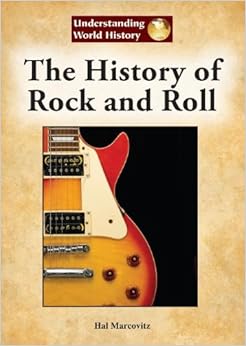
The Book: History of Rock and Roll by Hal Marcovitz
The Program: Music Club Teen Program
My library hosts a monthly teen music club. Each month highlights a specific genre or decade in music, allowing teens to both enjoy the music they love and hear music to which they’ve not been exposed. Marcovitz’s title can add a lot of context and interesting facts to a music club meeting, and I can see several of our die-hard musician teens checking it out for leisure reading.
The Book: Life During the Roman Empire by Stuart A. Kallen
The Program: Minute to Win It - Gladiator Style for Teens or School-age Kids
Even if they aren’t familiar with the Minute to Win It television show, lots of kids and teens are drawn to game competition programs. The quick pace of Minute to Win It tasks (ideas here) keeps everyone interested. I’d throw a Roman Gladiators-themed Minute to Win It program, complete with an introduction about all the perils facing those alive in Ancient Rome--info that can be provided by Kallen’s title. Togas optional.
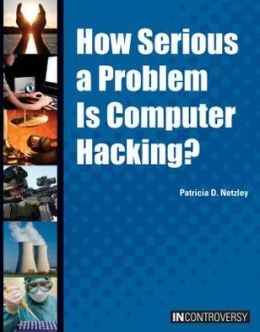
The Book: How Serious a Problem is Computer Hacking? by Patricia D. Netzley
The Program: CoderDojo for teens or school-age children
Make a STEM programming connection and help teens and kids learn to code by offering a CoderDojo at the library. I would either use Scratch or Code Academy to introduce basic coding skills, and I would include facts from Netzley’s title to give context to the potential for coding skills to do both great and destructive things. We would of course talk about using our coding powers for good.
In the classroom:
The Book: Thinking Critically: Social Networking by Andrea C. Nakaya
The Classroom Activity: Classroom debate on the school’s social media policies
The Books: Life in the North During the Civil War by Jim Whiting and Life in the South During the Civil War by Diane Yancey
The Classroom Activity: Understanding different points of view in history class; Using first-person accounts to further understanding
The Book: The Future of Renewable Energy series
The Classroom Activity: Persuasive writing about current topics in science and politics
Scholastic
In the public library:
The Book: Monster Bulldozers by Chris Bowman
The Program: Preschool Construction Party
Preschoolers love to build, and they love the equipment associated with construction. Monopolize on those interests by offering a construction party program. Share plenty of nonfiction with great images, like Bowman’s book, to work in some great construction vocabulary, then let the construction begin. You can set out all the library’s building materials and let kids engage as they please, or you can follow a more specific program plan.
The Book: Unexplained Mysteries series
The Program: Fact or Fiction? School-Age Trivia
Take advantage of the common fascination with the unexplained and myths to put together a trivia program for school-age kids. I’d create a long list of possible questions on a variety of topics using the Unexplained Mysteries series as well as some Ripley’s Believe it or Not! titles. During the program, I’d break kids into teams and have them compete to answer each question as fact or fiction. Prizes may result, but bragging rights are great, too.
The Book: You Wouldn’t Want to… series
The Program: Time Travel Adventures School-Age Program
Set up a carnival-style program with several different games and activities stations. Each station would represent a historical time period, with the games and activities gleaned from this popular nonfiction series. Think pyramid-building tasks and mammoth- and whale-hunting skills. I would make sure to display titles from the different historical time periods alongside the activities, because so many of these little history factoids inspire interest and leisure reading.
The Book: You Can Draw It! series
The Program: 12-Hour Comics Day for Teens or School-Age
I previously worked at a library that offered a variation on 24-Hour Comics Day, a worldwide event that encourages comic writers, artists, and fans to create a full 24-page comic in one day. I’d book the program room for an entire day and set out plenty of paper, pencils, pens, and coloring implements as well as tons of resources for crafting stories and drawing. The new titles in this You Can Draw It! series would assist comics creators in making comics around some of their favorite topics: mythical beings and cars.
In the classroom:
The Book: Blastoff! Readers - Exploring Countries series
The Classroom Activity: Using different text features to get all the information, in the school media center; Social studies country projects
The Book: Cornerstones of Freedom: Gun Control by Steve Otfinoski
The Classroom Activity: Persuasive writing or speaking assignments
The Book: Extremely Weird Animals series
The Classroom Activity: Animal research unit; Science unit on animal adaptation
The Book: Rookie Read-About Science: Acorn to Oak Tree by Lisa M. Herrington
The Classroom Activity: Science unit on plants or the life cycle; Arbor Day activities
~*~
How would you use these or other new nonfiction titles in your school or public library?
As supplementary material to the webcast, Cathy and I are both expanding on some of the topics we’re sharing with attendees. Head over to Cathy’s blog, The Nonfiction Detectives, to get some context for the nonfiction we’re seeing published for youth today. Cathy and her co-blogger, Louise Capizzo, are veritable experts on this topic, and they have lots of examples and food for thought for understanding the nonfiction available now.
I’m sharing some programming and classroom connections for titles mentioned in this webcast. I’ve connected a variety of titles from each of the three featured publishers to public library program options--so you can see how you can add these titles to your programming repertoire as well as your nonfiction stacks. Cathy shared some great info about how some of the titles can connect to classroom activities (I don’t go into as much detail here, as no one wants to see me pretend to know what school curriculum or a typical school day looks like in 2014).
So check out Cathy’s intro to the types of nonfiction available for libraries serving youth; read up on some programming and classroom connections for specific titles; accessing the archived webcast when it’s available; and get using more nonfiction in your library. I’d love to hear what you’re currently doing with nonfiction down in the comments.
Gale Cengage
In the public library:
The Program: Animation School-Age Program
Every librarian knows that Disney is big--and perhaps more so here in Missouri, Disney’s birthplace. So an animation program that has some Disney materials tie-ins will be popular. To create context around animation, I’d use Sheen’s book as well as the Disney Animated app (the 2013 Cybils winner for best app!). Then we’d get animating. If we have enough tablets, we could go high-tech and use animation apps for the iPad to create cartoons. Or we could go old-school and make flip book cartoons using markers and pads of sticky notes.
The Book: Science Behind Sports: Cycling by Stephen Currie
The Program: Sports and Simple Machines School-Age Program
Lots of sports equipment uses the principles of simple machines to help athletes perform well. In this program, we’d introduce the different types of simple machines and test them out at different stations. From there, we’d see either video clips or still images of athletes performing their sports, and then we’d try to identify how simple machines are at work. Currie’s title would add great context and examples to this activity. We would end with some hands-on, creative construction to try to imagine making our own sports equipment.
The Book: Teen Rights and Freedoms: Bullying by David M. Haugen
The Program: Teen Chat & Chew: Bullying Edition
My library regularly hosts Chat & Chews for teens. These programs take the form of a book discussion, although there is no assigned reading leading up to the event. Instead, teens gather to enjoy some snacks and talk books. Teens share what they’ve been reading, and then the library staffer shares book talks for titles on a theme. Bullying happens in a huge variety of young adult titles, and it’s a nearly universal experience, so it would make a great topic for book discussion in a Chat & Chew. Haugen’s title can also add great context to these discussions and instances of bullying in books, allowing teens to see facts and legislation about bullying.
The Book: Eye on Art: Public Art by Meryl Loonin
The Program: Graffiti Art for Teens
I’d share some examples of public art from Loonin’s book as well as some graffiti images (think Banksy) to get the graffiti juices flowing. From there, I’d designate a space--a bare wall covered with butcher paper, large glass windows--and hand out supplies for teens to create their own graffiti. We’d talk about keeping it appropriate if it’s going to be displayed, but I don’t see too many teens at a library program trying to get away with crude illustrations. I’d love to host this program in the lead-up to summer reading and have teens decorate on the summer reading theme.
In the classroom:
The Book: Hot Topics: Medical Marijuana by Kevin Hillstrom
The Classroom Activity: Supporting opinion with facts in both persuasive writing and speaking
The Book: At Issue: Drones by Gale
The Classroom Activity: Persuasive writing on a current event topic in social studies class
The Book: Opposing Viewpoints: Human Genetics by Louise Gerdes
The Classroom Activity: Understanding different points of view in biology class
ReferencePoint Press
In the public library:
The Book: Tattoos, Body Piercing, and Art by Kris Hirschmann
The Program: Henna Tattoos Teen Program
Many teens are drawn to tattoos for the artistic aspect, which means a henna tattoo program can be a huge draw. Hirschmann’s title allows the program to have just as much information as creativity. Share facts about tattoos as teens sketch their own designs and then get temporary henna tattoos.
The Book: History of Rock and Roll by Hal Marcovitz
The Program: Music Club Teen Program
My library hosts a monthly teen music club. Each month highlights a specific genre or decade in music, allowing teens to both enjoy the music they love and hear music to which they’ve not been exposed. Marcovitz’s title can add a lot of context and interesting facts to a music club meeting, and I can see several of our die-hard musician teens checking it out for leisure reading.
The Book: Life During the Roman Empire by Stuart A. Kallen
The Program: Minute to Win It - Gladiator Style for Teens or School-age Kids
Even if they aren’t familiar with the Minute to Win It television show, lots of kids and teens are drawn to game competition programs. The quick pace of Minute to Win It tasks (ideas here) keeps everyone interested. I’d throw a Roman Gladiators-themed Minute to Win It program, complete with an introduction about all the perils facing those alive in Ancient Rome--info that can be provided by Kallen’s title. Togas optional.
The Book: How Serious a Problem is Computer Hacking? by Patricia D. Netzley
The Program: CoderDojo for teens or school-age children
Make a STEM programming connection and help teens and kids learn to code by offering a CoderDojo at the library. I would either use Scratch or Code Academy to introduce basic coding skills, and I would include facts from Netzley’s title to give context to the potential for coding skills to do both great and destructive things. We would of course talk about using our coding powers for good.
In the classroom:
The Book: Thinking Critically: Social Networking by Andrea C. Nakaya
The Classroom Activity: Classroom debate on the school’s social media policies
The Books: Life in the North During the Civil War by Jim Whiting and Life in the South During the Civil War by Diane Yancey
The Classroom Activity: Understanding different points of view in history class; Using first-person accounts to further understanding
The Book: The Future of Renewable Energy series
The Classroom Activity: Persuasive writing about current topics in science and politics
Scholastic
In the public library:
The Book: Monster Bulldozers by Chris Bowman
The Program: Preschool Construction Party
Preschoolers love to build, and they love the equipment associated with construction. Monopolize on those interests by offering a construction party program. Share plenty of nonfiction with great images, like Bowman’s book, to work in some great construction vocabulary, then let the construction begin. You can set out all the library’s building materials and let kids engage as they please, or you can follow a more specific program plan.
The Book: Unexplained Mysteries series
The Program: Fact or Fiction? School-Age Trivia
Take advantage of the common fascination with the unexplained and myths to put together a trivia program for school-age kids. I’d create a long list of possible questions on a variety of topics using the Unexplained Mysteries series as well as some Ripley’s Believe it or Not! titles. During the program, I’d break kids into teams and have them compete to answer each question as fact or fiction. Prizes may result, but bragging rights are great, too.
The Book: You Wouldn’t Want to… series
The Program: Time Travel Adventures School-Age Program
Set up a carnival-style program with several different games and activities stations. Each station would represent a historical time period, with the games and activities gleaned from this popular nonfiction series. Think pyramid-building tasks and mammoth- and whale-hunting skills. I would make sure to display titles from the different historical time periods alongside the activities, because so many of these little history factoids inspire interest and leisure reading.
The Book: You Can Draw It! series
The Program: 12-Hour Comics Day for Teens or School-Age
I previously worked at a library that offered a variation on 24-Hour Comics Day, a worldwide event that encourages comic writers, artists, and fans to create a full 24-page comic in one day. I’d book the program room for an entire day and set out plenty of paper, pencils, pens, and coloring implements as well as tons of resources for crafting stories and drawing. The new titles in this You Can Draw It! series would assist comics creators in making comics around some of their favorite topics: mythical beings and cars.
In the classroom:
The Book: Blastoff! Readers - Exploring Countries series
The Classroom Activity: Using different text features to get all the information, in the school media center; Social studies country projects
The Book: Cornerstones of Freedom: Gun Control by Steve Otfinoski
The Classroom Activity: Persuasive writing or speaking assignments
The Book: Extremely Weird Animals series
The Classroom Activity: Animal research unit; Science unit on animal adaptation
The Book: Rookie Read-About Science: Acorn to Oak Tree by Lisa M. Herrington
The Classroom Activity: Science unit on plants or the life cycle; Arbor Day activities
~*~
How would you use these or other new nonfiction titles in your school or public library?
Show Me STEAM on The Library As Incubator Project
I am extremely excited to be sharing my first post today on The Library as Incubator Project!
A while back, The Library as Incubator Project (LAIP) contacted me to see if I'd be interested in regularly contributing to their blog. They were looking for a STEAM perspective--specifically, programming ideas and examples for integrating STEM concepts into those "traditional" arts and crafts programs that take place at so many libraries. I LOVE the LAIP and was thrilled to say "yes."
My first post serves as something of an introduction to this idea of harnessing the STEM potential in arts and crafts programs. It's meant to serve as an introduction to the idea that there are STEM applications for arts & crafts activities. Readers of The Show Me Librarian are likely already familiar with this concept in theory, but fret not: from here on out, my monthly posts on LAIP will each highlight a specific program, ready to replicate in your library. These will be programs that at first glance look like straight arts and crafts programs, but which actually have tons of avenues for adding in STEM concepts, too.
I hope you'll head over to LAIP to read my first post for them. Then stick around and browse all of their great content. It's a gold mine of ideas over there!
A while back, The Library as Incubator Project (LAIP) contacted me to see if I'd be interested in regularly contributing to their blog. They were looking for a STEAM perspective--specifically, programming ideas and examples for integrating STEM concepts into those "traditional" arts and crafts programs that take place at so many libraries. I LOVE the LAIP and was thrilled to say "yes."
My first post serves as something of an introduction to this idea of harnessing the STEM potential in arts and crafts programs. It's meant to serve as an introduction to the idea that there are STEM applications for arts & crafts activities. Readers of The Show Me Librarian are likely already familiar with this concept in theory, but fret not: from here on out, my monthly posts on LAIP will each highlight a specific program, ready to replicate in your library. These will be programs that at first glance look like straight arts and crafts programs, but which actually have tons of avenues for adding in STEM concepts, too.
I hope you'll head over to LAIP to read my first post for them. Then stick around and browse all of their great content. It's a gold mine of ideas over there!
Tuesday, February 25, 2014
World Read Aloud Day is March 5!
If you haven't made them already, you should make some plans to do extra read-aloud activities next Wednesday. That's because March 5 is World Read Aloud Day!
According to LitWorld, the international non-profit that puts on the event each year, "World Read Aloud Day is about taking action to show the world that the right to read and write belongs to all people." It's a prime opportunity to insert a few bonus story read-alouds or writing activities at your library.
Next week at my library, we're celebrating in a handful of ways. We have an advertised "Read with a Police Officer!" story time program in the afternoon, and a member of my local police force will come to share a story and talk about why reading is fun and important. I'm going to set up a "Favorite Books to Read Aloud" station for all library customers; they'll be able to write the names of their favorite read-alouds on die-cut books and share them on a display. And my plan is to do impromptu read-alouds in the children's area whenever there are a handful of kids present.
I'll report back next week for a recap of our World Read Aloud Day festivities. In the meantime, I'd love to hear how you plan to celebrate!
According to LitWorld, the international non-profit that puts on the event each year, "World Read Aloud Day is about taking action to show the world that the right to read and write belongs to all people." It's a prime opportunity to insert a few bonus story read-alouds or writing activities at your library.
Next week at my library, we're celebrating in a handful of ways. We have an advertised "Read with a Police Officer!" story time program in the afternoon, and a member of my local police force will come to share a story and talk about why reading is fun and important. I'm going to set up a "Favorite Books to Read Aloud" station for all library customers; they'll be able to write the names of their favorite read-alouds on die-cut books and share them on a display. And my plan is to do impromptu read-alouds in the children's area whenever there are a handful of kids present.
I'll report back next week for a recap of our World Read Aloud Day festivities. In the meantime, I'd love to hear how you plan to celebrate!
Monday, February 24, 2014
Thinking Outside the Book: Ballet Storytime
It's probably no surprise to anyone that a ballet-themed story time is a hit with our young program-goers; after all, how many young ones are in ballet and other dance classes, and how many more love the idea of dancing? And so a ballet story time is really a no-brainer. But what if you think outside the book when planning that story time and partner with a ballet professional in your community for an extra special program experience?
That's what my library district has been doing this week. My colleague made a call to a ballerina with the Missouri Ballet Theatre, and before we knew it, a ballet dancer was scheduled to make a costumed appearance at storytimes at each of our programming branches. Since the real live ballerina is a huge draw for this program, that means restructuring the story time format a bit. Here's what we did.
Ballet Storytime
Welcome & Introduction
I wanted to make extra sure that all our attendees had time to get into the program room, so I spent the first few minutes of the program time talking to the children (many of whom came in tutus and other fancy dress). We talked about who likes to dance, who takes dance classes, what they wear to dance, and who had been to the ballet. Lots of fans of The Nutcracker here.
When it was time to get started, I introduced myself and Miss Rachel, our ballerina from the Missouri Ballet Theatre who was in full Sugar Plum Fairy regalia. I also explained the format for our special story time.
Story: Brontorina by James Howe, illustrated by Randy Cecil
This is truly a dance story of grand proportions: it's got dance, dinosaurs, worries about fitting in, and strong friendship themes. I did my read-aloud of this book standing up, which allowed me a larger range in sharing the illustrations--a necessity considering we had about 60 people show up for the program. There are a few pages that show Brontorina and her dance classmates doing a few ballet steps, and Miss Rachel demonstrated those moves so that the children could get an even better idea of what they look like.
Ballerina Time!
After the story, Miss Rachel took over for a bit. She invited all of the children (almost all girls, with one lone boy who was equally captivated by the demonstration) to stand and try some ballet steps. The learned to stand in first position, to pliƩ, to arabesque, and to relevƩ. They finished up their mini lesson with a combination--a short dance, if you will. There was plenty of excited ballet dancing going on.
After I had the children sit back down, they were able to ask Miss Rachel questions. Questions included how long she had been dancing, what are her favorite ballet roles, and questions about what moves she can do and how much she practices. Our lone male storytime attendee raised his hand last to ask if boys can be ballet dancers, and Miss Rachel happily shared how important male dancers are to ballet.
Craft and Picture Time
Our event advertisement mentioned that there would be a photo op with the ballet dancer, and many a young friend was clamoring for just that chance. To help with crowd control and keep the line of children waiting to meet the dancer short, I also offered a simple ballet craft at the back of the room. I printed (and a volunteer cut) card stock ballerinas. I set these out with crayons and scissors, and also available were cupcake liners, which could be glued on with glue sticks to create tutus and dancing skirts (see finished craft in above photo). The children could do the craft then get in line for a picture, or vice versa, or any combination that worked for them. I made sure to have plenty of ballet fiction and nonfiction books by the photo op area, too, to encourage folks to check out a book and keep learning about ballet. Having two activities going at once definitely cut down on the waiting time for pictures with Miss Rachel, and it also helped us keep the program at the advertised 45 minutes.
All in all, our Ballet Storytime was a delightful success. I saw several attendees leap and dance out of the library afterwards; I think that's pretty indicative of a meaningful library experience, when you are literally acting out the program as you head home.
That's what my library district has been doing this week. My colleague made a call to a ballerina with the Missouri Ballet Theatre, and before we knew it, a ballet dancer was scheduled to make a costumed appearance at storytimes at each of our programming branches. Since the real live ballerina is a huge draw for this program, that means restructuring the story time format a bit. Here's what we did.
Ballet Storytime
Welcome & Introduction
I wanted to make extra sure that all our attendees had time to get into the program room, so I spent the first few minutes of the program time talking to the children (many of whom came in tutus and other fancy dress). We talked about who likes to dance, who takes dance classes, what they wear to dance, and who had been to the ballet. Lots of fans of The Nutcracker here.
When it was time to get started, I introduced myself and Miss Rachel, our ballerina from the Missouri Ballet Theatre who was in full Sugar Plum Fairy regalia. I also explained the format for our special story time.
Story: Brontorina by James Howe, illustrated by Randy Cecil
This is truly a dance story of grand proportions: it's got dance, dinosaurs, worries about fitting in, and strong friendship themes. I did my read-aloud of this book standing up, which allowed me a larger range in sharing the illustrations--a necessity considering we had about 60 people show up for the program. There are a few pages that show Brontorina and her dance classmates doing a few ballet steps, and Miss Rachel demonstrated those moves so that the children could get an even better idea of what they look like.
Ballerina Time!
After the story, Miss Rachel took over for a bit. She invited all of the children (almost all girls, with one lone boy who was equally captivated by the demonstration) to stand and try some ballet steps. The learned to stand in first position, to pliƩ, to arabesque, and to relevƩ. They finished up their mini lesson with a combination--a short dance, if you will. There was plenty of excited ballet dancing going on.
After I had the children sit back down, they were able to ask Miss Rachel questions. Questions included how long she had been dancing, what are her favorite ballet roles, and questions about what moves she can do and how much she practices. Our lone male storytime attendee raised his hand last to ask if boys can be ballet dancers, and Miss Rachel happily shared how important male dancers are to ballet.
Craft and Picture Time
Our event advertisement mentioned that there would be a photo op with the ballet dancer, and many a young friend was clamoring for just that chance. To help with crowd control and keep the line of children waiting to meet the dancer short, I also offered a simple ballet craft at the back of the room. I printed (and a volunteer cut) card stock ballerinas. I set these out with crayons and scissors, and also available were cupcake liners, which could be glued on with glue sticks to create tutus and dancing skirts (see finished craft in above photo). The children could do the craft then get in line for a picture, or vice versa, or any combination that worked for them. I made sure to have plenty of ballet fiction and nonfiction books by the photo op area, too, to encourage folks to check out a book and keep learning about ballet. Having two activities going at once definitely cut down on the waiting time for pictures with Miss Rachel, and it also helped us keep the program at the advertised 45 minutes.
All in all, our Ballet Storytime was a delightful success. I saw several attendees leap and dance out of the library afterwards; I think that's pretty indicative of a meaningful library experience, when you are literally acting out the program as you head home.
Friday, February 21, 2014
Flannel Friday: Dog's Colorful Day
In continuing my 2014 story time resolution to begin creating felt stories, I decided to focus this month on creating a story using a book pattern. In choosing a story for this challenge, I looked to the box of books to consider for withdrawal on my desk. Dog's Colorful Day by Emma Dodd was in the box thanks to a few too many tears on the well-read pages. Srince I had to get rid of the book and wouldn't have a replacement for a while, I figured the tale would make a great felt story.
Turns out that Dog's Colorful Day is something of a felt story staple. Search Flannel Friday and you'll see many a variation, which was incredibly helpful as I planned making my own pieces. In the end, I used this great printable pattern from MakingLearningFun.com. After printing and cutting out the pattern for Dog, I cut out my felt Dog using a somewhat freestyle manner (I had forgotten where I'd put my sewing kit and straight pins). I then cut out circular spots freehand. I was quite pleased with my final product, which involved my first foray into puffy paint. And every time I've used this felt story in outreach story times, it's been a crowd-pleaser. Month two of felt story goal: complete!
Check out this week's full Flannel Friday round-up on K Leigh's blog Storytime ABC's.
Turns out that Dog's Colorful Day is something of a felt story staple. Search Flannel Friday and you'll see many a variation, which was incredibly helpful as I planned making my own pieces. In the end, I used this great printable pattern from MakingLearningFun.com. After printing and cutting out the pattern for Dog, I cut out my felt Dog using a somewhat freestyle manner (I had forgotten where I'd put my sewing kit and straight pins). I then cut out circular spots freehand. I was quite pleased with my final product, which involved my first foray into puffy paint. And every time I've used this felt story in outreach story times, it's been a crowd-pleaser. Month two of felt story goal: complete!
Thursday, February 20, 2014
February STEAM Reads Roundup
One of the ways in which I plan to blog about books on this blog now that I'm post-Newbery is to focus on STEAM titles. That's books, both fiction and nonfiction, that have some sort of connection to science, technology, engineering, the arts, and math. Since I aim to read as many of these titles as I can in the time I've got, the plan is to share a roundup of my STEAM reads once every month or so. Reviews may be on the shorter side depending on the overall length of posts, but I hope they'll still give you the gist of how I'd use any particular STEAM title in my library.
STEAM Reads - February 2014
The Stats: Assorted titles from Bullfrog Books/Jump!, including Red (Glaser), Clownfish (Meister), Pumpkins in Fall (Schuh), Ants (Schuh), Lions (Lindeen), Bulldozers (Meister), Pigs (Dieker), and Fall (Dawson), copyright 2014
The Synopsis: Easy nonfiction series on topics including animals, colors, seasons, and trucks
The Review: These 8"x8" volumes are full of rich, high-quality color photographs that illustrate each books topic in a beautiful and interesting manner. Combining simple informative text with a touch of narrative, these titles are excellent for young children looking for information on and pictures of favorite or new topics. Titles include simple glossaries and indexes.
The Programming Connection: I'll be using these books to add nonfiction elements to story times, in preschool science programs, and as visual display elements in programs centered around relevant topics
The Stats: Dinosaurs #1: In the Beginning... story by Arnaud Plumeri, art by Bloz, color by Maƫla Cosson, released January 7 from Papercutz
The Synopsis: Indino Jones is a dinosaur expert, and he gets this graphic novel started by sharing some major dinosaur facts and records. The book touches on a range of dinosaur facts, exploring imagining the lives of a variety of different dinosaurs.
The Review: The storytelling style of this fact-based graphic novel is peppered with dinosaur factoids, action, and plenty of humor to keep readers enthralled. It's not all strictly lighthearted dino chat, though, as real information comes through in the panels as well as the index and glossary. The lettering is a bit on the small side, but I don't think that will deter many young readers interested in dinosaur graphic novels.
The Programming Connection: A great addition to displays of materials for check-out at dinosaur- and paleontology-themed programs
The Stats: Feathers: Not Just for Flying by Melissa Stewart, illustrated by Sarah S. Brannen, released February 25 from Charlesbridge
The Synopsis: When we think of feathers, we tend to think only of flight and nothing more. In actuality, though, feathers serve many different purposes for the birds who have them, from providing protection and camouflage to acting as tools.
The Review: This beautifully-illustrated book is a treasure trove of information about feathers, a nature topic that never fails to captivate children. The field journal-style layout gives readers multiple ways to engage with this title: as an introduction to the myriad roles feathers play in the natural world, or as a leisurely exploration of the beauty, diversity, and function present in such a simple thing as a feather. This title is part informative, part invitation to explore, and the combination will serve readers well.
The Programming Connection: Offer a school-age program about birds and spend a good amount of time focused on feathers using this title. I'd pair it with high-resolution photographs from books about birds, and I'd include an open-ended craft utilizing feathers as an art medium.
The Stats: Aviary Wonders Inc. Spring Catalog and Instruction Manual by Kate Samworth, released March 4 from Clarion
The Synopsis: The year is 2031, and birds are extinct in the wild. Luckily for folks with some spending money, however, that Aviary Wonders Inc. can offer custom-made birds with any shape, color, or function desired.
The Review: For all the whimsy of the premise of this title, it's an extremely strong STEAM text. Samworth's illustrations are beautiful, but the value of this text extends far beyond aesthetics. Readers will chuckle upon reading the specifics of designing one's own bird--choose a beak! a tail! a style of wings!--but they'll really be learning plenty about birds along the way. Clever illustrations implore readers to consider the physical nature of birds with a critical eye, ultimately leading them to learn why different real-life birds look the way they do. Those short beaks or long legs serve a purpose, after all.
The Programming Connection: This is a great title to share as an inspirational text in a program about birds, or really about any type of animal. It begs for children to be able to assemble their own bird oddities. In fact, I'd love to see this title adapted into book app format to really allow kids the opportunity to order their birds from Aviary Wonders Inc.
The Stats: Behold the Beautiful Dung Beetle by Cheryl Bardoe, illustrated by Alan Marks, released March 11 from Charlesbridge
The Synopsis: Dung beetles are so much more than just bugs who hang around animal feces. In actuality, they are tiny creatures who take advantage of a readily-available resource in a variety of ways.
The Review: Who knew there were so many beetles vying for animal dung? That's exactly what young readers will discover in reading this book. There's a whole insect world focused around eating, moving, and utilizing animal dung, this title demonstrates that the small dung beetle has much to captivate us. The text is handled quite well, with larger font denoting the major facts and paragraphs in a smaller font adding more detail (these paragraphs could be left out in read-alouds without limiting the book's efficacy). With some particularly great turns of phrase ("Clad in splendor, dung beetles ascend into our world."), this book is surprisingly interesting and never stoops to using obvious poop jokes.
The Programming Connection: This title will make a fascinating, non-traditional addition to story times about bugs (move over, hungry caterpillar!), and it would be an attention-grabbing element of a school-age program on entomology.
The Stats: Wild About Bears by Jeannie Brett, released March 11 from Charlesbridge
The Synopsis: There are eight species of bears living on earth today, each with distinct attributes and habitats as well as a few commonalities.
The Review: After giving a basic introduction to bear physical traits and behavior, this title shares simple, fact-packed descriptions of the different types of bears that exist in the world. Sun bears and sloth bears get just as much page space as the more common polar and brown bears, and each illustration boasts a few additional pieces of interesting bear trivia. Each bear is identified by scientific name, common names, and size, making this title a strong starting resource for reports on bears. Back matter includes a world map showing where different bears live as well as a glossary of different habitats.
The Programming Connection: I'll make this title available for check-out after sharing Florence Minor's If You Were a Panda Bear as a read-aloud, as Brett's text goes into more detail and depth and can truly inspire interest in bears of all kinds.
Review copies provided by the publishers.
Subscribe to:
Posts (Atom)