Tuesday, July 7, 2015

Exploring Bubbles in Science Club, Jr.

Our science adventure opportunities for preschool-age children have continued at my library this summer, with seasonal additions of weekly Nature Play (outdoor sensory play time) and Tour the Sensory Garden (hands-on garden explorations) programs that have been quite well attended. We've also continued to offer Science Club, Jr., as a monthly offering. In our most recent Science Club, Jr. program, we explored bubbles.

To prepare for this program, I gathered:
  • 18 small bubble containers, to which I added a few drops of watercolor colorant;
  • white paper; 
  • one massive jug of bubbles;
  • a sleeve of chenille sticks;
  • some plastic food container lids; and
  • plenty of paper towels for inevitable drips and spills.

We kicked off our exploration of bubbles with a story: Big Bad Bubble by Adam Rubin, illustrated by Daniel Salmieri. This delightful picture book suggests that, when a bubble pops here on Earth, it doesn't just disappear--it reappears in La La Land, where the monsters find bubbles terrifying. This fun, obviously fictional, story provides lots of opportunities for talking about what kids know about bubbles, making observations, etc. And a little bit of humor can go a long way to starting a program off well.


Our first hands-on activity was to see what bubbles leave behind when they do pop. I placed sheets of white paper and the small containers of now-colored bubbles on each table, and kids were instructed to blow their bubbles onto their papers. Note: instruct caregivers to hold the bubble containers while their kids dip the bubble wands and blow bubbles, as otherwise spills are guaranteed. As kids blew their bubbles onto the white paper and the bubbles popped, they saw the various shapes and sizes, now in color, that the bubbles left behind. Abstract bubble art!

Our second hands-on activity was to see if we could blow bubbles in shapes that are not spheres. We talked about circles and spheres, then I gave each child a chenille stick to bend into another shape. These chenille sticks--now in the form of bubble wands with triangle, square, heart, and moon-shaped heads--were then dipped into pans of bubble solution I had set on the tables. We had a bit of a bubble party as kids with different shaped wands took turns demonstrating the bubbles they were creating. Much to the kids' delight, this activity shows that no matter the shape of the bubble wand, bubbles are spheres. Note: I highly recommend ending your program with this activity, or doing it outside if possible, as the floor is a bit of a slippery mess after all the blowing of bubbles around the room.

Thus ended our exploration of bubbles in Science Club, Jr. The topic seemed particularly apt to kick off the summer (this program happened early in June), and I heard many families say they'd be experimenting with bubbles at home as a result of attendance.


Thursday, June 18, 2015

Stock Your Digital Suitcase: A Family Tech Program

Summer usually means two main things at the library: summer reading and vacations. As youth librarians, we want those two things to go hand in hand; we want kids to include reading as part of their summer vacations. For many libraries, this intended connection has long led to heightened promotion of audiobooks in the summertime. After all, what better way to pass the time of a long family car trip than with a great book that's performed for you? With this summer ethos in mind, I decided to offer a program to highlight the particular value of the library's eresources during the summer. And so the concept for "Stock Your Digital Suitcase" was born.

My idea for "Stock Your Digital Suitcase" was to allow my target audience--school-age children and their caregivers--the opportunity to learn about the different downloadable and streaming eresources my library offers, then give them time to start trying them out while I was in the program to help with questions and troubleshooting.

Because I knew I wanted families who attended the program to be able to get hands-on and actually download a resource, I clearly stated in the published event description that attendees should bring an ereader and/or wi-fi-connected device (smartphone, tablet), their library card, and any password they might need to download the free eresource apps. I asked people to register for the program so I could gauge the general level of interest in this topic--if only one or two signed up, I was prepared to scrap the program and instead set up one-on-one appointments with the would-be registrants. While the program roster didn't fill up as quickly as some of our summer program offerings, I was pleasantly surprised that, come program day, I only had one slot left in my 20-person roster. Eresources is obviously a topic of interest for many of our patrons.

I spent the first half of the program--about 30 minutes--giving an overview of the basics of my library's eresources. I presented these basics with the visual aid of some simple slides, which I had on my iPad mini and projected via Apple TV. We talked about what is required to use ersources: library card in good standing; device; and internet connection. And, because my library has eresources available for both download and streaming, we talked about the difference between those two models. The big takeaway: if you're going on vacation to a place where you don't know if you'll have wi-fi access, make sure to download everything before you leave!


In this introduction to our eresources, I also explained that each of the platforms--in our case, 3M Cloud Library, OverDrive, OneClick Digital, Hoopla, and Zinio--requires users to set up an account with them. I emphasize that, while this initial setup process can feel a bit tedious, it is a one-time process. From there, I touted what each resource offers, running the gamut from downloadable and streaming ebooks and eaudio, to downloadable magazines and streaming comics, to streaming movies, tv shows, and music. To say that the attendees were flabbergasted at the breadth of content available who be accurate.

I had created a little half-page handout for attendees to use in the second half of the program, which was hands-on trial time. The handout listed the web address of where to find the list of the library's eresources as well as the names and types of content offered by our different platforms. I included images of each platform's app icon as well to make locating them in the app marketplace easier.

I moved about the room as the kids and their caregivers got down to business downloading a first app and setting up an account. The account creation aspect is the reason I specified this program was for families, including the caregiver: creating an account on each platform requires an email address (which many kids either don't have or don't know), and most ask you to check a box saying you are over 13 or have a parents' permission to proceed. 

Once the desired apps were downloaded and required accounts created, kids searched and browsed for the books and other materials (but primarily books, which made me so happy!) they found interesting, then tried their hands at downloading and/or streaming. At this point, we talked a bit about how eresources return themselves (no late fees!), how best to browse for kids' materials, and how to put an eresource on hold. All of the questions were outstanding ones that really helped kids and their caregivers understand how to use these resources in the same ways they would the library stacks. After the end of the program--which I ended with a reminder to add all ereading to kids' summer reading logs--lots of families left with smiles and statements that they couldn't wait to "pack" for their summer vacations.


I'm thrilled that this program was such a success. As the staff member who purchases all the children's and teen content for our ebook/eaudiobook platforms, I know that we've upped our budgets for eresources in past years. The fact that there's a sizable audience of library cardholders eager to put these materials to use makes me happy. When I shared the success with my colleagues, they recommended possible times to repeat this type of program: perhaps after the holidays when devices have been received as gifts, or in advance of spring breaks. I'll figure out the logistics of when, but I think it's safe to say this program deserves some repeats to highlight a great pocket of our collections.

Tuesday, June 2, 2015

What It Means to Me to Be a Media Mentor

I consider myself a pretty competent desk worker. When I'm on the youth services "Ask Questions Here" desk at my library, I genuinely enjoy advisory questions--it's a joy to get great materials into the hands of eager youth. I get a rush from a good reference query; it's like a sort of logic puzzle to find the specific resource or information that the child or caregiver seeks. And I feel like my natural curiosity serves me well in my job: I read a lot about literacy, education, developmental appropriateness, etc., and I am always happy to share some of the research and recommendations I've read when parents ask questions about specific materials, encouraging literacy, or appropriateness of a certain item for their child.

I love doing all of these parts of the desk worker's daily trade. And, in a twenty-first century library, I don't think any of these services is limited strictly to books.

Did you notice that I didn't specifically mention books and traditional reading materials in the first paragraph of this blog post? That was intentional. If my experience working at reference desks over the past few years has taught me anything, it's that library patrons--of every age--consume information widely and in many different ways. Books. Audiobooks. Downloadables. Web resources. Databases. And, most recently, new media--predominantly apps.

The way I see it, my job is to answer patron questions. If they ask me about books, I tell them about books. If they ask me about the appropriateness of a book for a child of a certain age, I share resources that can provide perspectives on that topic. I use the knowledge I have gleaned from my education, training, and years of service to given patrons the best possible resources in answer to their questions, whatever those questions may be. And if that holds true for books, it holds true for other types of media, too.

That's one of the reasons I co-authored Media Mentorship in Libraries Serving Youth, a white paper adopted by the ALSC Board this past March.

Media mentorship means providing children and their caregivers with the best possible answers to their queries, regardless of the type of media they ask about. Being able to answer those questions well--which is my job--requires me to be knowledgeable about all those types of media my kids and caregivers might ask about. I need to have some basic information about all those types of media, specifically information and recommendations from experts. And I need to know where to go to find reliable, quality information when I a patron's question requires me to find it.

That's what being a media mentor means to me: supporting children and their families in their information needs and wants, and having access to and knowledge of the information that can help me do that. It's not about format--I am a media mentor when asked about books as much as when I'm asked about apps. After all, books are the original library medium.

I don't find the idea of media mentorship controversial. It's not about technology; it's about children and families and doing the best we can to serve their needs. That's what it means to me to be a media mentor.

~~*~~

Do you have a perspective or story about what it means to act as a media mentor to children and families in your library? Help us spread the word about the virtual release party for the new Media Mentorship in Libraries Serving Youth white paper! After Tuesday's ALSC Community Forum, we'll be taking to Twitter and blogs to spread ideas for media mentor programs and services. You can join us by using the hashtag #mediamentor.  

Tuesday, May 26, 2015

Exploring Colors in Science Club, Jr.

For the past few months, I've been offering Science Club, Jr. programs here at Skokie. These programs, aimed at children ages 3-5 with an accompanying caregiver, take place in our youth craft room, which boasts laminate floors, counters, and a sink. It's the perfect space to get a little bit messy, y'all!

And that's what we've been doing as families become accustomed to this new program offering: getting hands-on (and a tad bit messy) with some science. Because the room is quite snug with 15 kids and their caregivers, I've reformatted the Preschool Science programs that I used to do in Missouri for a different space. In Science Club, Jr., we focus on a main topic of the day. We first explore that topic with a story, talking about our topic as we go. Then it's time for the hands-on experimentation, which brings the program to 30 minutes.

This month, we explored colors in Science Club, Jr. As we waited for our scientists to trickle into the program space, we all talked about our favorite colors. Then we shared a story: Hervé Tullet's Mix It Up! Have you read it? If not, you're probably familiar with Press Here, the great interactive picture book also by Tullet. Mix It Up! boasts lots of the same interactive aspects while also exploring how colors mix together--specifically, what happens when primary colors combine. One thing I love about the book is that it reinforces the learning about secondary colors by having kids guess what will happen several times. It's not tedious, I promise; rather, it's perfect for a group of kids whose familiarity with colors may vary.

From there, I had the young scientists put on their smocks just in case things got really messy. Then it was experiment time. I had prepped our new indestructible test tubes so that each child would have access to tubes of red, yellow, and blue water (made with liquid food coloring; only 1 drop of blue per tube, please). I had also stocked each workstation with four empty cups for mixing colors, as well as a one-page, both-sides observation sheet on which the kids could record their experiments. There was room for four experiments: mixing red and yellow; mixing yellow and blue; mixing blue and red; and mixing any two (or more!) colors the child might choose. The observation sheet showed two empty tubes and one empty cup for each experiment; kids could use the appropriate colors of crayons to color in the tubes to show what colors they mixed, and then to color in the cup to show what color resulted.

Kids had so much fun getting to mix primary colors to create new colors they also recognized. Many of the kids seemed to enjoy the process of recording their experiments by coloring in the observation sheets, too. I tried to prompt the caregivers, who assisted their young scientists in the experiments, to ask thoughtful questions about "What do you think is going to happen?" and "What do observe from mixing the colors," and I have to say I was satisfied with the interactions happening between children and caregivers throughout. Some kids (and caregivers) needed a bit more step-by-step guidance to proceed through the four experiments, but others were pleased as punch to get down to business and try mixing anything and everything. That's a sign of a great scientific exploration, if you ask me: high engagement and interest in what else might happen.

When all was said and done, this was a simple, straightforward, and engaging edition of Science Club, Jr. It used all items we already had on hand: Mix It Up! by Hervé Tullet, plastic test tubes, paper cups, water, liquid food coloring, and crayons. The only thing I needed to make from scratch was the observation sheet, which you're more than welcome to access for yourself here.

If you offer this program, or some other permutation on exploring the science of colors with young children, I'd love to hear how it goes for you. I've also previously offered a Preschool Science program on colors, which you can read about here.

Monday, May 11, 2015

How I've Done Preschool Science: A Q&A

Over the few years since I started offering Preschool Science programs at my previous job, and in particular as I started blogging about those programs for the ALSC Blog, I've gotten a bunch of questions from librarians all over asking for some additional details on how I ran those programs. I am always so happy to answer questions about these or other of my programs; why should every programmer have to start from scratch for every program? It's so much more efficient to start with examples of programs that have succeeded at real libraries, culled from whatever sources you prefer.

So, on that note, today I'm sharing a Q&A pertaining to my Preschool Science programs, inspired by some recent questions I've had about theme. I'm referring to the Preschool Science series of programs I started at my previous job in Missouri--I haven't written about my similar programs here at Skokie yet.

And in case you want to check out the program plans/write-ups first, you can find them at the following links:

Do you offer these programs on a one time occasional basis, in scheduled sessions of multiple weeks in a row, or are they integrated into a schedule that also includes non-science storytimes?
     Preschool Science programs appeared on the program calendar for the branch library every other month, or six times per year. The regular branch storytime schedule involved three weeks of back-to-back storytimes each month, but Preschool Science (and any other “bonus” preschool programs, like dance parties, etc.) were scheduled in addition to regular storytimes. We did make an effort to schedule Preschool Science on a day of the week that we didn’t usually have a storytime; this decision was to allow as many families with a range of schedules and availability the option to attend one of our early literacy programs.

Do you bring in other elements of a traditional storytime into a Preschool Science program? (e.g., fingerplays, rhymes?)
     I certainly do integrate fingerplays and rhymes into Preschool Science programs. I prefer to match rhymes and other elements with our science topic--as another way to reinforce basic concept knowledge--but if I need to throw in a song for a fidgety group, I’ll do that, too. I haven’t always found songs, rhymes, or fingerplays that match all my science topics, but I’m always on the lookout.

Do you set a lower age limit, or do babies and toddlers come to play too?
     The programs are advertised for ages 3-5 with a caregiver. Siblings are welcome to attend as well, but the program content is not geared at younger children.

How long does a typical Preschool Science program run?
     The story and other concept introduction portion lasts 10-15 minutes, and then kids are able to spend the rest of the time at any or all of the hands-on stations (with their caregivers). As a result of this self-paced format, the program can last anywhere from 20-45 minutes. That is, after everyone finished the introduction portion together, some kids will spend 5 minutes at the stations while others will happily spend 30 minutes. It’s up to them and their level of engagement.

I imagine these events are wildly popular. Do you register and/or cap attendance, or is it come one come all?
     I have always put a registration limit on my Preschool Science programs because of the size of the program room. Technically speaking, I could easily do the storytime introduction portion for a huge group, and since the hands-on activities are self-paced, there’s no limit to potential audience their, either. So I’ve just always let the capacity of the room be my guide for capping attendance. That said, if a coworker were leading the program and felt more comfortable with a restricted group size, I’d totally accommodate that.

I see you set up stations for after the storytime. Some of them seem sequential, while others seem to be more go-to-what-interests-you in any order. How do you decide what set-up will work best for a given program? Does one way work better than another in terms of: How kids enjoy it? Getting the lesson across? What is easiest to do?
     Let me start off by saying that, when I’m planning the hands-on stations, I never envision that they need to be done in a certain order. I intentionally plan for the stations to be able to stand alone; this is because, with the self-paced nature of the hands-on exploration time, I would have no control over who goes to what station when, and I also wouldn’t want to create a bottleneck of everyone trying to do the same stations, in the same order, at the same time. So I make sure that stations can be done in any order at any pace and still be meaningful.
     Kids really seem to enjoy the fact that stations are self-paced, as it allows them to spend an amount of time on an activity that is appropriate to their attention span and interest. Also, because stations are self-paced, it is expected that the child’s caregiver will “do” the stations with the child. As a result, kids seem to love getting to “do” science with their grownup, whatever the particular activity is.
     I do make sure, in setting up each station, that I include on each table a caregiver “cheat sheet,” if you will, which gives brief, simple instructions for the activity at the particular station as well as a few key vocab words and/or questions they can ask their children as they do the activity together. That’s how I try to ensure that the science concept for the program gets across.
     And to reiterate an earlier point, I think it’s easiest to offer standalone stations to keep the flow of the room moving. If I had to spend my time in the program helping people take turns along a set course of stations, I wouldn’t have time to meander about the room and talk to kids and caregivers about what they were doing and observing.

Putting these programs together, do you tend to start with a book you like or the concept?
     When I first started offering Preschool Science programs, I would start with a basic science concept and then build a program around it (i.e., find a book or books, figure out some group discussion activities, and then plan the stations). After I’d gotten the program rolling for a few months, however, I started to keep a list of newer picture books that would lend themselves well to a science topic of a future Preschool Science program.

Do you have additional staffing requirements to run the stations?
     Because the stations are self-guided and standalone, and because caregivers are expected to attend with their kids and go through the stations with them, I don’t require any extra staffing for the stations in the program. I’d occasionally have a homeschooled teen volunteer come before a program to help with set up the stations, but didn’t require additional help in the program.

Do you have a set end time, or do people linger and trickle out gradually?
     I booked the program room for a 45 minute long program. As I mentioned above, some kids and their caregivers only stayed for 20 minutes--that was sufficient time for them to go through the activities in a way that was meaningful and interesting for them. Others (usually slightly older preschoolers) stayed in activities for much longer, and so the 45 minute cap gave them good parameters for when it was time to wrap up their explorations at the library. I did always encourage further exploration at home, so it never felt like I had to kick a kid out of the program when our time was up.

You have noted positive caregiver/child exchanges at the stations. Have you had similar interactions between librarian and caregiver?
     Yes! I always tried to talk to caregivers as I meandered between hands-on activity stations. This was especially possible with the caregivers of kids who stayed longest in the program. I would talk to caregivers about how they could replicate simple science activities at home; how they could ask open-ended questions to help their children learn; and I’d also answer questions about science resources at the library and elsewhere in the community. The interactions were great, and they left me feeling confident that science wasn’t just an at-the-library thing for many of the families--that they became dedicated to being scientists at home, too.

~~*~~

Do you have any additional questions about how I've done Preschool Science programs? Ask away in the comments!


Monday, May 4, 2015

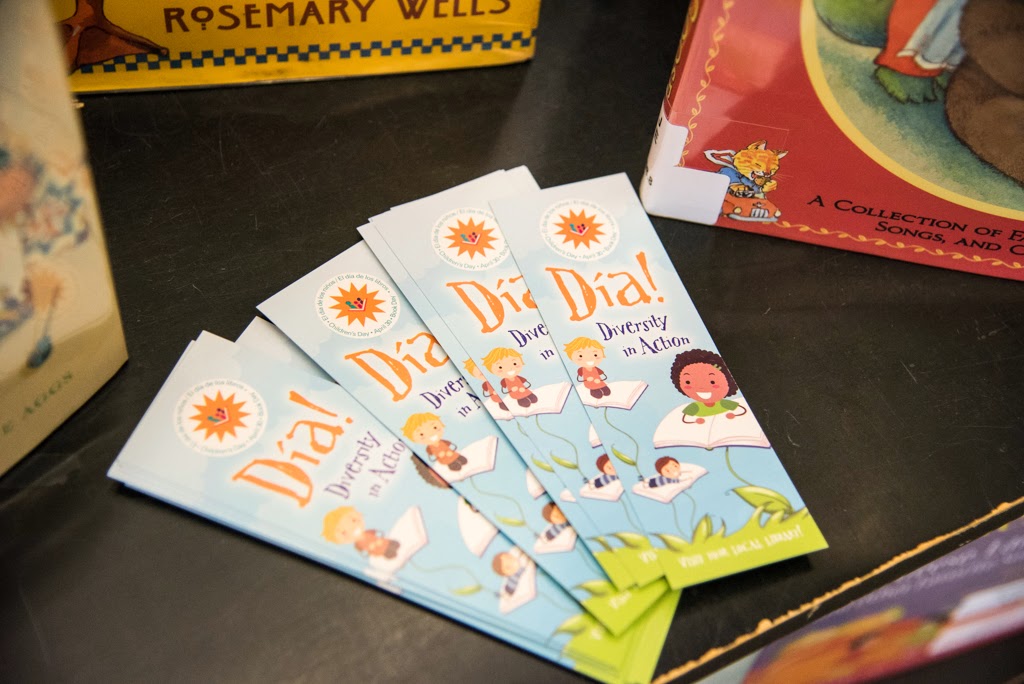
Rhymes Around the World: A Día Celebration

The village my library serves is remarkably diverse. It's been that way for decades, with large community initiatives like the Festival of Cultures and Coming Together in Skokie and Niles Township meant to celebrate and explore that diversity on a continual basis. In putting together my first Día program since coming to this library, I wanted to do my best to help the diversity of our community show through in a Día program. My attempt at this goal was Rhymes Around the World.

(photo by Skokie Public Library,
CC BY-NC-SA 2.0)

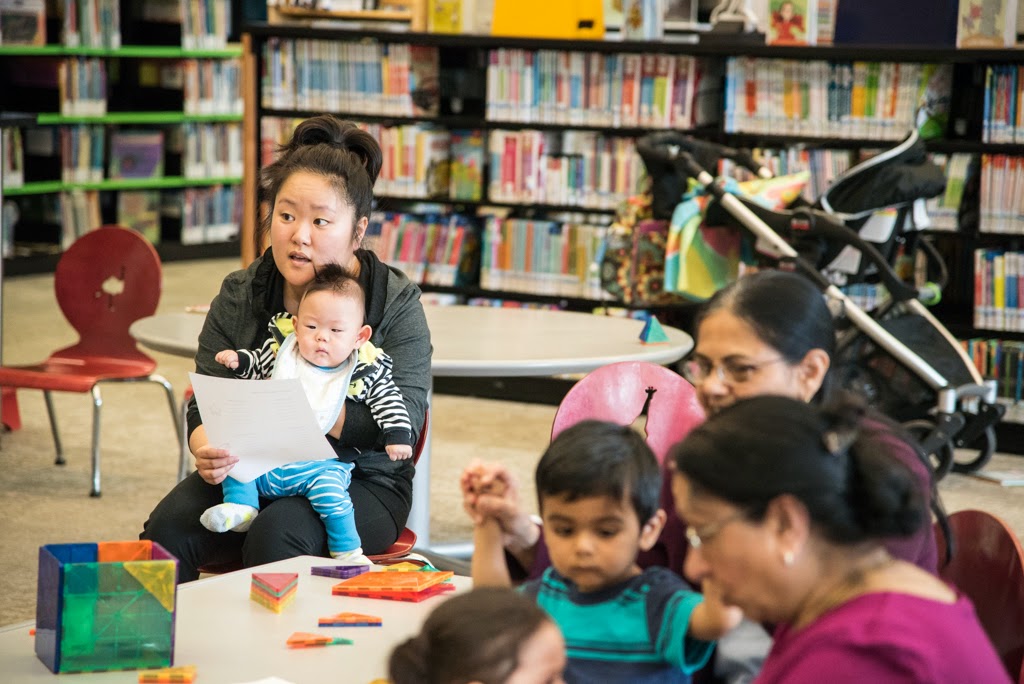
Rhymes Around the World was a 30-minute storytime-style program that took place smack dab in the middle of the preschool area of the youth department. I intentionally opted to do the program in an open space (as opposed to in a program room) so that anyone who happened to be in the library on our program morning would be able to join in, even if just for a few minutes. As part of my planning process, I sent out a call to many of the library's contacts within cultural community groups in the village; these are groups the library has had working relationships with, and who are huge supporters of the library. The invitation: to share favorite nursery rhymes and/or songs with the program attendees, and in so doing help celebrate the culture of literacy and love for children that transcends languages and backgrounds.

During the actual program last Thursday, we had nearly 50 kids and caregivers participating throughout the program. Many of these caregivers said they came to the library for a play outing but were pleasantly surprised to be able to join in a program. (A handful said they particularly liked the out-in-the-open setting for the program, as it made them feel less self-conscious about kids whose attentions waver in enclosed settings.)

(photo by Skokie Public Library,
CC BY-NC-SA 2.0)

These ~50 folks enjoyed songs and rhymes in English, French, Spanish, and Urdu, with lots of caregivers chiming in to offer their children's own favorite rhymes and songs with the group. For a relatively informal event--people could come and go as they pleased--I was struck by the successful simplicity of it all: caregivers to passionate about teaching and celebrating their children; children captivated by rhymes they knew as well as rhymes the were hearing for the first time; and an overarching sense that our community shares a value for supporting young children that is not bounded by lines of culture or ethnicity.

(photo by Skokie Public Library,
CC BY-NC-SA 2.0)

I wrapped up the program with a resonating thought: that a community rich in cultural diversity can offer something truly great to all the children we serve when we share and celebrate our literary heritages.

I hope you had a successful Día celebration of your own!

(photo by Skokie Public Library,
CC BY-NC-SA 2.0)

Friday, April 24, 2015

Stargazer Nights at the Library

This spring at my library, we're exploring both microcosms and macrocosms as part of the newest rotation of the BOOMbox, our flexible STEAM space. Under the heading Big and Small, the space is filled with microscopes, telescopes, and all manner of activities to explore these various cosmos.

My coworker Amy had the outstanding idea to move some of the formal programming for this spring outside of the physical library space by offering Stargazer Nights on the Village Green adjacent to the library. All the better to take advantage of the Cometron telescopes the library purchased, Amy reasoned. And to maximize the potential audience for these sessions, Amy asked me if I'd be willing to host one session per month on the night of my usual weekly evening shift while she offered sessions on hers. I was excited to help!

So far we've hosted four of our six total Stargazer Nights. While these events appear on our online and print calendars and BOOMbox flyers, they're drop-in events, with no registration required. Despite the fact that we've had 2/4 overcast evenings, we've had several dozen participants each time. And I consider this next bit exciting: through informal conversations with the folks who come to participate, we've found out that about 80% of participants had not come to the library specifically for the event; rather, they serendipitously discovered it was happening on their way into or out of the library. Visibility, here, was a huge factor--folks could see the telescopes pointing upward as they went about their library business, and natural curiosity and wonder induced them to stop and look up, too.

Regardless of the visibility on any given evening, each Stargazer Night introduced families and individuals across a wide age spectrum to basic telescope skills and etiquette. We talked about using the finderscope to help to point the telescope at the desired object to view; how the mirrors of the telescope cause what we see through the eyepiece to be inverted; and how to focus the telescope. Amy and I have also discovered an excellent way to help young stargazers use the telescope without bumping it and thus changing the view: we ask kids to put their hands in their pockets before leaning over to look in the eyepiece. Simple!

We talked about simple astronomical identification skills such as finding the Big Dipper; using the Big Dipper to locate the North Star; and how to tell a star from a planet from a man-made satellite. We also talked visible constellations, including Orion (we had a great view in March) and Leo (in April). We saw the moon in several different phases over the course of the four Stargazer Nights, and so we had conversations about the phases of the moon and their names as well.

The cream of the crop, though, truly was looking through our Cometron telescope to see the moon in sharper relief as well as a few planets. We've been able to see Venus (both with the naked eye and through telescopes), but Jupiter really takes the cake. Jupiter is plenty visible without a telescope, but we were also to see a whopping 5 of Jupiter's moons when we viewed the planet through the telescope. 5! So many participants' minds were blown at being able to see such distant celestial bodies.

While we have two more Stargazer Nights coming up in May, I must say we've already had some outstanding outcomes. On the most basic level, we've had lots of participants of all ages expressing thanks for being able to even do this sort of thing at the library. We're relatively near Chicago, with its Adler Planetarium, but even so everyone we talked to was thrilled to have this type of opportunity in Skokie. Parents commented that they particularly appreciated being able to expose their children to this type of technology. One family who stumbled upon the event and joined had never even seen a telescope before--what an amazing opportunity for the library to have a significant impact on their scientific knowledge.

The programs thus far have engaged a wide range of ages and knowledge levels. We had the aforementioned novices, but we also have had longtime astronomy hobbyists who enjoyed a) participating in something they care deeply about with others, and b) having the opportunity to share their knowledge by answering some questions when Amy and I were helping other folks.

The majority of participants fell into some middle ground--they knew a bit about stargazing and/or astronomy, but hadn't been reminded to look up in quite some time. Stargazer Nights resparked their interest. And that's what we ultimately want of any BOOMbox activity: to spur an interest or motivation to engage in a topic beyond the library program itself. To that end, we made sure that anyone who was interested in continuing to stargaze on their own was able to take home the monthly Evening Sky Map we had printed from SkyMaps.com.

If we can inspire behavior that leads to further exploration? I consider that a stellar program.