Thursday, February 28, 2013

What's Popular in MG Series: Books Kids Love Survey Results

The results are in! 146 of our participated in Part II of the Books Kids Love Survey that Anne and I sent out into the interwebs; that's 146 people weighing in on what middle grade series are popular at their branches and which are not. And now, without further ado, the fifteen middle grade series we surveyed, from most popular to least:

I am intrigued by the fact that the top three most popular middle grade series--Diary of a Wimpy Kid, Big Nate, and Dork Diaries--can all be considered readalikes of one another. I sense a theme, writing style, and or perspective that appeals to this age of reader...

Anne compiled the data on each individual series. Take a look at the charts below; how do series' popularity at your library relate to any larger trends? Are you missing anything from your collection?

Anne and I want to say THANK YOU for weighing in on the series that your readers are enjoying, or perhaps not so much. My hope is that the results can give us some points of consideration in moving forward. What I'll be thinking about:
  • Are there series on which I should be offering book discussions or programs?
  • Based on series popularity, what types of readalike booklists should I make before summer reading?
  • What series am I purchasing too many copies of?
  • What series may need replacement copies?
It should be noted that a few people expressed a wish that we had offered more descriptive criteria in Part II of our survey; namely, they wanted there to be an option for a series that saw consistent middling interest among readers. Note that our data will only reflect popularity within the boundaries that we set for the survey. Also, there will always be room for discussion on what it even means for a book or series to be "popular." For now, though, I think these data give us plenty of interesting things to talk about.


Tuesday, February 26, 2013

On Peer Sourcing in the Library

No librarian is an island. That, of course, is my opinion: that good librarianship requires a degree of collaboration, a willingness to learn from others. I know I couldn't do my job well without my peers--colleagues, friends--who open themselves and their expertise to others.

The way I see it, there are a lot of brilliant librarians out there, and they all have something tremendous to offer to the profession. Some excel at offering program successes, some at offering service innovations. Some specialize in research and tips on the work we do with kids, which helps me gain intentionality and purpose; some share insightful ruminations on the profession that give me new perspective on what it is I do. I know that I strive to share everything I can about STEAM programming for kids--that's what I would want to be my niche, were I to have one; and while I would not claim to be the loudest or best voice on that topic (I have some really smart peers!), I do hope I am offering something worthwhile.

My peer-sourced flyer
I want to contribute because, simply, I take a lot from my peers. That is to say, I peer source. Frequently. Take my recent initiative to get more kids reading our great graphic novel series; why would I start from scratch in making a top ten list when Hannahlily Smith already shared a stellar one on the Nerdy Book Club blog? Sure, I designed the handout I placed in our graphic novel stacks; but the core of the material came from a peer I consider an authority on the subject. I peer sourced it.

I peer source themed book selection for impromptu story times. I peer source genre readers' advisory lists. I peer source simple crafts for large groups, and I peer source homeschooling program formats. My library services benefit from all this peer sourcing.

Don't get me wrong--I do a lot of original work, as do my peers. But the reason we are able to create so many quality services from scratch is because we look to our peer "experts" to fill in the gaps where we may not always be so successful or confident on our own. We look to and learn from the know-how of others. The way I see it, that's an exemplary work model: services are top-notch, staff are developing skills and working efficiently, and children benefit.

I'm proud to be a part of a profession that values collaboration and believes we all have something valuable to offer.


Monday, February 25, 2013

Guest Post: Balloon Story Time & STEAM Craft, by Miss Erin

Today's guest post comes from one of my staffers, Miss Erin. She is sharing a preschool story time program that she offered in our library last week. One of my favorite aspects of her program: the Mini Marshmallow Shooter STEAM craft! Engineering + Arts, with fidelity to her theme... terrific! Without further ado, it's Miss Erin!

Balloon Story Time

Opening Song: "Finger Family"

Song: "Where is Thumbkin?"

Story: Emily’s Balloon by Komako Sakai
     While this book has a story to narrate, I decided to use it for a picture walk. Preschoolers helped me tell a story about a little girl named Emily and her yellow balloon.


Song: "Animal Action I" by Greg and Steve

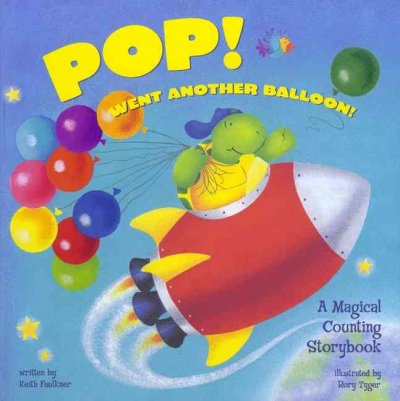
Story: POP! Went Another Balloon! by Keith Faulkner, illustrated by Rory Tyger
     This story demonstrated counting and subtracting in a fun and repetitious way. Ended up being a great interactive story!

Song: "Body Rock" by Greg and Steve

Story: Sally’s Great Balloon Adventure by Stephen Huneck (didn’t get to this book)
     This is a story about a dog,Sally, who goes to a hot air balloon race. While looking at the balloons, Sally smells fried chicken! In an attempt to find the chicken, Sally finds herself in a hot air balloon, alone and floating away. While Sally’s adventure makes the news, all she can do is worry about the fried chicken.

Closing Song: "If You’re Happy & You Know It!"

Craft: Mini Marshmallow Shooters (from www.cometogetherkids.com)
     Materials Needed: plastic cups;   balloons;   mini marshmallows;   scissors
  1. Cut the bottom part off of the cup. 
  2. Tie a knot at the end of a balloon and cut off about ½” from the other end opposite of the knot. 
  3. Stretch the open end of the balloon over the end of the cup. That’s it! You are now ready to launch marshmallows!
     Each child made two shooters. I had the cups already cut. The children tied the balloons, cut the ends off, and placed balloons over cups. As they were leaving, I supplied them with a baggie of marshmallows and balloon coloring sheets.

*lead photo by Erin Gilmer

Friday, February 22, 2013

Reading, Then & Now

Today, as part of the build-up to World Read Aloud Day, I'm going to finish some sentences about reading from the perspectives of both my 10-year-old (4th grade) self and my current grown-up self.

Sentence #1: I think everyone in the world should read...
10-year-old Amy: Bridge to Terabithia by Katherine Paterson. I loved the idea of having a Terabithia--a special, secret place to go. I remember scrunching up into a corner of my bedroom and pretending that I needed to use my hot pink electronic Dear Diary in order to access my secret hideaway. The password, of course, was "Terabithia."
Grown-up Amy: Three Times Lucky by Sheila Turnage. I especially think that everyone in the world should read this story aloud in order to enjoy the stylistically-perfect language as much as the quirky characters and captivating mystery.

Sentence #2: If I could listen to anyone in the world read aloud to me it would be...
10-year-old Amy: my cousin Stephanie. She lived in New York when I was growing up, which felt very far away from my house in Indiana. I loved when her family came to visit. Stephanie was very theatrical--she would write plays for all of us cousins to perform--and she was always talking about the books that she was reading. Hearing her read aloud would have been a natural combination of her aspirational literary enthusiasm.
Grown-up Amy: Neil Gaiman. I was so excited when my best friend Mike told me I could listen to Gaiman read The Graveyard Book online. Gaiman has one of those reading voices that can make the nutritional content of cereal sound magical, and I'd love to hear him read aloud from some of my favorite books.

Sentence #3: When I read aloud, my favorite character to impersonate is...
10-year-old Amy: Sister Bear from the Berenstain Bears books. We had a lot of these books in my house growing up, and when I was ten, I would still read them with my 7-year-old brother.
Grown-up Amy: the bear narrator from Jon Klassen's I Want My Hat Back. I love doing all of the voices in this book--a slow turtle, a confused what's-that-animal--but my favorite is the bear. I particularly like to say, in my best distraught bear voice, "My poor hat. I miss it so much." It always gets some giggles from listeners.

Sentence #4: The genre that takes up the most room on my bookshelf is...
10-year-old Amy: Newbery Award books. My mother was always happy to buy books for my brother and me, and our school's book orders included great, inexpensive paperback copies of Newbery winners and honorees. I had a great selection.
Grown-up Amy: Jane Austen books, both written by her and about her. I know, that's not really a children's librarian thing (although I do own the board book version of Pride and Prejudice!), but when all is said and done, Jane Austen books take up over 2 feet of bookshelf space in my apartment. I also own four different copies of Persuasion, my favorite Austen novel.

Sentence #5: The last book I wish I'd written or inspired me to write my own story is...
10-year-old Amy: The View from Saturday by E.L. Konigsburg. I was absolutely enchanted by how all of the characters and narratives were woven together, and I was inspired to write my own story, also set at a trivia competition, in the same style. My story was three pages, I think.
Grown-up Amy: none. With all of the books that I've read, I have realized that creating stories is not a particular talent of mine. That's not a bad thing, and it doesn't make me sad at all. Instead, I am thrilled that I have a job that allows me to share the work of talented writers and storytellers with children.


Do you ever reflect back on what your reading life was like at different times in your life? I'd love to hear how you would have finished these sentences as a young reader!

~~*~~

This post is part of the World Read Aloud Day Blogging Challenge, which features weekly blog prompts leading up to World Read Aloud Day on March 6. Stay tuned over the next couple of weeks another WRAD Blog Challenge post and the details on the implementation of my library's WRAD program!

Wednesday, February 20, 2013

Best of Friends (Super Simple) Story Time

February is a great month for focusing on friendship during story time, and that's precisely what we did at my evening story time last week. I had a small group, so I used a simple, flexible plan:

Opening Song: "The More We Get Together" with the ukulele

Story: Boy + Bot by Ame Dyckman, illustrated by Dan Yaccarino
     I love this story of the new friendship between a boy and a robot and their concern for one another's wellbeing. It's equal parts funny and touching, and I love that I get to use my robot voice in read alouds.

Story: You Will Be My Friend! by Peter Brown
     Another great story about making a friend--and why it's important to be yourself, because you'll find friends who are perfectly compatable with you. We talked about the illustrations a lot during this reading, and we also talked about activities we like to do with our friends.

Activity: Parachute time!
     You can't use a big parachute by yourself--you need your friends to help you in order for it to be a lot of fun (see what I did there?). We worked together to make small ripples, rough waves, and, finally, a tent that we could sit inside. The kiddos loved the parachute so much that they asked to do it again after our craft. I obliged.

Craft: "My Best Friend" drawing/writing activity
     I love open-ended crafts, especially for programs where attendance can vary. This craft consisted of a white sheet of paper with the words "My Best Friend" and a picture of an empty picture frame; I asked the children to draw a picture of what they like to do with their best friends in the frame. One child drew himself and his friend pretending to be pirates; another drew a picture of himself and his friend on a treasure hunt. Not only does the open-endedness of these crafts facilitate writing--an early literacy practice--but it also provides opportunities for talking about what the children draw/write. That's both talking (another early literacy practice) and ascribing meaning to marks on a page. The big, bold letters at the top also provide perfect fodder for practicing letter recognition. For a rather simple paper-and-crayons craft, that's a lot of early literacy impact.

My story time friends and their caregivers certainly seemed to enjoy themselves!

Tuesday, February 19, 2013

Friday, February 15, 2013

What's so special about reading aloud?

As a children's librarian, I have interactions with children who cannot read, those who struggle to read, and those who voraciously read. Yet whatever a child--nay, a person's--age or reading ability, I've found that people consider it a treat when someone reads aloud to them.

What's so special about reading aloud?

Reading aloud connects us all to our cultural ancestry, to a time before ebooks and the printing press and lay literacy, when the only way to tell stories was out loud. Technological developments in the book world haven't dented the human appreciation for stories, and listening to a book read aloud resonates with a fundamental need to connect with the world through words, imagination, and stories.

Reading aloud allows us to rejoice in the rhythm and melodious sounds of words. There is such beauty in language, and I love to share that with others. I'll often read a sentence or passage aloud to my coworkers or the children in the library simply because of how beautiful it sounds.

Reading aloud gives listeners shared experience. I love to share funny books aloud because group laughter is infectious and momentous. I regularly have classrooms of preschoolers talk to me excitedly about a book we shared months before, simply because the experience of sharing that book was a touchstone for them. I also often take my favorite picture books home for visits to read aloud for friends and family after dinner simply because shared stories are wonderful. Reading aloud together creates strong bonds.

Reading aloud is comforting. One of my favorite summer programs is a Book Bunch Picnic Lunch series, where families bring sack lunches to the library and eat an indoor picnic while I read aloud. I love to see just how much older school-age children in particular enjoy listening to stories despite the fact they can read them on their own. Being read to feels safe and relaxing and luxurious.

Reading aloud gives us mantras and meanings that enrich our lives. "I think I can, I think I can!" "Let the wild rumpus start!" We internalize the lines and stories that we hear and love; they stick with us. My mother and I can still recite the first several pages of Dr. Seuss's Sleep Book--that's how much we read it together and loved it. And while it may seem amusing that I know an intro to a Dr. Seuss book by heart as a 26-year-old, I would firmly argue my life is better for having bits of books inside my brain.

What do you think is special about reading aloud?

~~*~~

This post is part of the World Read Aloud Day Blogging Challenge, which features weekly blog prompts leading up to World Read Aloud Day on March 6. Stay tuned over the next few weeks for more WRAD Blog Challenge posts, culminating in details on the implementation of my library's WRAD program!